 Save Pin
 One weeknight, I stood at the stove with half an hour to feed people, a pantry that felt emptier than my energy, and the sudden clarity that everything I needed was already there. Garlic, tomatoes, cream, basil, pasta—ingredients that somehow knew each other. That one-pot moment, where the pasta cooks right into the sauce instead of drowning separately, changed how I think about weeknight dinners. It felt less like cooking and more like letting flavors do the work while I actually relaxed.
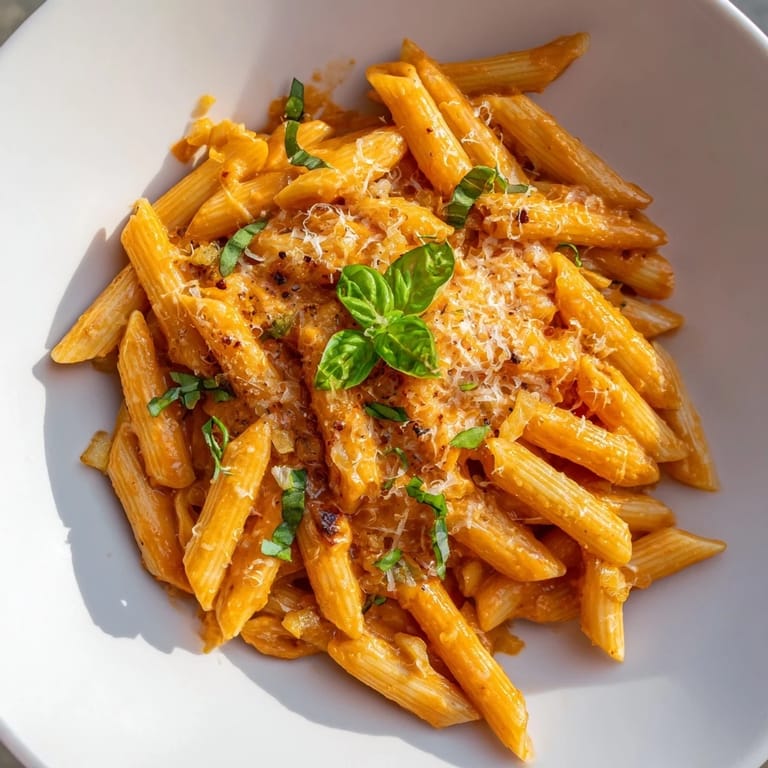
I made this the night a friend arrived unannounced with a bottle of wine and zero appetite until that smell hit. Garlic and tomato filling the kitchen, cream mellowing everything into comfort—by the time the pasta was ready, they were already leaning against the counter with a fork in hand. We ate straight from the pot, talking over each other, and I realized this dish has that quiet magic of making people feel genuinely welcomed.
Ingredients
- Penne or fusilli pasta, 350 g: Shapes with ridges or spirals grab the sauce better than smooth pasta; I learned this after years of flat noodles that just slide around.
- Olive oil, 2 tbsp: Good quality matters here since it's a base note—cheap oil makes the whole thing taste thin.
- Yellow onion, 1 medium, finely chopped: The sweetness balances the acidity of tomatoes; rushing the sauté step steals that complexity.
- Garlic, 4 cloves, minced: If you love garlic, mince it yourself and add it slowly so it doesn't burn and turn bitter.
- Red pepper flakes, 1/2 tsp: Optional, but they add a whisper of heat that keeps the richness from feeling heavy.
- Canned crushed tomatoes, 800 g: San Marzano if you can find them, though any quality brand works when you're building flavor layer by layer.
- Tomato paste, 2 tbsp: This concentrate of flavor does heavy lifting; don't skip it even though it seems like a small amount.
- Sugar, 1 tsp: Cuts the acidity just enough so the cream doesn't curdle and the sauce tastes balanced instead of sharp.
- Salt and black pepper: Season as you go, not all at once at the end.
- Heavy cream, 200 ml: Room temperature is better; cold cream seizes the sauce for a moment before it smooths out.
- Parmesan cheese, 60 g, freshly grated: Pre-grated catches moisture and won't melt smoothly; the difference is noticeable.
- Fresh basil, 1 cup, chopped: Add it off heat so it stays bright green and doesn't fade to dull.
- Water or vegetable broth, 600 ml: Broth adds depth if you have time to open a carton, but water works just as well.
Tired of Takeout? 🥡
Get 10 meals you can make faster than delivery arrives. Seriously.
One email. No spam. Unsubscribe anytime.
Instructions
- Start the base with onion:
- Heat olive oil in a large deep skillet over medium heat, then add the chopped onion. Let it soften for 3 to 4 minutes, stirring now and then—you want it to turn translucent and sweet, not brown.
- Wake up the garlic:
- Stir in minced garlic and red pepper flakes, cooking for just 1 minute until the smell fills the kitchen. This is the moment when your hands know something good is starting.
- Build the tomato foundation:
- Add crushed tomatoes, tomato paste, sugar, salt, and black pepper all at once, stirring everything together. The sugar mellows the acidity while the spices bloom into the oil.
- Add pasta and liquid:
- Pour in the dry pasta and water or broth, making sure the pasta is covered. The pasta will look crowded and underwater, and that's exactly right.
- Simmer until tender:
- Bring to a boil, then lower heat to medium-low, cover, and let it bubble gently for 12 to 14 minutes, stirring occasionally. The pasta absorbs the liquid and the sauce deepens—this is the magic part.
- Finish with cream and cheese:
- Stir in the heavy cream and freshly grated Parmesan, cooking uncovered for 2 to 3 minutes until the sauce turns silky. If it looks too thick, add a splash of pasta water to loosen it.
- Fold in basil and taste:
- Remove from heat, fold in the chopped basil gently, and taste for salt and pepper. The basil should stay bright, not cooked into submission.
- Serve immediately:
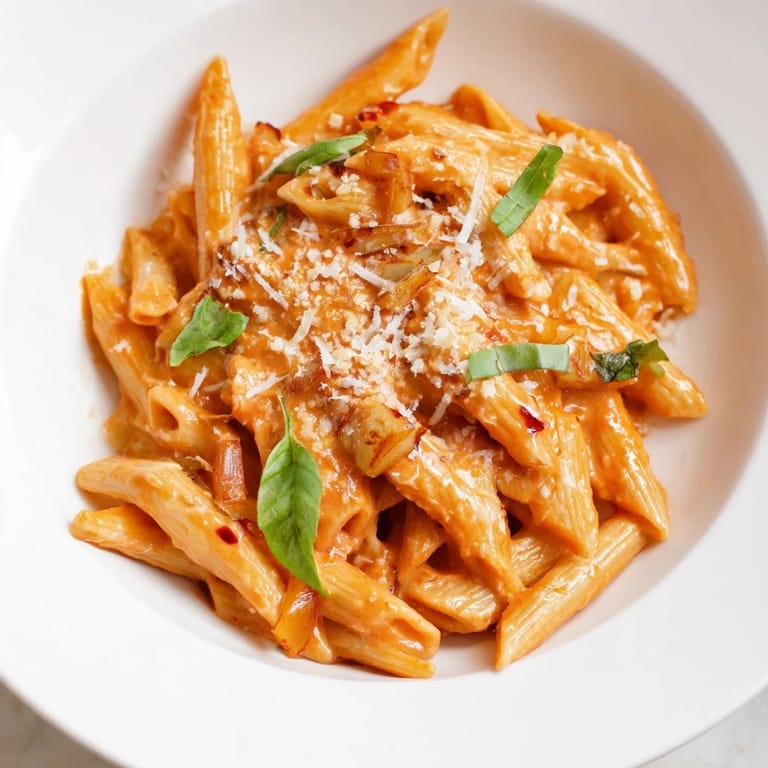
- Divide among bowls while it's hot, finishing each with a crack of fresh pepper and more basil if you like.
 Save Pin
 There's a moment in cooking when separate ingredients stop being themselves and become something that tastes like home. That's what happens in this pot around the 15-minute mark, when the kitchen smells so good you can't imagine why you'd order takeout. This pasta does that simply, without fuss, and somehow that simplicity is what makes people come back to it.
Why This Recipe Works for Busy Nights
The genius of one-pot pasta is that it lets you stop multitasking. No draining, no rinsing, no sauce-on-pasta-in-a-separate-pan logistics. You sauté, you add everything, you stir occasionally, and while it cooks, you actually have time to set the table or pour wine instead of standing at the stove juggling three pans. I've learned that this approach feels indulgent because it's rare—most cooking demands your full attention, but this one almost prefers you wander away.
The Chemistry of Creaminess
Cream doesn't just make this sauce rich; it softens the bite of tomato acidity and creates a smooth texture that clings to pasta instead of pooling at the bottom of the bowl. The Parmesan adds umami, that savory depth that makes you reach for another forkful without knowing why. Together, they transform what started as a sharp tomato sauce into something luxurious, which is exactly why adding them at the very end matters—if they simmer too long, they break and the sauce becomes grainy instead of silky.
Variations and Personal Tweaks
The beauty of this recipe is that it tolerates experimentation. Some nights I add a handful of sautéed mushrooms for earthiness, other times fresh spinach that wilts into the sauce, or roasted cherry tomatoes if I'm feeling fancy. A friend swears by adding lemon zest at the end for brightness, while another tosses in red pepper flakes without hesitation. The core stays solid, but the dish becomes yours.
- Sautéed mushrooms add an earthy depth that plays beautifully with the garlic and cream.
- Stir in spinach just before the cream so it wilts gently into the sauce.
- For a vegan version, swap heavy cream with coconut or cashew cream, and use nutritional yeast instead of Parmesan.
 Save Pin
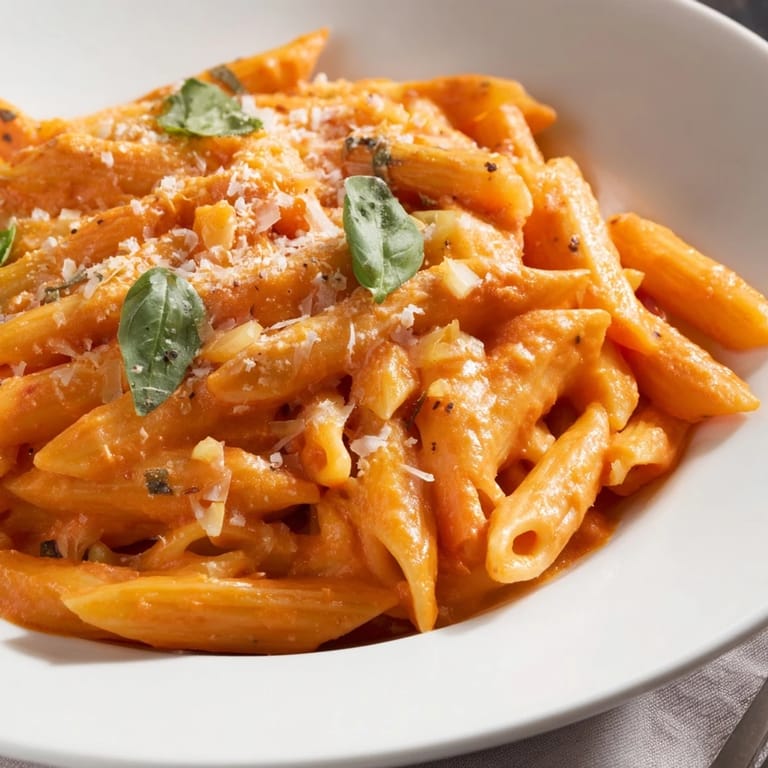
 This is the kind of dish that fills more than bellies—it's proof that simple ingredients and a little time create something worth savoring. Make it, and you'll understand why it keeps getting made.
Recipe FAQs
- → What type of pasta works best for this dish?
Penne or fusilli are ideal as their shape holds the creamy tomato sauce well, but other short pasta works too.
- → Can I adjust the spiciness in the sauce?
Yes, red pepper flakes can be added or omitted depending on your preference for heat.
- → How do I make this dish vegetarian-friendly?
This dish is already vegetarian, featuring no meat products and relying on cream and cheese for richness.
- → Is it possible to prepare this recipe vegan?
Yes, substitute the heavy cream and Parmesan with plant-based alternatives for a vegan version.
- → What sides complement this creamy tomato pasta?
A crisp green salad and a light white wine like Pinot Grigio pair wonderfully with the rich flavors.
- → Can I add extra vegetables to this dish?
Definitely, sautéed mushrooms, spinach, or roasted vegetables can be stirred in for added nutrition and texture.