 Save Pin
 I still remember the Sunday afternoon when my sister called asking me to bring something to share for a last-minute family gathering. With only twenty minutes and a tight budget, I raided the deli counter and pulled together whatever looked good—sliced meats, a couple of cheeses, some vegetables I had on hand. What started as a practical solution became the star of the table. Everyone kept coming back, building their own combinations, chatting around the platter. That's when I realized the magic wasn't in fancy ingredients or complicated cooking—it was in creating a spread that invited people to gather, eat, and connect without any fuss.
I've made this platter for birthday parties, work potlucks, and unexpected visitors. The best part? Watching people's faces light up when they see the abundance spread before them. Someone always says, 'Wow, you made all this?' and I get to smile knowing it took me less time than most recipes take to bake.
Ingredients
- Sliced cooked ham (200g): Choose the thicker slices from the deli counter—they hold up better and feel more substantial than pre-packaged varieties. This is your volume player, so don't skimp on quantity.
- Sliced turkey breast (200g): Mild and crowd-pleasing, turkey bridges the gap for people who want something lighter. Ask the deli to slice it to medium thickness so it fans beautifully.
- Sliced salami (150g): This adds the deep, savory note that makes people reach back for more. A little goes a long way for flavor.
- Mild cheddar, sliced (200g): Skip the fancy aged stuff here—mild cheddar is approachable, budget-friendly, and everyone recognizes it immediately.
- Swiss cheese, sliced (150g): Those beautiful holes make it visually interesting and give you variety in cheese flavors without breaking the bank.
- Cream cheese (100g): This becomes your spreadable anchor, offering richness and creating those small moments of indulgence when paired with crackers.
- Large carrots, sliced into sticks (2): Cut them on a slight angle so they catch the light and look intentional. They add natural sweetness and color that makes the whole platter sing.
- Cucumber, sliced into rounds (1): The cool, crisp element that refreshes the palate between richer bites. Slice them thin enough to bend slightly without breaking.
- Red bell pepper, sliced (1): This is your visual showstopper—those bright red strips make everything around them look more appealing.
- Cherry tomatoes (1 cup): Leave them whole. They're jewel-like and give people something they can pop into their mouth between building their next bite.
- Assorted budget-friendly crackers (400g): Mix textures and shapes—round, square, seeded, plain. High volume means nobody runs out and has to awkwardly wait for more.
- Baguette, sliced (1): Toast it lightly if you have five minutes; if not, fresh is wonderful too. Cut on a sharp angle for elegance on a budget.
- Hummus (1 cup): The creamy counterpoint to all the sliced items. It transforms crackers into something special.
- Green olives (1/2 cup): These little flavor bombs give people a reason to linger over the platter. Their briny pop is essential.
- Pickles (1/2 cup): Tangy, crunchy, and wonderfully nostalgic. They balance all the richness beautifully.
Tired of Takeout? 🥡
Get 10 meals you can make faster than delivery arrives. Seriously.
One email. No spam. Unsubscribe anytime.
Instructions
- Prep everything first:
- Before you even look at your platter, have all your meats unwrapped, cheeses sliced, vegetables cut into appealing shapes, and your bowls filled with the spreadables. You want to be able to arrange everything without pausing to slice another carrot mid-setup. Set your platter in front of you where you can reach all four sides comfortably.
- Build the meat anchor:
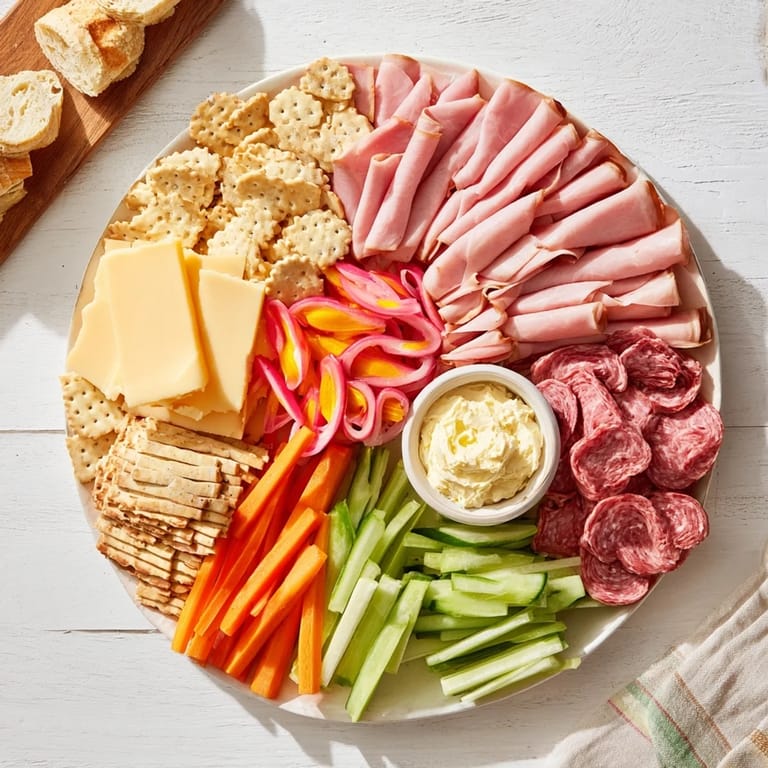
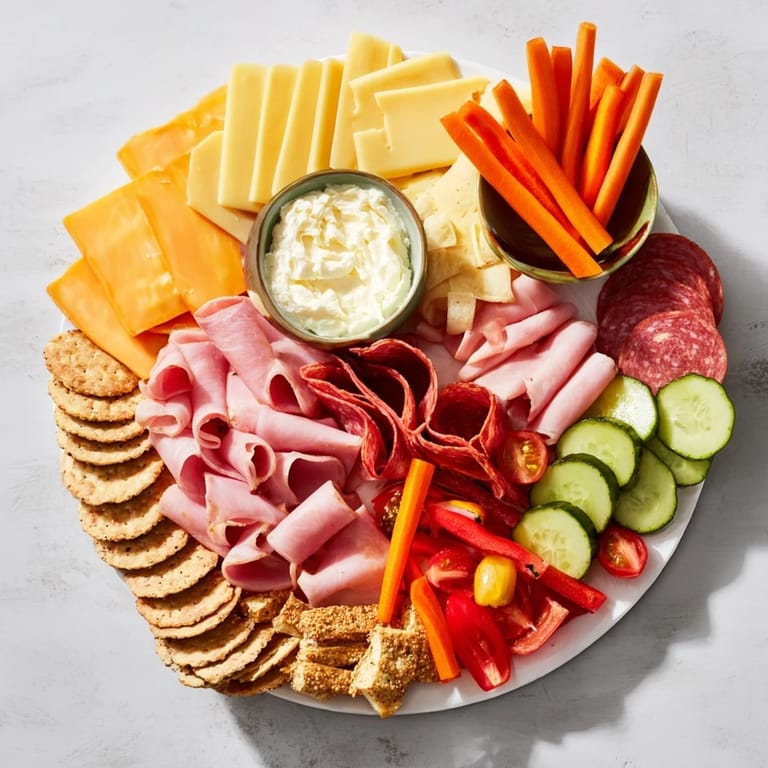
- Choose one corner or section of your platter and create generous piles of your three meats. Fold or fan them so light catches the surface and they look abundant rather than sparse. Leave breathing room between varieties so people can see what they're choosing.
- Layer the cheeses with intention:
- Next to each meat section, arrange your sliced cheeses. Fan them slightly—like a card dealer's spread—so the edges overlap and create visual movement. The fanned arrangement makes everything look more impressive and makes it easier for people to grab individual slices without disrupting the whole stack.
- Create vegetable zones:
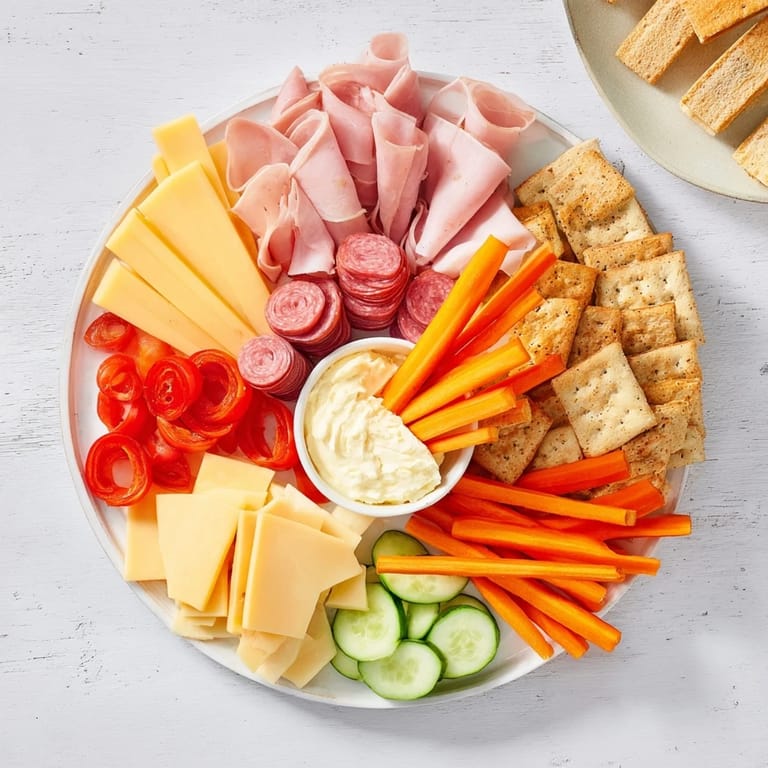
- In large, accessible heaps, group your vegetables by type. Put all the carrot sticks together, all the cucumber rounds in their own spot, bell pepper slices in another area. This organization actually makes the platter easier to navigate—people know where to look for what they want. The color contrast between vegetables creates natural visual division on your platter.
- Strategic dip placement:
- Place small bowls of cream cheese, hummus, olives, and pickles around the platter edges. Nestle them into spaces between your other components so they feel integrated rather than like afterthoughts. Make sure they're accessible from multiple angles so nobody has to reach across someone else to grab what they need.
- The cracker abundance:
- This is where volume truly matters. Create generous, tall stacks of crackers and baguette slices. Fill in any remaining gaps with these high-carb items. People love the visual abundance, and stacks on multiple sides of the platter mean different guests can reach them without crowding one spot.
- The final eye:
- Step back and look at your platter. Are there any dark, empty gaps? Fill them with more cherry tomatoes or a scatter of olives. Does one area look too heavy? Move some items slightly to balance it. The whole thing should look like abundance and celebration, not like you were careful with portions.
 Save Pin
 I'll never forget the moment my grandmother looked at this platter and teared up a little. She said it reminded her of the spreads her mother used to put together for family celebrations back in Poland. That's when I understood this wasn't just a platter—it was a language of abundance and inclusion that transcends recipes. Everyone at that table felt welcome and cared for.
The Psychology of a Good Platter
There's something deeply satisfying about building your own bite from many options. When you set out a platter like this, you're not just offering food—you're offering agency and creativity. Watch how people's faces light up as they discover their personal perfect combination: the person who's been waiting for an excuse to eat cheese with crackers, the one who piles everything on bread, the vegetable lover who builds a feast from just the colorful stuff. This platter works because it respects that everyone at your table eats differently, and everyone finds their joy.
Why This Works for Groups
Unlike plated food that everyone receives identically, a spread platter creates conversation and movement. People gravitate toward it, linger, sample, discover, return. It becomes a gathering point rather than just a meal. The abundance—real or visual—makes everyone feel generously treated. Nobody feels like they got a small portion or the wrong choice. There's always more to reach for, and that abundance mindset makes people feel cared for in a way a measured portion simply cannot replicate.
Making This Platter Your Own
The true magic of this recipe is its adaptability to what you have on hand and what your guests love. Swap cheeses for local varieties, use whatever sliced meats your budget allows, add seasonal fruit if you have it, include any vegetables that are beautiful right now. This is cooking that celebrates plenty and resourcefulness rather than rigid perfection.
- Add apple slices or grapes for a fresh contrast that works especially well in warm months when you want brightness among the richness.
- For vegetarian guests, double the cheese varieties and add roasted vegetables, marinated mushrooms, or plant-based deli options—the platter becomes even more generous.
- Remember this works for any gathering where people want to eat while socializing—it's not just appetizer energy, it's party energy.
 Save Pin
 Twenty minutes to abundance. That's the quiet promise of this platter. In a world where entertaining feels complicated and intimidating, this is proof that the most memorable gatherings come from simplicity, generosity, and the willingness to let your guests build their own moment of joy.
Recipe FAQs
- → How can I make this platter vegetarian?
Simply omit the sliced meats and add extra cheeses, roasted vegetables, or plant-based deli slices to keep it flavorful and satisfying.
- → What are some good drink pairings for this spread?
Light white wines or sparkling water complement the variety of flavors and keep the overall taste fresh and balanced.
- → How should I arrange the ingredients for easy access?
Place meats and cheeses in generous piles at different corners of the platter, surround with grouped vegetables, and fill bowls with dips and extras for convenient grabbing.
- → Can I prepare this spread in advance?
Yes, most components can be sliced and arranged shortly before serving to maintain freshness, especially fresh vegetables and crackers.
- → Are there any common allergens in this spread?
Yes, it contains dairy, gluten, and possibly soy; always check labels for specific ingredients if hosting guests with allergies.