 Save Pin
 The sharp scent of paprika hitting hot butter always takes me straight back to a cramped studio kitchen where counter space was a luxury and ambition was not. I had just started cooking for myself beyond pasta and jarred sauce, and stroganoff felt impossibly grown-up. The first attempt was clumpy and bland, but something about the creamy mushroom sauce over noodles convinced me to try again. By the third go, I'd learned to let the mushrooms actually brown instead of steaming them into sad rubber, and suddenly it all made sense.
I made this for a friend who was convinced she hated mushrooms, and I watched her go quiet after the first bite. She didn't say much, just kept twirling noodles and scraping up every bit of sauce from the bowl. When she finally looked up, she admitted she'd been wrong about mushrooms her whole life. It became our monthly dinner tradition after that, always with too much wine and never enough napkins.
Ingredients
- Boneless, skinless chicken breasts (500 g): Slice these thin so they cook fast and stay tender, and toss them in just enough flour to help the sauce cling without turning gummy.
- Salt and black pepper: Season generously here because under-seasoned chicken is a missed opportunity that no amount of sauce can fix later.
- Unsalted butter (2 tbsp): This adds a silky richness to both the chicken sear and the mushroom base, and using unsalted lets you control the saltiness as you go.
- Olive oil (1 tbsp): Mixing oil with butter raises the smoke point so you get a better sear without burning the butter solids.
- Medium onion (finely chopped): Dice it small so it melts into the sauce and sweetens the whole dish without chunky bites.
- Garlic (3 cloves, minced): Fresh garlic blooms beautifully in the butter and gives the stroganoff its savory backbone.
- Cremini or white mushrooms (250 g, sliced): Let them cook undisturbed for a few minutes so they caramelize instead of steam, which is the secret to deep, earthy flavor.
- Sweet paprika (1 tsp): This isn't just for color; it adds a subtle warmth and a whisper of sweetness that ties everything together.
- Dry white wine (120 ml, optional): Use it to deglaze and lift all those browned bits from the pan, or swap in extra chicken broth if you prefer.
- Low-sodium chicken broth (250 ml): This forms the base of your sauce and keeps you in control of seasoning without ending up too salty.
- Sour cream (200 ml): Stir this in off the heat or on very low so it stays creamy and doesn't break into grainy curds.
- Dijon mustard (2 tsp): A little tang here cuts through the richness and makes the whole sauce taste brighter and more complex.
- Fresh parsley (1 tbsp, plus extra): Chop this at the last minute for a pop of color and a fresh, grassy note that balances the cream.
- Egg noodles (300 g): Wide, buttery noodles are traditional and perfect for catching every bit of that luscious sauce.
Tired of Takeout? 🥡
Get 10 meals you can make faster than delivery arrives. Seriously.
One email. No spam. Unsubscribe anytime.
Instructions
- Prep the chicken:
- Toss your chicken strips with salt, pepper, and flour until they're lightly dusted. This coating helps them brown beautifully and thickens the sauce just a touch as they cook.
- Sear the chicken:
- Heat butter and oil in a large skillet over medium-high, then add the chicken in a single layer. Let it sizzle undisturbed for a couple minutes before flipping, cooking until golden and just done, about 4 to 5 minutes total, then set aside.
- Cook the aromatics and mushrooms:
- Add the remaining butter to the same skillet, toss in the onion, and let it soften for 2 minutes. Stir in garlic and mushrooms, then resist the urge to stir constantly—let them brown and release their liquid, about 5 to 6 minutes.
- Build the sauce base:
- Sprinkle in the paprika and let it toast for 30 seconds until fragrant. Pour in the wine if using, scraping up all those tasty browned bits, and let it bubble down by half, about 2 minutes.
- Simmer with broth:
- Add the chicken broth and bring everything to a gentle simmer, then lower the heat. This is where the flavors start to marry and deepen.
- Finish with cream and mustard:
- Turn the heat to low, then stir in the sour cream and Dijon until smooth and warmed through, being careful not to let it boil. Return the chicken and any juices to the pan and let it all simmer gently for 2 to 3 minutes.
- Cook the noodles:
- While the sauce simmers, boil your egg noodles in well-salted water according to the package directions. Drain and keep warm.
- Taste and adjust:
- Give the stroganoff a taste and add more salt, pepper, or a squeeze of lemon if it needs brightness.
- Serve:
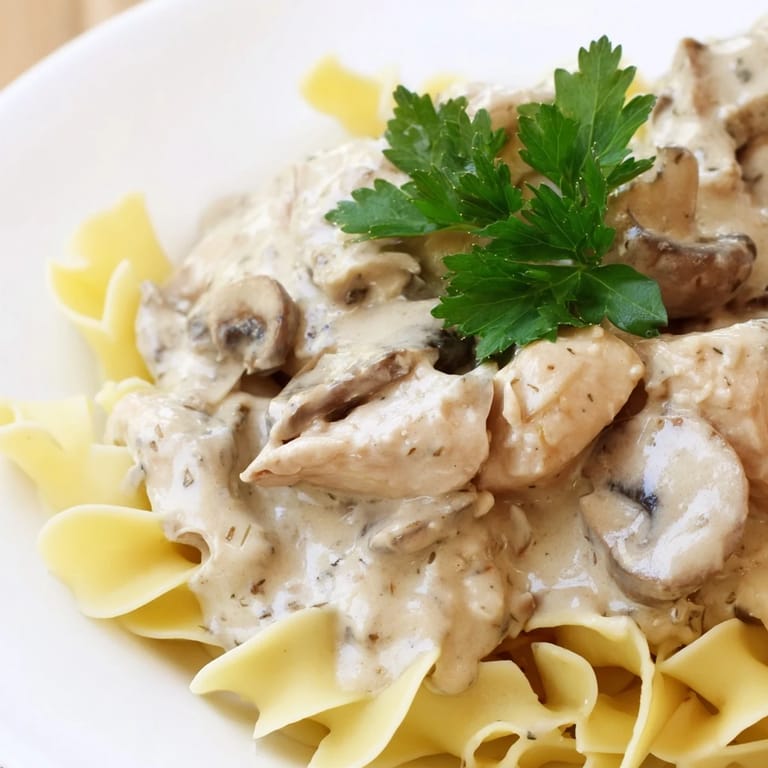
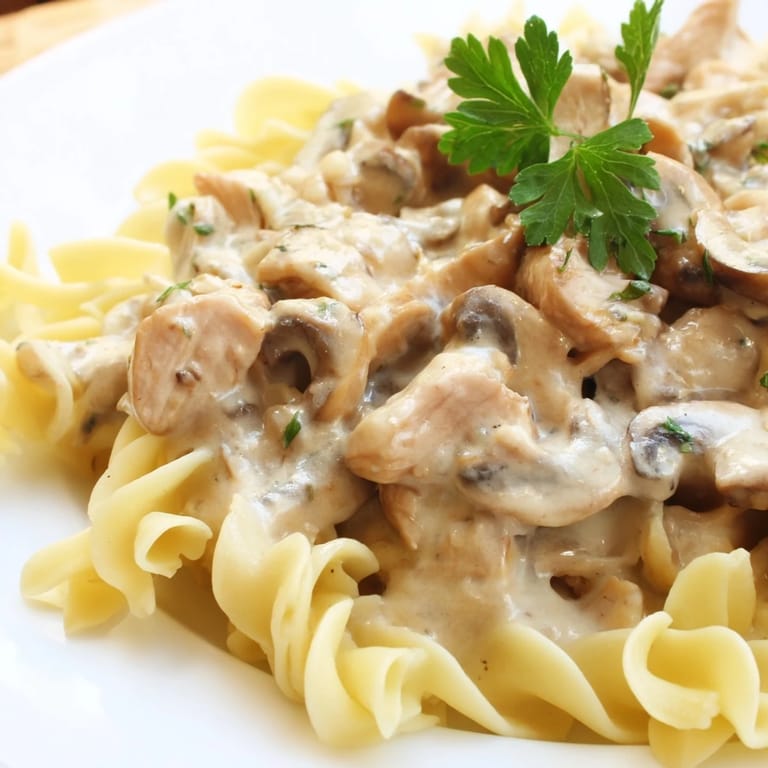
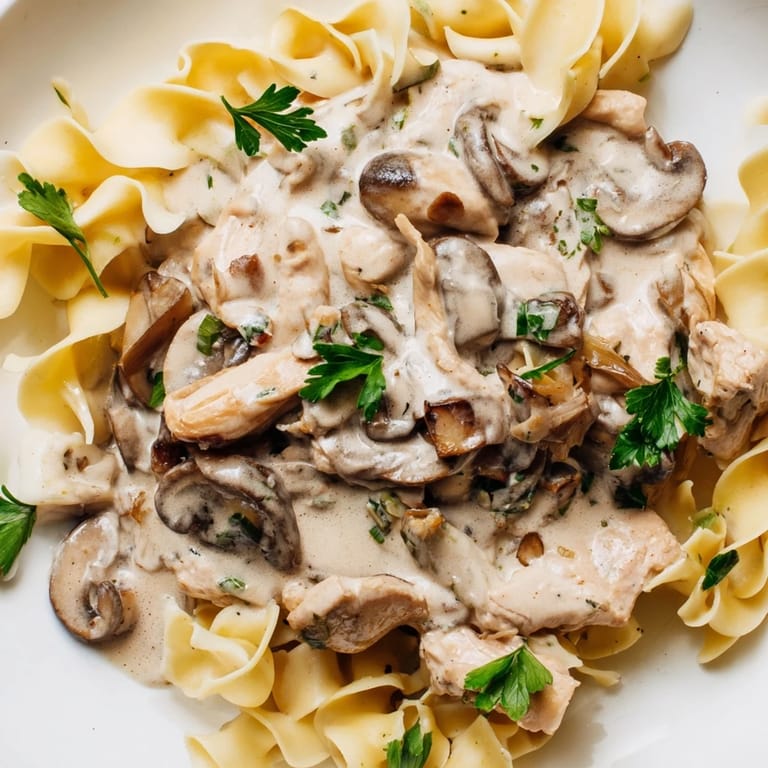
- Spoon the creamy stroganoff over a mound of warm noodles and scatter fresh parsley on top for color and freshness.
 Save Pin
 One rainy Tuesday, I served this to my partner after a long day, and we ate it in silence on the couch with our bowls balanced on our knees. No phones, no TV, just the sound of forks scraping plates and the occasional satisfied sigh. That's when I realized some recipes earn their place not because they're fancy, but because they make ordinary moments feel like enough.
Making It Your Own
You can swap Greek yogurt for the sour cream if you want something tangier and lighter, though you'll need to be even more careful about the heat. A splash of Worcestershire sauce adds a savory depth that feels almost meaty, and I've stirred in a handful of spinach at the end when I needed to feel like I was eating vegetables. Some nights I use thighs instead of breasts because they stay juicier, and once I added a pinch of smoked paprika by accident and loved the result so much it became intentional.
What to Serve Alongside
A crisp green salad with a sharp vinaigrette cuts through the richness perfectly, or you can keep it simple with steamed green beans tossed in butter and lemon. I've also served this with roasted asparagus when it's in season, and the slight char plays nicely against the creamy sauce. For wine, a dry Riesling or an unoaked Chardonnay is ideal, though honestly a cold beer works just as well on a casual night. If you're feeding kids, a side of buttered bread for dipping into the sauce is always a hit.
Storage and Reheating
Leftovers keep well in the fridge for up to three days in an airtight container, and I actually prefer them the next day when the flavors have had time to settle. Reheat gently on the stovetop over low heat, adding a splash of broth or water to loosen the sauce if it's thickened too much. The microwave works in a pinch, but use 50 percent power and stir every 30 seconds so the sour cream doesn't break. I don't recommend freezing this because dairy sauces can separate when thawed, though if you must, undercook it slightly and freeze without the noodles.
- Store noodles separately from the sauce if you can to keep them from getting mushy.
- Taste after reheating and add a squeeze of lemon or fresh parsley to brighten it back up.
- This reheats beautifully in a cast iron skillet if you want a slightly crispy edge on the noodles.
 Save Pin
 This is the kind of recipe that doesn't demand perfection but rewards attention, and it's become my go-to when I want something comforting without spending hours in the kitchen. Make it once, and I promise it'll find its way into your regular rotation too.
Recipe FAQs
- → Can I use chicken thighs instead of breasts?
Yes, chicken thighs work wonderfully and stay moist during cooking. Cut them into similar-sized pieces and increase cooking time slightly to ensure they're cooked through. Thighs have more fat, which creates an even richer sauce.
- → What's the best substitute for sour cream?
Greek yogurt is an excellent lighter alternative that adds tanginess. You can also use crème fraîche for a similar texture, or a combination of heavy cream and lemon juice if you prefer. Avoid boiling once dairy is added to prevent curdling.
- → Can I make this without wine?
Absolutely. Simply omit the wine and add the chicken broth directly to the pan after the paprika. The dish will still be delicious, though the wine adds subtle depth. Worcestershire sauce or a splash of vinegar can provide additional complexity.
- → How do I prevent the sauce from breaking?
Keep the heat low once you add the sour cream and never let the sauce boil, as high heat causes the dairy to separate. Stir constantly and add the cream slowly to the warm broth. If it does curdle, straining and gentle reheating usually restores the texture.
- → What vegetables pair well with this dish?
Steamed green beans, fresh spinach, or roasted broccoli complement the creamy stroganoff beautifully. A crisp arugula or mixed green salad provides a nice contrast. Roasted bell peppers or peas can also be stirred into the stroganoff for added color and nutrition.
- → Can this be made ahead and reheated?
Yes, stroganoff reheats well. Store it separately from the noodles in an airtight container for up to 3 days. Reheat gently over low heat, adding a splash of broth or cream if the sauce thickens. Cook fresh noodles when ready to serve for the best texture.