 Save Pin
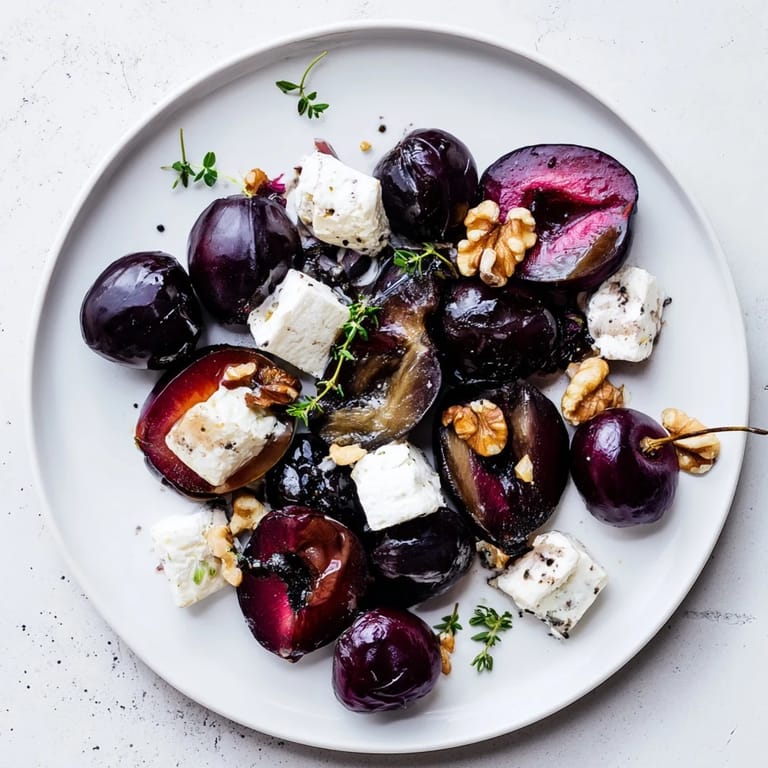
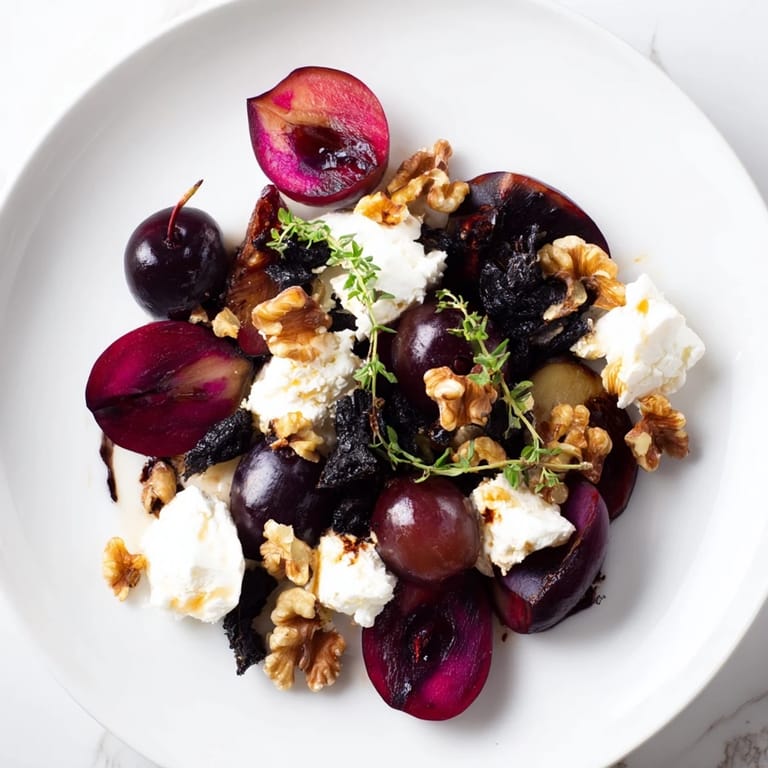
 I discovered this platter on a late evening when friends texted that they were stopping by, and I had maybe twenty minutes to transform what was in my kitchen into something that looked intentional. The dark cherries caught my eye first, their deep purple almost black in the lamplight, and I realized how rarely we arrange fruit to actually be beautiful. That night, the simplicity of it—just quality ingredients on a board—felt like the most generous thing I could offer.
My mom came over once and watched me arrange this, and she said it reminded her of a still life painting she'd seen years ago—something about the purple tones against the pale cheese. We ended up talking for hours over this platter, and I realized that sometimes the most memorable meals aren't elaborate, they're just honest.
Ingredients
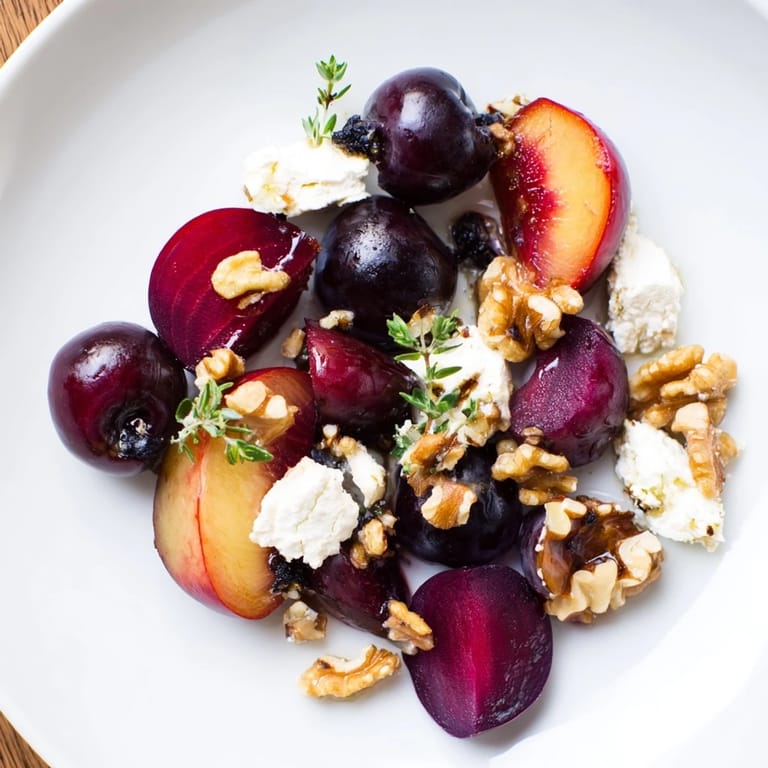
- Dark cherries: These need to be truly ripe and sweet, the kind that stain your fingers. Pit them just before serving so they don't oxidize and turn sad.
- Ripe plums: Look for ones with a little give when you press them gently. The sweetness matters here more than any other element.
- Purple grapes: Halving them helps the flavors feel more intimate and prevents them from rolling around the board like fugitives.
- Black-ashed goat cheese: This is the anchor of everything, creamy but with that subtle mineral quality. Slice it just before serving if you can, though crumbles work beautifully too.
- Toasted walnuts: They add a whisper of bitterness and crunch that surprises people in the best way.
- Honey: Just a drizzle, because you want people to taste the fruit and cheese, not sweetness.
- Fresh thyme: Use it for both beauty and flavor—it bridges the earthy cheese and bright fruit like a quiet conductor.
Tired of Takeout? 🥡
Get 10 meals you can make faster than delivery arrives. Seriously.
One email. No spam. Unsubscribe anytime.
Instructions
- Pit and prep the cherries:
- Split each cherry in half and remove the pit. This takes a few minutes but matters because whole cherries can be clumsy to eat when you're holding a small plate.
- Slice the plums:
- Cut them into wedges that feel generous in your hand. Don't make them too thin or they'll tear; aim for about a quarter inch.
- Halve the grapes:
- This small step prevents them from rolling and makes them easier to pair with cheese.
- Arrange with intention:
- Think of the platter as a painting. Group the fruits by color, leaving space between them so the eye can rest. Place the cheese in a strategic spot—I like an off-center placement that feels more natural than perfect symmetry.
- Add the walnuts and honey:
- Scatter walnuts across the board, then drizzle honey in a thin thread. Restraint here makes the impact bigger.
- Finish with thyme:
- Tuck sprigs between the fruit and cheese like you're setting a stage. Serve right away, while everything is cool and the colors are at their most vivid.
 Save Pin
 One guest told me that this platter felt like a permission slip to slow down, to actually taste things instead of just eating them. That stuck with me.
Why This Feels Like Abundance
There's something about a fruit and cheese board that says you've thought about your guests without fussing. Each person builds their own bites, which turns eating into a small act of creativity. I've learned that the best entertaining isn't about showing off; it's about making people feel like their time with you is worth slowing down for.
Pairing and Serving
I keep this platter simple because the ingredients speak for themselves, but the right drink transforms it into something almost ceremonial. A dry sparkling wine cuts through the richness of the cheese and lifts the fruit. A light-bodied red like Pinot Noir echoes the dark tones of the cherries. Even still water with a lemon wedge works if that's what you have.
Making It Your Own
Once I added thin slices of toasted baguette, and someone called it the bridge between snack and meal. Another time I swapped the walnuts for almonds because that's what was in the pantry, and honestly, it was just as good. The structure stays the same, but the variations let you cook with what's honest about your season and your kitchen.
- For a vegan version, plant-based ash-coated cheeses exist and they're actually delicious.
- If you can't find black-ashed goat cheese, use any goat cheese and dust it with activated charcoal or fine sea salt mixed with herbs.
- Serve this at room temperature for maximum flavor, but keep it in a cool spot until the last moment.
 Save Pin
 This platter reminds me that elegance doesn't require recipes with twenty steps or ingredients you've never heard of. Sometimes it's just about knowing what's good and letting it be good.
Recipe FAQs
- → What fruits are used in this platter?
Dark cherries, ripe plums, and purple grapes are the primary fruits featured, each providing a balance of sweetness and tartness.
- → Can I substitute the black-ashed goat cheese?
Yes, for a vegan option, you can use a plant-based ash-coated cheese to maintain the distinctive look and flavor.
- → How should the fruits be prepared?
Cherries should be pitted and halved, plums sliced into wedges, and grapes halved to create bite-sized, easy-to-enjoy pieces.
- → Are there any recommended garnishes?
Toasted walnuts add crunch, honey provides subtle sweetness, and fresh thyme sprigs lend aromatic freshness.
- → What beverages pair well with this selection?
A dry sparkling wine or a light-bodied red wine complements the flavors beautifully.