 Save Pin
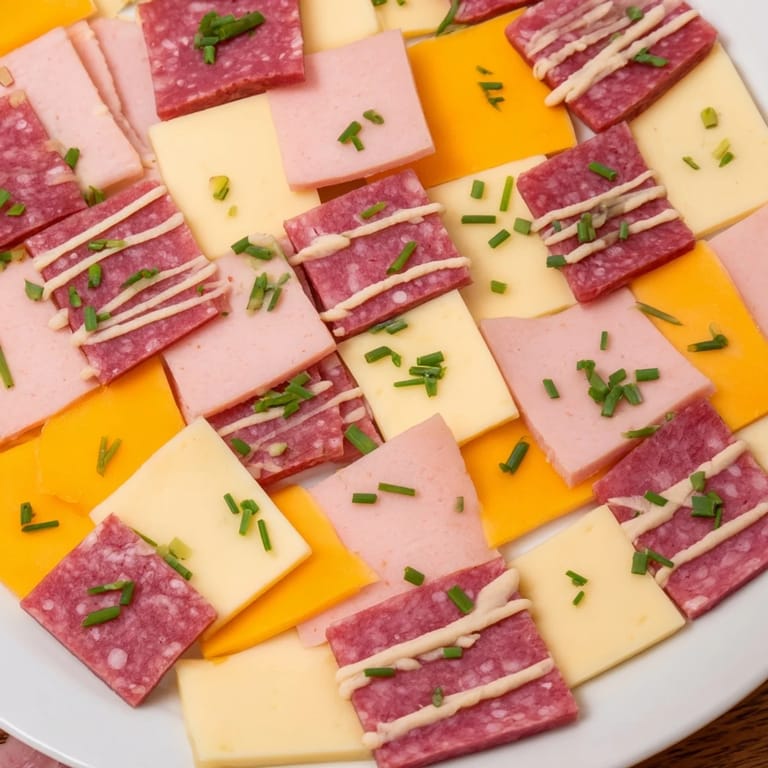
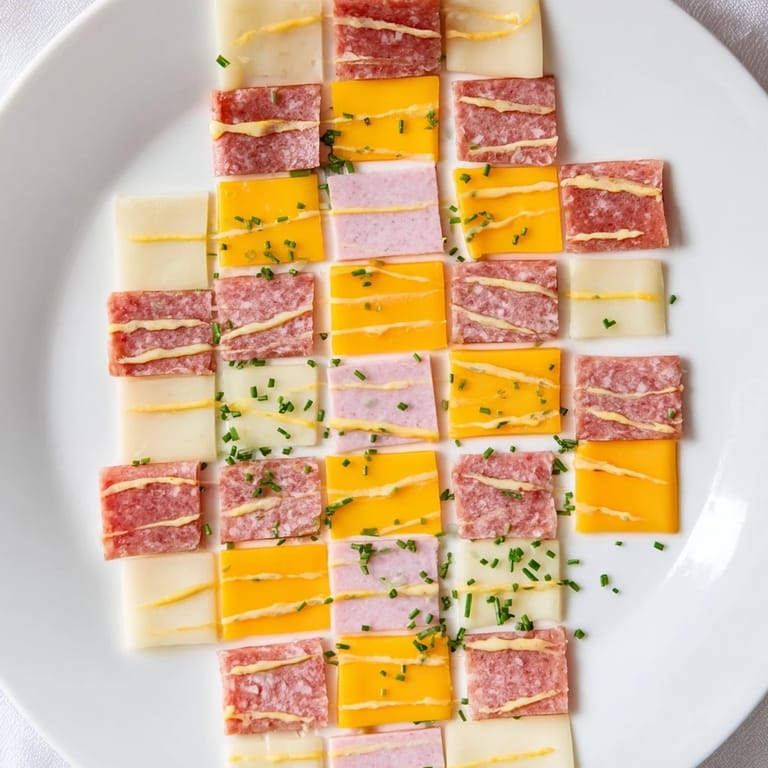
 I discovered the magic of food architecture at a dinner party where I was frantically assembling appetizers, and decided to turn a simple meat and cheese board into something playful. The moment I arranged the first squares in a checkerboard pattern and drew mustard lines between them, my friend laughed and said, "It looks like a quilt my grandmother made." That simple observation sparked something, and suddenly this wasn't just food—it was edible art that people would actually want to photograph before eating.
I made this for a casual Saturday gathering where everyone was supposed to bring something, and I showed up with my platter feeling a little uncertain. Within minutes, it became the conversation starter—not because it was complicated, but because people were genuinely delighted by the unexpected playfulness of it. Watching someone choose their first square with deliberation, tasting the interplay of mustard and meat, felt like a small victory.
Ingredients
- Smoked turkey breast, sliced (100 g): The leanest of your meats, it brings a subtle smokiness without overwhelming the board; slice it yourself if you can, as deli slicing is sometimes too thin for clean squares.
- Salami, sliced (100 g): This is your bold flavor anchor, adding richness and visual depth; choose one with good marbling so it doesn't look flat.
- Ham, sliced (100 g): The gentle middle player that keeps things balanced and familiar; look for quality ham that isn't too rubbery or overly processed.
- Swiss cheese, sliced (100 g): Those characteristic holes create visual interest and a mild, nutty flavor that doesn't compete with the mustard lines.
- Sharp cheddar, sliced (100 g): This brings color and personality; its boldness pairs beautifully with whole grain mustard in particular.
- Provolone, sliced (100 g): Slightly smoky and creamy, it bridges the gap between the milder Swiss and more assertive cheddar.
- Whole grain mustard (2 tbsp): The texture of the seeds makes the mustard lines visible and adds a gentle crunch that feels intentional.
- Dijon mustard (2 tbsp): Smoother and sharper, it creates visual contrast against the whole grain and cuts through the richness beautifully.
- Fresh parsley or chives, finely chopped (optional): A whisper of fresh green that catches the light and signals that someone actually cared about the details.
Tired of Takeout? 🥡
Get 10 meals you can make faster than delivery arrives. Seriously.
One email. No spam. Unsubscribe anytime.
Instructions
- Square everything up:
- Cut meats and cheeses into uniform 2-inch squares using a sharp knife on a clean board; uniform size matters more than you'd think because uneven pieces break the quilt pattern and make the whole board look accidental instead of intentional.
- Build your pattern:
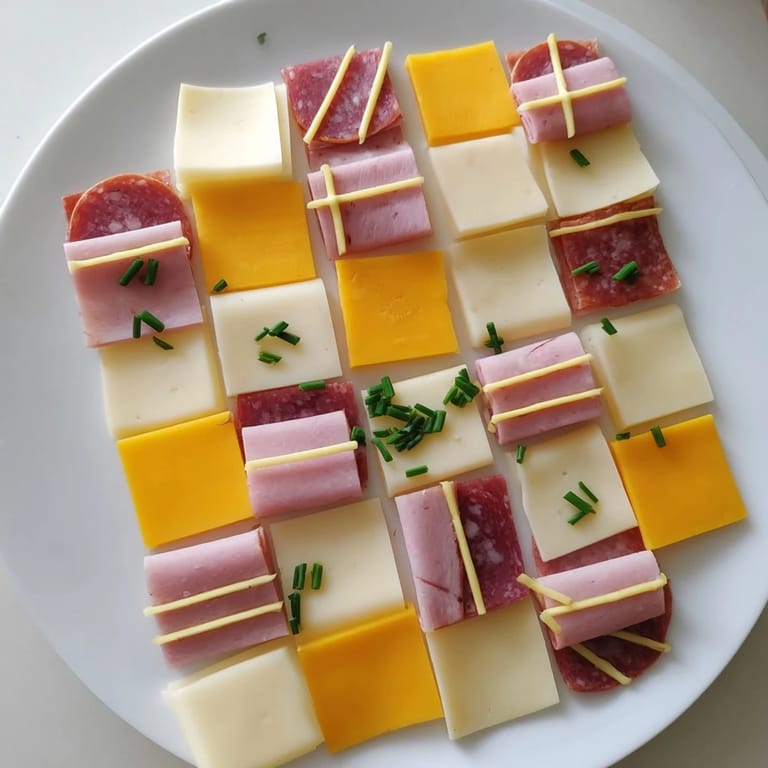
- Arrange the squares on your platter in a checkerboard or patchwork design, alternating meats and cheeses so the colors play off each other; step back and look at it from different angles because what looks good close up might need tweaking from across the room.
- Stitch with mustard:
- Load a squeeze bottle or piping bag with whole grain mustard and draw lines between the squares like thread stitching through fabric, then repeat with Dijon mustard in the opposite direction; this is where the playfulness happens, so don't overthink the precision.
- Add your finishing touch:
- Sprinkle fresh parsley or chives across the top if you're using them; this gives the board a final moment of freshness that keeps it from feeling too heavy.
- Serve with intention:
- Have toothpicks or small forks nearby and serve immediately while everything is still cool and crisp; the longer it sits, the less defined your mustard lines will be.
 Save Pin
 The moment someone used a toothpick to pick up a cheddar square with just the right amount of mustard, bit into it, and then looked around the table with genuine delight—that's when I realized this wasn't just about having something to eat. It was about creating a moment where people could engage with food as something playful and intentional.
Playing With Color and Texture
The real secret to making this work isn't precision—it's contrast. You want colors that pop against each other, textures that vary so your eye stays interested. I learned this by experimenting with different cheese combinations, discovering that the pale Swiss next to the deep orange cheddar creates visual rhythm that makes the whole board feel more composed. Think about what you're looking at as much as what you're eating.
Making It Your Own
Once you understand the basic structure, this becomes your canvas. I've added roasted red pepper squares, cucumber slices, and even thin strips of smoked salmon to make it seasonally interesting. The guidelines are loose—the only rule is that your ingredients should work well together and create a visual story. Some boards tell a Spanish story with jamón and manchego; others whisper elegance with prosciutto and burrata.
Serving and Pairing Wisdom
This board is forgiving and flexible, which is exactly why it works as an appetizer. Serve it with toothpicks for a purely meat-and-cheese experience, or set out sliced baguette and water crackers nearby for those who want them. A crisp white wine or light beer finds its way beautifully alongside this—the acidity or carbonation cuts through the richness and prepares your palate for the next bite.
- Prep everything an hour ahead and refrigerate, then assemble just before serving so the mustard lines stay sharp and defined.
- If you're making this for a crowd and concerned about it sitting out, keep it on ice and replenish it with a fresh platter halfway through the party.
- Remember that the visual presentation is half the appeal, so spend that extra minute making sure your lines are deliberate and your arrangement feels intentional rather than random.
 Save Pin
 The Patchwork Quilt is a reminder that appetizers don't have to be complicated to be memorable. It's about taking everyday ingredients and treating them with a bit of intention and playfulness, creating something that feeds both the eye and the body.
Recipe FAQs
- → What types of meats work best for this dish?
Smoked turkey, salami, and ham sliced into uniform squares create a balanced combination of flavors and textures.
- → Which cheeses complement the meats well?
Swiss, sharp cheddar, and provolone offer a tasty mix that pairs nicely with the assortment of meats.
- → How do the mustard lines enhance the presentation?
Alternating whole grain and Dijon mustard form 'stitching' lines that add tang and make the platter visually appealing.
- → Can fresh herbs be included?
Sprinkling fresh parsley or chives on top adds color and a subtle aromatic touch.
- → What serving suggestions pair well with this dish?
Offering sliced baguette, crackers, or pairing with crisp white wine or light beer complements the flavors beautifully.