 Save Pin
 I stumbled onto the concept of flatbread rafts at a dinner party where someone's charcuterie board tipped over mid-serving, and in that chaotic moment of salvaging scattered meats and cheeses, I realized they'd taste infinitely better on warm, garlicky flatbread than balanced precariously on edges. The Rustic Raft was born from that friendly disaster, and it's become my go-to when I want to look effortlessly sophisticated while actually just piling good things onto bread.
Last spring, I made this for a garden gathering and watched someone try a bite of prosciutto-brie-basil together for the first time, and their face just lit up like they'd discovered something they didn't know they were missing. That's the magic of this dish—it's not complicated, but when you let people mix and match their own combinations, something genuinely special happens on each plate.
Ingredients
- Flatbreads (lavash, naan, or ciabatta): Three large rectangular ones give you enough surface area to pile generously without toppling; avoid thin wraps that'll turn into shards.
- Olive oil: Two tablespoons is enough to brush each flatbread lightly and help them crisp in the oven.
- Garlic clove: One small minced clove scattered across the oil adds subtle depth without overpowering the delicate meats.
- Prosciutto: Four ounces of paper-thin slices bring salty elegance; buy from a good deli counter if possible.
- Salami: The same weight gives you a spicy contrast that balances the milder turkey and creamy cheeses.
- Smoked turkey breast: Four ounces thinly sliced keeps things lean while adding smoky flavor that plays well with everything else.
- Soppressata or chorizo: Four ounces adds a peppery kick that ties the whole composition together.
- Brie: Four ounces sliced thin will soften on the warm bread and create creamy pockets between other layers.
- Aged cheddar: Four ounces of sharp slices provides familiar comfort and complexity.
- Manchego: Four ounces brings a slightly nutty, dense texture that holds up well against softer cheeses.
- Blue cheese: Three and a half ounces crumbled gives a bold pop that either delights people or makes them skip that section—there's no middle ground.
- Seedless grapes: One cup halved adds sweetness and surprising juiciness when you bite into them with salty meat.
- Cherry tomatoes: One cup halved brings acidity and freshness that cuts through the richness.
- Marinated olives: Half a cup offers brininess and texture; drain them well so they don't make the bread soggy.
- Roasted red peppers: Half a cup sliced bring sweetness and a silky texture that works with almost every combination.
- Fresh basil: Quarter cup of whole leaves scattered on top at the very end stays bright and fragrant instead of bruised.
- Honey or fig jam: Quarter cup on the side lets people drizzle as much sweetness as they want to balance savory bites.
Tired of Takeout? 🥡
Get 10 meals you can make faster than delivery arrives. Seriously.
One email. No spam. Unsubscribe anytime.
Instructions
- Heat your raft foundations:
- Preheat your oven to 200°C (400°F), then brush each flatbread generously with olive oil and scatter the minced garlic evenly across. Warm them for 5 to 7 minutes until they're lightly crisped and smell incredible.
- Arrange your canvas:
- Pull the warm flatbreads out and lay them on a large wooden board or platter, spacing them apart like you're creating individual serving zones. The warmth will keep everything from sliding around and will gently soften the cheeses.
- Build the layers:
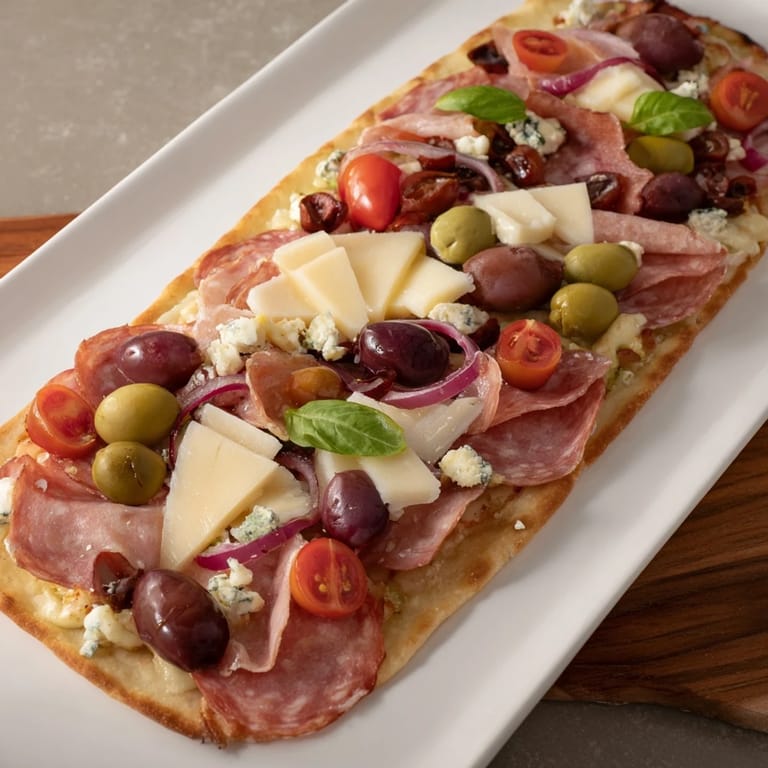
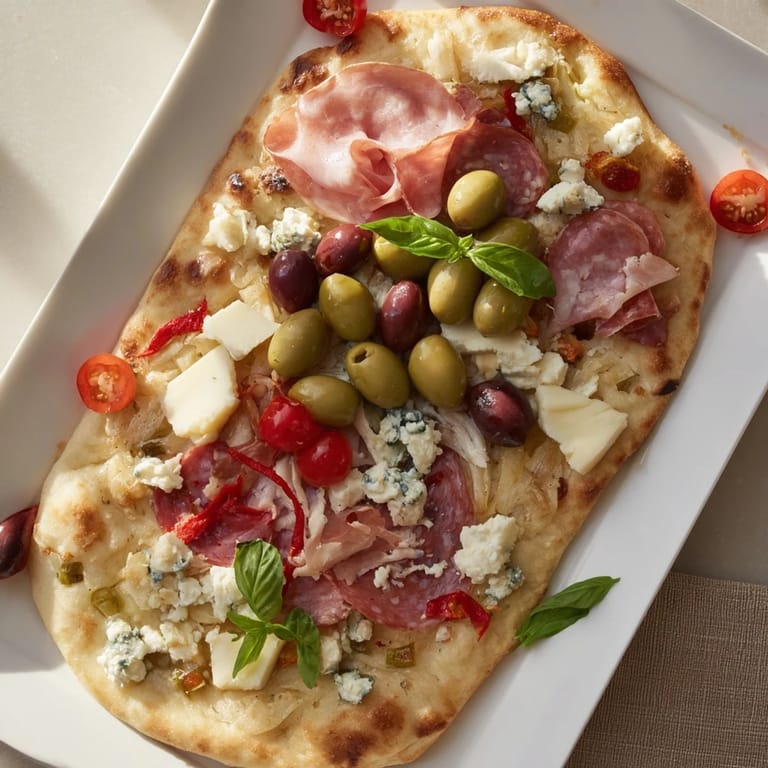
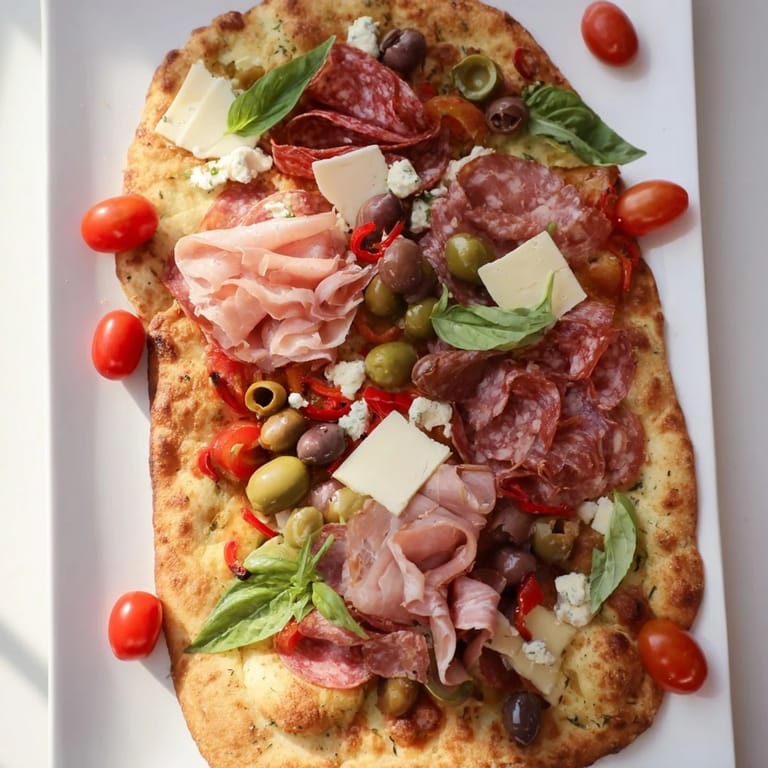
- Start layering your meats and cheeses across each flatbread, alternating types so each bite offers different flavors and textures. Don't be shy—overlap them generously and let them touch.
- Fill the spaces:
- Scatter your halved grapes, cherry tomatoes, marinated olives, and roasted red peppers in the gaps and across the top, filling the board like you're a painter and these ingredients are your colors. The variety of shapes and colors is half the appeal here.
- Final flourish:
- Tear or scatter fresh basil leaves over everything at the last possible moment so they stay bright and don't bruise. Place your honey or fig jam in a small bowl nearby for people to use as they wish.
- Invite and observe:
- Set it all out and encourage guests to break off pieces of flatbread with their chosen toppings, building their own perfect bite each time they reach for more.
 Save Pin
 I learned the hard way that platters like this are less about perfection and more about abundance and permission—permission for people to eat however they want, to skip the blue cheese if it's not their thing, to pile extra prosciutto if they love salt. That shift in thinking made these gatherings so much more joyful.
How to Mix Flavors Like You Know What You're Doing
The secret is thinking in flavor pairs rather than random combinations: prosciutto loves honey and fig jam, so encourage people to reach for those when they take a slice. Blue cheese pairs unexpectedly well with grapes, which is why I always cluster them together. Cherry tomato and basil are classic teammates, and manchego's subtle nuttiness bridges between the sharp cheddar and creamy brie.
Customizing Without Losing the Plot
The beauty of this approach is that you can swap almost any component based on what you find at the market or what your crowd actually eats. Can't find manchego? Use emmental or gouda instead. Don't have soppressata? Pancetta or even good quality ham works just fine. The structure stays the same; it's really about quality individual ingredients that taste good on their own.
Wine, Timing, and Other Practical Matters
This dish lives best alongside crisp white wines or very light reds that won't overpower the delicate meats and cheeses. Make it during that 20-minute window before your guests actually arrive—close enough to the deadline that everything still feels fresh, but far enough ahead that you're not panicking. If you want to add extra texture, scatter Marcona almonds or pickled vegetables across the top, but remember you're building edible rafts, not toppling towers.
- Taste as you assemble to catch any flavor imbalances before serving.
- Keep a small damp cloth nearby to wipe your hands between handling different ingredients.
- Serve at room temperature unless your kitchen is very warm, then keep it on ice.
 Save Pin
 At its heart, The Rustic Raft is less a recipe and more an invitation—to slow down, to build your own perfect bite, to taste how flavors talk to each other when you're paying attention. That's when food becomes memorable.
Recipe FAQs
- → What types of flatbreads work best for this dish?
Rectangular flatbreads like lavash, naan, or ciabatta are ideal for their size and texture, holding toppings well when warmed.
- → Can I substitute the meats and cheeses?
Yes, feel free to swap meats and cheeses based on preference or availability while maintaining a balance of flavors.
- → How should the flatbreads be prepared before adding toppings?
Brush with olive oil and minced garlic, then warm in the oven until slightly crisp to enhance flavor and texture.
- → What sides complement the flatbreads?
Fresh grapes, cherry tomatoes, olives, roasted red peppers, and basil leaves add color and contrasting flavors.
- → Is this suitable for large gatherings?
Yes, the shareable style makes it perfect for social settings, encouraging guests to pick their favored combinations.