 Save Pin
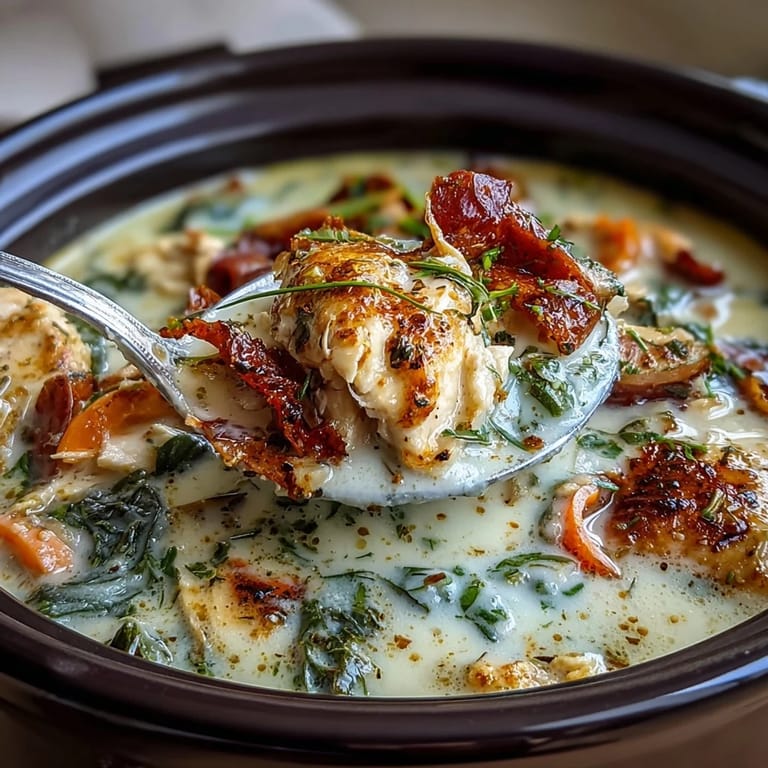
 My neighbor stopped by on a particularly gray Tuesday afternoon, and the smell of this soup simmering in my slow cooker seemed to pull her right into the kitchen. She hadn't planned to stay, but somehow we ended up talking for hours while the pot did all the work, the broth darkening to a rich golden amber. That's when I realized this soup wasn't just about feeding people—it was about creating a moment where time felt less urgent. The slow cooker does something magical: it transforms simple ingredients into something that tastes like it took all day to perfect, yet requires almost no effort from you.
I made this for my partner after he came home exhausted from a difficult week, and watching him taste it—that moment where his shoulders actually dropped—reminded me why I cook. A single bowl somehow held both the warmth we needed and the quiet reassurance that some things don't require perfection to be exactly right.
Ingredients
- Boneless, skinless chicken breasts or thighs (1.5 lbs): Thighs stay more tender through the long cook, but breasts work beautifully too—just don't skip the shredding step, as it transforms them into silky strands that disappear into the broth.
- Yukon Gold or Russet potatoes (2 cups diced): These varieties hold their shape during the slow cook without turning mushy, and Yukon Golds add a subtle sweetness that deepens the overall flavor.
- Carrots and celery (1 cup each diced): They're the quiet backbone of flavor here, softening into sweet, tender pieces that thicken the soup naturally as they break down.
- Frozen peas (1 cup): Don't use fresh or thawed peas—frozen peas hold their color and texture better when added near the end, creating those little bursts of brightness.
- Onion and garlic (1 medium onion diced, 3 cloves minced): The onion caramelizes slightly during cooking, building depth, while garlic keeps the flavor sharp and honest rather than one-note sweet.
- Low-sodium chicken broth (4 cups): Low-sodium is essential because you'll be reducing the liquid slightly and concentrating flavors, so regular broth would become oversalted.
- Whole milk and heavy cream (1 cup milk, 1/2 cup cream): This combination strikes a balance—the cream adds richness without making it feel heavy, while milk keeps it approachable and silky.
- All-purpose flour (1/3 cup): The roux method creates a silky texture that clings to the vegetables and chicken instead of making the soup grainy.
- Unsalted butter (3 tbsp): Butter carries flavor in a way oil simply cannot, and it's the foundation of a proper roux that transforms the broth into something luxurious.
- Dried thyme, parsley, rosemary, and bay leaf: Together they create that unmistakable pot pie seasoning profile—earthy and warm without being aggressive, letting the chicken shine.
- Salt and black pepper: Taste before serving because slow cookers concentrate flavors unpredictably, and you may need less salt than you'd expect.
Tired of Takeout? 🥡
Get 10 meals you can make faster than delivery arrives. Seriously.
One email. No spam. Unsubscribe anytime.
Instructions
- Layer everything into the slow cooker:
- Arrange the chicken breasts on the bottom, then scatter the diced potatoes, carrots, celery, onion, and minced garlic around them. Sprinkle the thyme, parsley, rosemary, bay leaf, salt, and pepper evenly over everything so the flavors distribute as they cook.
- Add the broth and start the long journey:
- Pour in the chicken broth—it should mostly cover the chicken and vegetables. Stir gently, cover, and set to low for 6 hours, resisting any urge to peek more than once or twice.
- Shred the chicken when it's tender:
- After 6 hours, the chicken will pull apart at the slightest touch with two forks. Shred it right in the pot, breaking it into bite-sized pieces that will distribute throughout the soup.
- Make a silky roux on the stovetop:
- In a separate saucepan, melt butter over medium heat until it foams slightly. Whisk in the flour steadily, cooking for 1–2 minutes until it turns pale golden and smells nutty—don't let it brown.
- Create the cream base:
- Slowly whisk the milk into the roux, then add the heavy cream, stirring constantly for 3–4 minutes until the mixture thickens enough to coat the back of a spoon. This step prevents lumps and ensures a silky texture.
- Bring everything together:
- Pour this creamy mixture into the slow cooker and stir thoroughly to combine. Add the frozen peas and mix well—the heat of the pot will warm them through.
- Final cook and seasoning:
- Cover and cook on high for 20–30 minutes until everything is heated through and the soup thickens slightly. Remove the bay leaf, then taste and adjust salt and pepper—slow cookers concentrate flavors, so you might need less than you'd expect.
- Serve with warmth and intention:
- Ladle into bowls and top with fresh parsley if you have it. A warm biscuit or puff pastry square on the side transforms it into something that feels like celebration rather than just dinner.
 Save Pin
 There's something about feeding someone a meal that took minimal effort but tastes like you spent hours thinking about them. This soup delivered that feeling to my kitchen, and I've made it dozens of times since, each time watching people's faces soften as they taste it.
Why the Slow Cooker Method Changes Everything
Traditional pot pie requires stovetop monitoring, oven time, and pie crust expertise—all wonderful skills, but not always practical for a Tuesday. The slow cooker eliminates that pressure entirely, developing flavor through low, gentle heat while you're free to do literally anything else. The broth becomes richer, the vegetables more tender without turning to mush, and the chicken practically melts into silken strands. It's proof that complexity doesn't require constant attention; sometimes it just needs time and patience.
The Science Behind the Roux
The roux—that butter and flour mixture—isn't just thickening the soup; it's transforming the texture from watery broth into something silky and cohesive that clings to each vegetable and piece of chicken. When you whisk it slowly into the milk, you're preventing lumps from forming and creating an emulsion that keeps everything suspended evenly throughout the pot. This technique also mellows the dairy, making it feel integrated rather than added-on, so your mouth experiences one unified flavor instead of separate layers.
Customizations That Honor the Original
This recipe thrives on gentle adjustments rather than major overhauls—add corn or green beans if fresh peas feel too simple, swap thyme for sage if you prefer earthier notes, or include a pinch of nutmeg if you want to whisper luxury without changing the character of the dish. Some cooks add a tablespoon of white wine to the broth for subtle depth, while others swear by a spoonful of Dijon mustard stirred in at the very end for brightness. The beauty is that you can bend this recipe without breaking it.
- A splash of white wine added to the broth deepens the flavor without tasting alcoholic after slow cooking.
- Fresh thyme stirred in just before serving reminds the soup of spring while maintaining its cozy warmth.
- Crusty bread on the side transforms a soup into a complete meal that feels substantial without heaviness.
 Save Pin
 This soup has become my answer to almost any situation—a cold evening, a stressful day, someone who needs feeding without fuss, or simply a craving for something that tastes like home. It asks very little of you and gives back warmth, comfort, and the quiet confidence that you've created something truly nourishing.
Recipe FAQs
- → What type of chicken cuts work best?
Boneless, skinless chicken breasts or thighs both work well, with thighs offering a bit more moisture.
- → Can I make this dish gluten-free?
Yes, substitute all-purpose flour with a gluten-free blend and serve with gluten-free biscuits.
- → How do I thicken the broth properly?
Make a roux with butter and flour, then slowly whisk in milk and cream to create a smooth, thickened sauce before adding to the slow cooker.
- → What vegetables are included?
This dish features potatoes, carrots, celery, onions, garlic, and peas for a variety of textures and flavors.
- → Can I prepare this ahead of time?
Yes, ingredients can be combined and refrigerated before cooking, making it convenient for busy schedules.