 Save Pin
 I remember the first time I created this platter for a dinner party, standing in my kitchen at midnight, suddenly inspired by a craving for something bold and interactive. My guests arrived the next evening, and when I unveiled this vibrant spread with its fiery red center, the entire room seemed to light up. Everyone gravitated toward it immediately, customizing their own perfect bites, and I realized that the best entertaining happens when food becomes a canvas for creativity rather than just sustenance.
My sister brought her new boyfriend to a casual gathering, and he kept returning to this platter throughout the evening, building different combinations and actually smiling with each bite. By the end of the night, he was asking for the recipe, which felt like the highest compliment. That's when I knew this platter had something special—it brings people together through play and flavor discovery.
Ingredients
- Chili flakes (2 tbsp): This is your heat anchor and visual centerpiece. Start with mild if you're uncertain about your crowd, but don't shy away from hot—the other elements balance the intensity beautifully.
- Fresh red chili peppers (2 peppers, thinly sliced): These bring both heat and a fresh brightness that dried flakes alone can't deliver. Keep the seeds if you want serious heat; remove them for a gentler touch.
- Fresh jalapeño (1, sliced): The green adds visual contrast and a different flavor profile—slightly grassy and less intense than red peppers, which gives people options.
- Sharp cheddar cheese (100 g, cubed): The tang here cuts through richness and complements the heat perfectly. Don't use mild cheddar; you need that assertiveness.
- Pepper jack cheese (100 g, cubed): This cheese brings its own subtle heat, so you're layering spice intelligently rather than just piling on burn.
- Feta cheese (100 g, crumbled): The creamy, briny counterpoint that makes the platter feel sophisticated and balanced.
- Spicy chorizo (80 g, sliced): Optional but recommended if your crowd eats meat. It ties the whole spicy theme together with smoky, complex flavors.
- Soppressata (80 g, sliced): Milder than chorizo but brings its own cured depth, creating texture variety in the meat selection.
- Cherry tomatoes (1 cup, halved): These burst with sweetness, offering the most crucial balance to all the heat and salt on this platter.
- Red bell pepper (1, sliced into strips): Sweet and slightly smoky, it creates another visual element while cooling the palate naturally.
- Cucumber (1, sliced): The hydrating, cooling element that people will reach for repeatedly between spicy bites—don't leave it out.
- Radishes (1/2 cup, sliced): Their peppery crunch adds sophistication and prevents the platter from feeling too predictable.
- Spicy hummus (1/2 cup): A creamy, protein-rich dip that lets people add heat on their own terms by using it as a vehicle for the peppers and chili.
- Roasted red pepper spread (1/2 cup): The sweet, smoky element that rounds out your dips and adds beautiful color contrast.
- Pita chips (1 cup): Your sturdy base for building proper bites; they hold up to aggressive topping and deliver satisfying crunch.
- Multigrain crackers (1 cup): These add texture variety and appeal to people who prefer a more substantial vehicle for toppings.
- Vegetable sticks (1 cup mixed carrots and celery): The raw, clean option for guests who want to eat lighter or need a palate cleanser between spicy adventures.
Tired of Takeout? 🥡
Get 10 meals you can make faster than delivery arrives. Seriously.
One email. No spam. Unsubscribe anytime.
Instructions
- Build Your Canvas:
- Start with a large platter—we're talking at least 14 inches in diameter. This isn't just practicality; the space lets you create the radiating pattern that makes this special. If you're serving six people casually, go even larger.
- Create the Fiery Center:
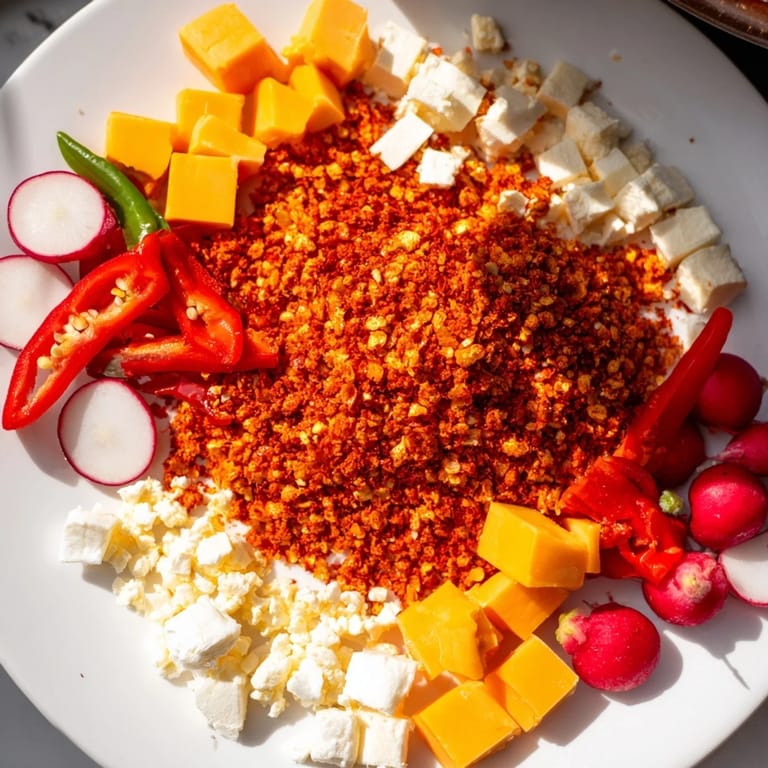
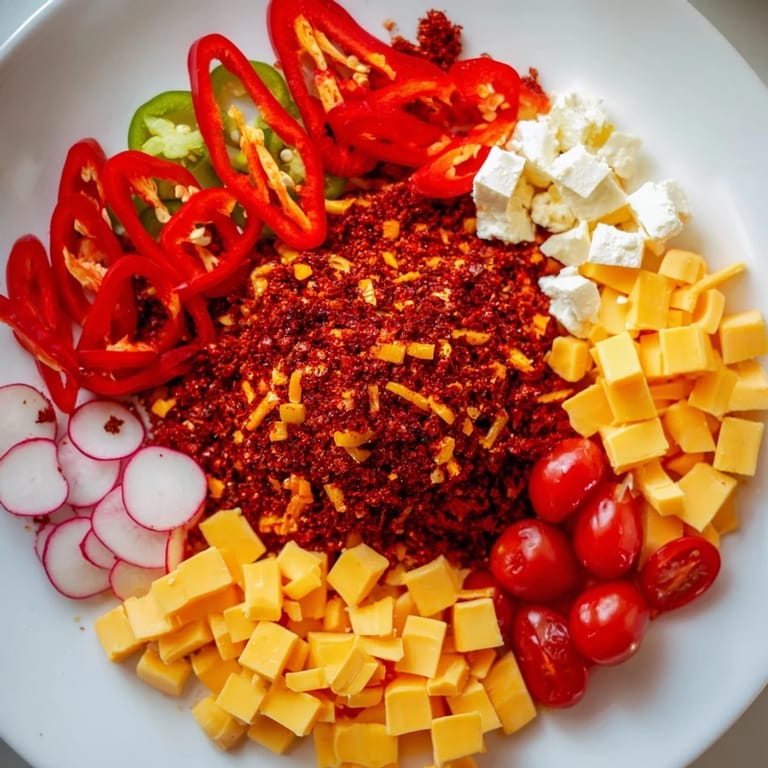
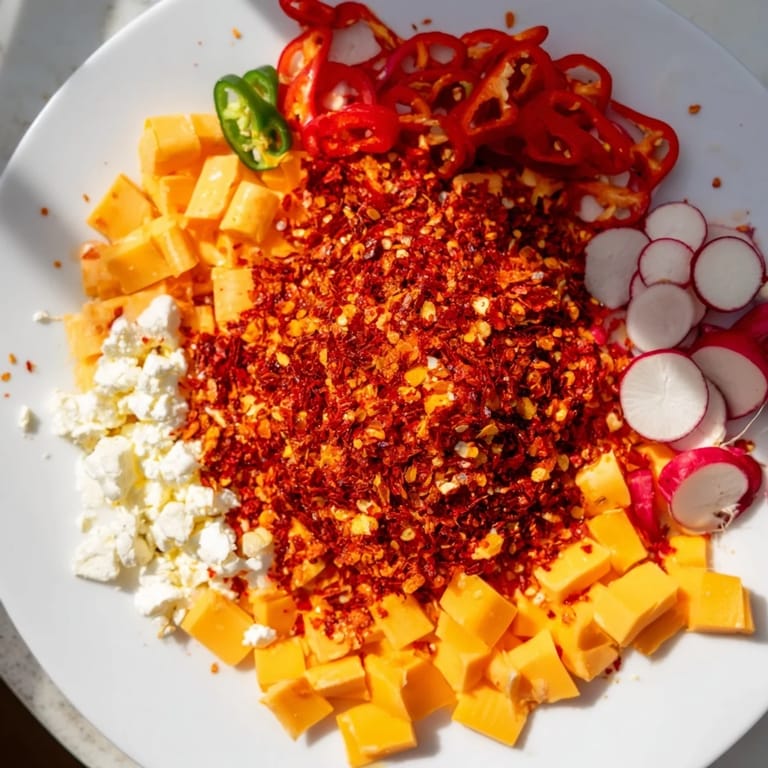
- In a small bowl or directly on the platter, arrange your chili flakes and sliced peppers as a vibrant mound. Make it look intentional and beautiful, almost like you're creating edible art. This is the visual hook that catches everyone's eye first.
- Establish Your First Ring:
- Working outward from the center, create distinct sections for each element. Start with your cheeses, leaving small gaps between cubes so people can actually pick them up. Think of this like creating sections of a pie, with each element getting its own slice of space.
- Add the Protein Layer:
- If using cured meats, overlap them slightly in their designated section. This prevents them from drying out as quickly and creates an intentional, elegant presentation that looks purposeful rather than haphazard.
- Fill With Vegetables and Refreshment:
- Place fresh vegetables in their own sections, clustered but distinct. Cherry tomatoes in one area, bell pepper strips in another, cucumber rounds in their own space. This organization actually helps guests navigate flavors intuitively.
- Add Your Dips and Crunchy Elements:
- Tuck your small bowls of hummus and roasted red pepper spread into the arrangement, or place them at the cardinal points of your platter. Arrange crackers and pita chips in their own sections, creating visual completeness.
- Final Flourish and Service:
- Step back and look at your creation. Adjust any sections that feel empty. The entire platter should feel generous but organized. Serve immediately, allowing guests the joy of discovering their own perfect combinations as they navigate this edible landscape.
 Save Pin
 I'll never forget watching a nervous home cook attempt this platter for the first time, hesitant about whether it would be impressive enough. By the time her guests started mingling around it, creating their own flavor combinations and actually talking about how the sweetness of tomato balanced the heat of the peppers, she had the biggest smile on her face. Food isn't impressive because it's complicated—it's impressive because it brings people joy.
Understanding the Heat Balance
The genius of this platter isn't actually the spice itself—it's how the spice interacts with everything around it. When someone takes a sliver of jalapeño followed by a cherry tomato, they're not just experiencing heat and sweetness in isolation. They're discovering how heat enhances other flavors, how it makes sweetness more pronounced, how it needs the cooling touch of cucumber to feel balanced. This is why you'll see people keep coming back: they're not chasing pure fire, they're chasing those perfect combinations. Start by building your bite consciously, then let your guests discover their own sequences. Someone might love chili flake directly on feta. Someone else might need a full hero's journey through hummus before tackling the center. Both are perfectly valid, and that's the beauty of interactive eating.
Customizing Your Platter for Your Crowd
The framework here is flexible enough to meet different dietary needs without losing its essential identity. Going fully vegan? Swap the cheeses for cashew-based alternatives and the meats for roasted seasoned chickpeas or spicy nuts. If your crowd skews more conservative with heat, replace those hot peppers with slightly milder options and let the chili flakes be the only serious spice element. The underlying principle stays the same: you're creating a visual and flavor landscape that lets people take control of their own experience. That's actually more impressive than forcing everyone into the same heat level because it shows you're thinking about your guests as individuals rather than a monolith.
Why Presentation Actually Matters Here
When you're making something that requires zero cooking skill, the presentation becomes your entire message. A carelessly thrown-together platter says you didn't care much about this. A thoughtfully arranged one—with distinct sections, color balance, and intentional spacing—communicates that you put genuine thought into your guests' experience. I've learned that people eat with their eyes first, their hands second, and their mouths last. This platter respects all three senses. The radiating pattern isn't just pretty; it's functional. It helps people navigate what might otherwise feel overwhelming. It shows them where to start, how to move, and that everything here has a purpose. When your presentation is this strong, people relax and enjoy themselves more.
- Use odd numbers when repeating elements (three types of cheese instead of two, five radish clusters instead of four) for visual interest.
- Leave actual empty space on the platter—don't fill every inch. White space prevents visual chaos and lets each element shine.
- Place your biggest, boldest elements first (the cheese cubes, the meat), then fill around them with smaller, delicate items like radish slices and tomato halves.
 Save Pin
 This platter isn't just appetizer protocol—it's permission to play with food again like you did as a kid. Make it, watch people light up, and remember that the best entertaining happens when you stop stressing about perfection and start creating joy.
Recipe FAQs
- → How can I adjust the heat level of the platter?
Select milder or hotter chili flakes and fresh peppers according to your preference to control the spice intensity.
- → What vegetarian options are available for this platter?
Omit cured meats and substitute cheeses with plant-based alternatives to suit vegetarian diets.
- → Which dips complement the spicy core best?
Spicy hummus and roasted red pepper spread provide creamy textures that balance the heat.
- → How should the platter be arranged for best presentation?
Place the chili flakes and sliced peppers as a central mound, then arrange cheeses, vegetables, dips, and sides radiating outward for a striking visual effect.
- → Can I add other ingredients for variety?
Pickled jalapeños, spicy olives, or roasted nuts can enhance flavors and add extra textures.