 Save Pin
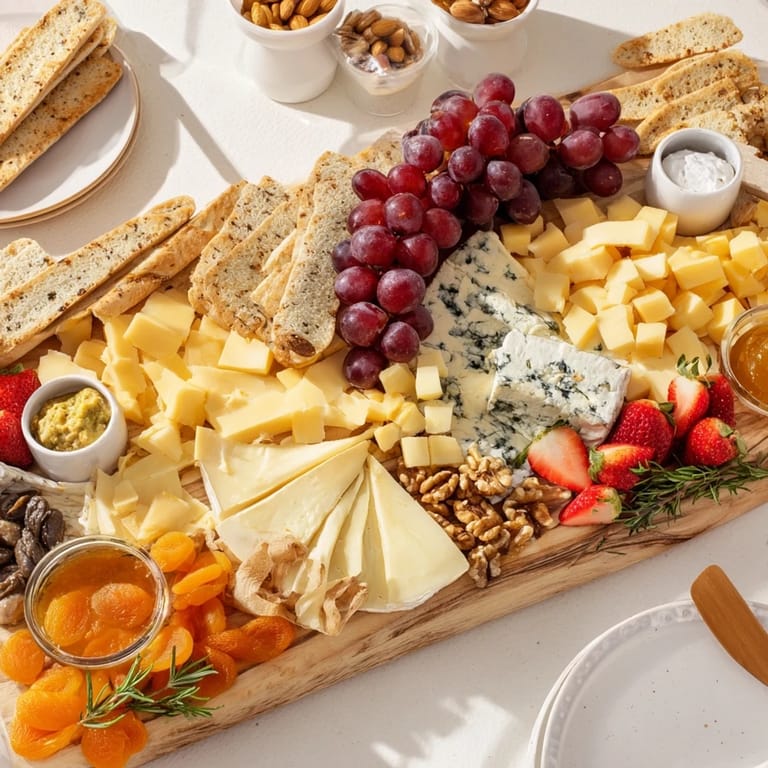
 I discovered the magic of the waterfall grazing board at a dinner party where I'd arranged everything meticulously on a standard board—until my friend nudged the table and suddenly, a cascade of cheese tumbled dramatically over the edge. Instead of panicking, I leaned into it. That happy accident became the entire concept: a board designed to look intentionally abundant and theatrical, with ingredients flowing like edible waterfalls. Now whenever I set one up, guests arrive to find half the feast already spilling onto the table, creating this sense of organized chaos that somehow makes everything taste better.
I remember setting this board up for a surprise birthday gathering, and watching my usually quiet friend's eyes light up when she walked in. She didn't even sit down at first—she just stood there, phone out, circling the table to capture it from every angle. Later she told me it was the most 'Instagram-worthy' thing she'd ever seen in person, but what mattered more was that everyone felt invited to something special the moment they entered the room.
Ingredients
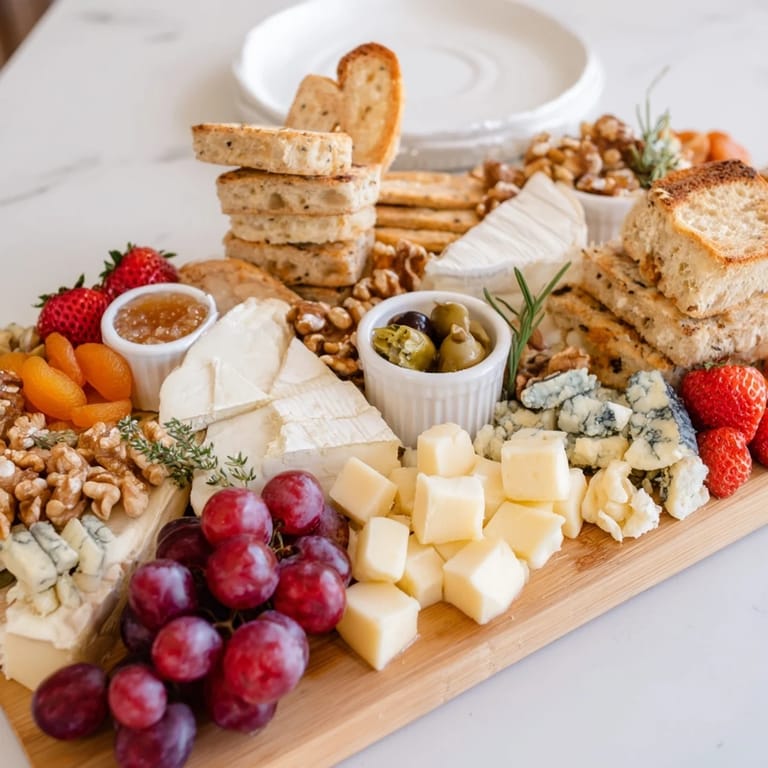
- Brie, sliced (150 g): Its creamy texture and delicate flavor become even more luxurious when layered to cascade—slice it thickly so pieces hold their shape as they spill.
- Aged Cheddar, cubed (150 g): The sharpness cuts through richness and those golden cubes catch light beautifully as they tumble down.
- Blue cheese, crumbled (100 g): Use just enough to add visual contrast and depth; a little goes a long way, and crumbles scatter naturally.
- Goat cheese, sliced (100 g): Its bright tang and creamy-crumbly texture make it perfect for tucking into gaps along the waterfall edge.
- Prosciutto (100 g): Fold it loosely and drape it like fabric—the delicate folds enhance the cascading illusion.
- Salami, sliced (100 g): Choose quality sliced salami that holds together; it adds color and a salty anchor.
- Red grapes in small clusters (1 cup): Their natural roundness and weight help them nestle convincingly at the board's edge and tumble onto the table.
- Strawberries, halved (1 cup): Fresh berries add moisture and brightness; halving them shows off their interior beauty as they cascade.
- Blueberries (1/2 cup): These little spheres roll naturally off edges, creating a playful, organic look.
- Pear, thinly sliced (1): Slice just before assembly so it doesn't brown; the delicate slices bend gracefully as they fall.
- Dried apricots (1/2 cup): Their warm color adds visual richness, and they tuck into any crevice needing filling.
- Dried figs, halved (1/2 cup): Deep and jewel-toned, figs look intentional as they spill, almost like they're meant to escape.
- Almonds (1/3 cup): Scatter loosely so they roll and settle naturally down the waterfall rather than stacking rigidly.
- Walnuts (1/3 cup): Their irregular shape adds organic texture and visual interest as they tumble.
- Baguette, sliced and toasted (1): Toast slices to golden crispness so they hold up to handling and dipping; prop some vertically for dramatic effect.
- Assorted crackers (150 g): Choose a mix of shapes and sizes so some can lean, stack, and appear mid-fall for visual drama.
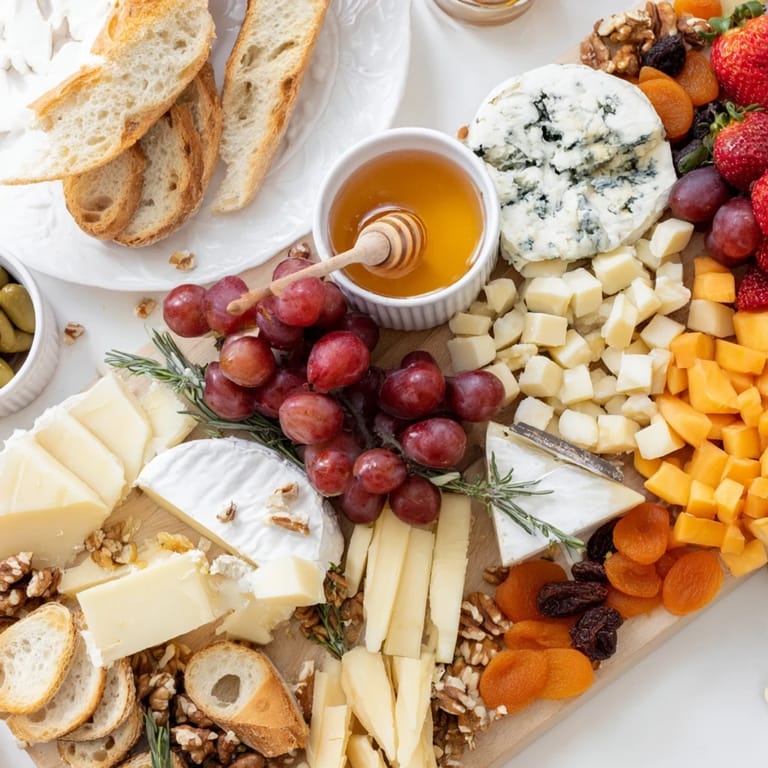
- Honey (1/4 cup): Pour into a small ramekin and let a few drips spill over the edge for visual continuity with the cascading theme.
- Fig jam (1/4 cup): Deep purple or brown jam adds another color layer and pairs beautifully with soft cheeses.
- Mixed olives (1/4 cup): Scatter some across the board and a few trailing down to the table for cohesive visual storytelling.
- Fresh herbs—rosemary and thyme: Use sprigs to fill gaps and add fragrance and color that ties everything together.
Tired of Takeout? 🥡
Get 10 meals you can make faster than delivery arrives. Seriously.
One email. No spam. Unsubscribe anytime.
Instructions
- Set Your Stage:
- Position your wooden board so one edge extends near—or even slightly over—the table's perimeter, leaving clear space on the floor or on parchment paper below. This is where your cascade will happen, so make sure nothing precious is underneath.
- Layer the Cheese Waterfall:
- Begin arranging sliced Brie in overlapping layers right at the board's edge, intentionally letting pieces extend past the boundary. Follow with aged Cheddar cubes nestled between the Brie, then crumbled blue cheese for texture and color contrast. Tuck sliced goat cheese into any gaps.
- Drape the Cured Meats:
- Gently fold and arrange Prosciutto so it drapes and flows like fabric over the cheese layers, allowing folds to cascade naturally. Layer salami slices on top, letting them bend slightly as they tumble toward the table edge.
- Arrange Fresh and Dried Fruits:
- Nestle grape clusters so some sit firmly on the board while others balance precariously at the edge, ready to spill. Position halved strawberries and individual blueberries to roll naturally downward. Tuck thin pear slices, dried apricots, and halved figs into crevices, letting some fall to the table below.
- Scatter Nuts and Texture:
- Distribute almonds and walnuts loosely across the board and trailing downward—they should look like they've accidentally rolled off rather than been placed. This organic randomness enhances the waterfall effect.
- Position Crackers and Toast:
- Lean toasted baguette slices and crackers at angles against cheese and fruit so they appear mid-tumble. Stack a few crackers vertically for height and drama, letting some extend beyond the board's edge as if they're falling.
- Add Liquid Elements:
- Place small ramekins of honey and fig jam directly on the board, positioning them so drips naturally trail downward. Scatter mixed olives across the board with a few trailing onto the table, creating a visual line that echoes the cascading theme.
- Garnish and Finish:
- Tuck sprigs of fresh rosemary and thyme into gaps and along the board's edge, letting herb sprigs drape downward slightly. Step back and assess—any bare spots should feel intentional, not accidental.
- Serve with Theater:
- Present it immediately while everything looks fresh and intentional. Encourage guests to gather 'fallen' elements from the table as well as the board itself, treating the overflow as part of the experience.
 Save Pin
 The first time a guest reached down and picked something off the floor without hesitation, I realized this board had done something almost alchemical—it made 'fallen' food feel not like a mistake, but like part of the invitation. That small gesture, so casual and playful, turned the whole presentation from just beautiful into genuinely interactive and fun.
The Psychology of Abundance
There's something almost primal about grazing boards—they trigger a sense of abundance without the formality of a plated meal. The waterfall concept takes that further by literally spilling richness onto the table, creating an almost fantastical abundance. People relax around boards like this because there's no single 'correct' way to eat from them; everyone creates their own experience.
Adapting to Your Guests
I've built this board for vegans by swapping dairy cheeses for nut-based alternatives and skipping cured meats entirely—it looked just as dramatic and tasted equally special. I've also added dark chocolate chunks and candied nuts for sweeter gatherings, and switched the wine pairing to sparkling cider. The framework stays the same; only the ingredients change to honor who's at your table.
Board Design and Cleanup Wisdom
A large wooden or marble board is essential because you need that visual weight and the natural variation in surface texture to make ingredients look artfully placed rather than haphazardly arranged. I learned to always use parchment or butcher paper on the table below—it catches spills, makes cleanup effortless, and honestly looks intentional as part of the presentation.
- Gather small bowls, cheese knives, and serving tongs so guests can help themselves without making a mess.
- Prep all ingredients within thirty minutes of serving so everything looks fresh and glistening.
- Keep extra napkins visible nearby; grazing board eating is joyful and inevitably a little messy.
 Save Pin
 This board isn't really about the food—though the food is delicious. It's about creating a moment where people feel celebrated the second they arrive, where something this beautiful exists simply because they're coming. That's the real magic.
Recipe FAQs
- → How do I achieve the cascading waterfall effect?
Arrange ingredients in overlapping layers, letting some items drift beyond the board's edge to create a natural flow reminiscent of a waterfall.
- → Which cheeses work best for this board?
Soft slices of brie and goat cheese complement firmer aged cheddar and crumbled blue cheese to offer varied textures and flavors.
- → Can I make this board vegetarian-friendly?
Yes, simply omit cured meats and consider including extra fruits, nuts, or plant-based cheese alternatives.
- → What accompaniments enhance the flavor profile?
Honey, fig jam, olives, and fresh herbs like rosemary and thyme add sweetness, saltiness, and aromatic notes.
- → How should I serve the board for best presentation?
Use a large wooden board positioned near a table edge, allowing some ingredients to spill onto the surface below for an inviting look.