 Save Pin
 I discovered this dish during a quiet afternoon when I was overthinking dinner for two. My hands were arranging and rearranging vegetables on a board when it suddenly clicked—the emptiness between them mattered as much as the food itself. There's something calming about building symmetry with your hands, watching two halves mirror each other into something that feels almost meditative. That's when I realized this wasn't really about feeding people; it was about creating a moment of pause.
My friend walked in while I was setting this up and stopped mid-conversation. She said the board looked like something from a gallery, not a kitchen. We ended up talking for twenty minutes before we even touched the food, just sitting there appreciating the arrangement. That's the magic of this—it invites people to slow down.
Ingredients
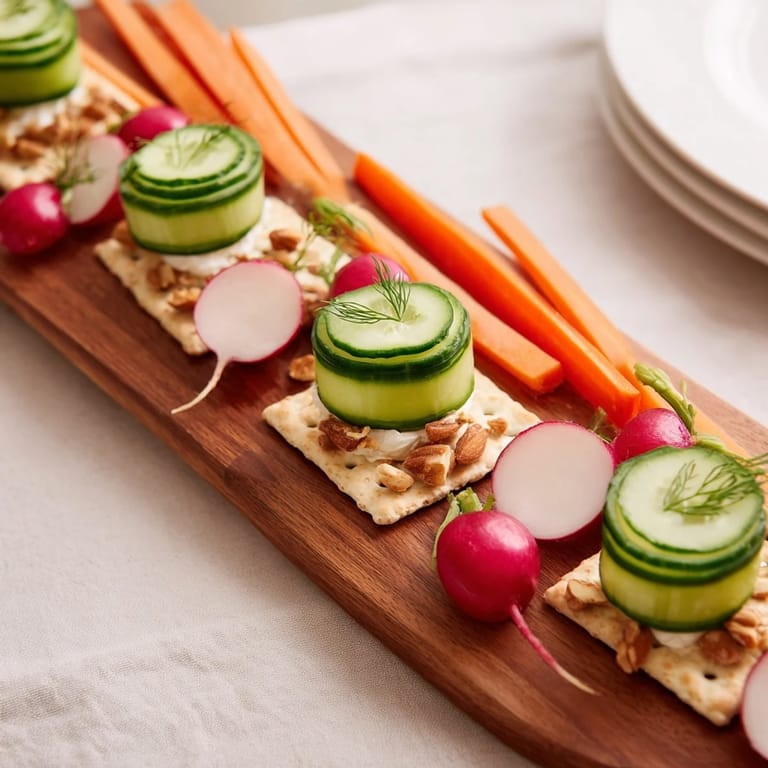
- Fresh cucumbers: Slice them thin and uniform; they're your visual anchor and surprisingly refreshing once you commit to raw vegetables.
- Baby carrots: These stay sweet and are the easiest vegetable to arrange without rolling everywhere.
- Radishes, halved: Their bright pink becomes your color contrast; choose firm ones that won't wilt on the board.
- Goat cheese: Shape these into small rounds beforehand so they're ready to place; soft cheese deserves respect and a gentle hand.
- Gluten-free crackers: These are your textural bridge between cheese and vegetables; pick ones sturdy enough to hold toppings.
- Roasted almonds: Already toasted almonds save you time and add warmth through color and crunch.
- Seedless red grapes: These are your jewels—whole, glossy, and the easiest win for visual drama.
- Fresh herbs: Chives and dill add aroma and softness to balance all those clean lines.
Tired of Takeout? 🥡
Get 10 meals you can make faster than delivery arrives. Seriously.
One email. No spam. Unsubscribe anytime.
Instructions
- Choose your stage:
- Find a wooden or slate board at least 60 cm long and give it a gentle wipe. The surface matters because it's doing half the storytelling here.
- Build one side:
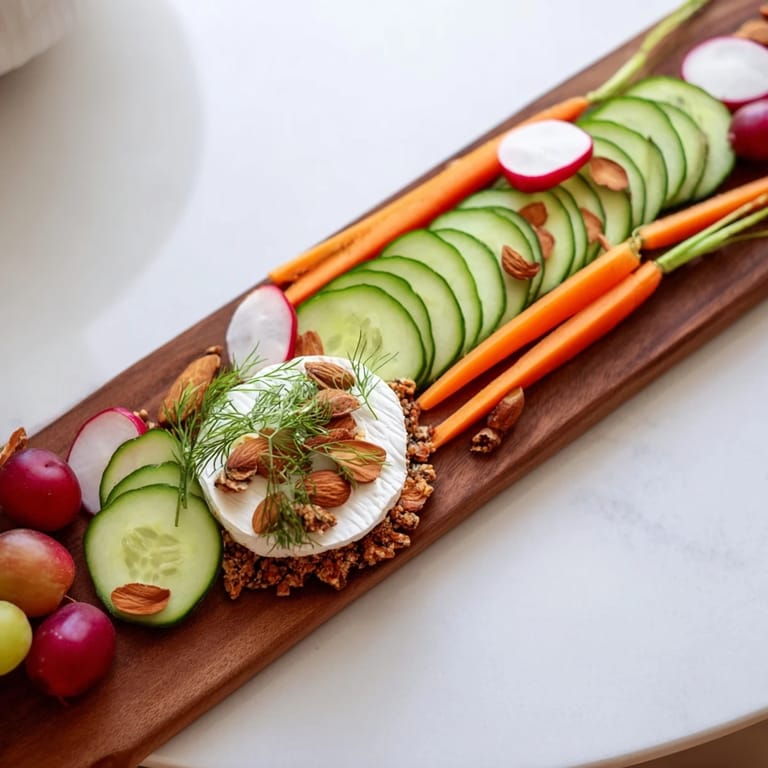
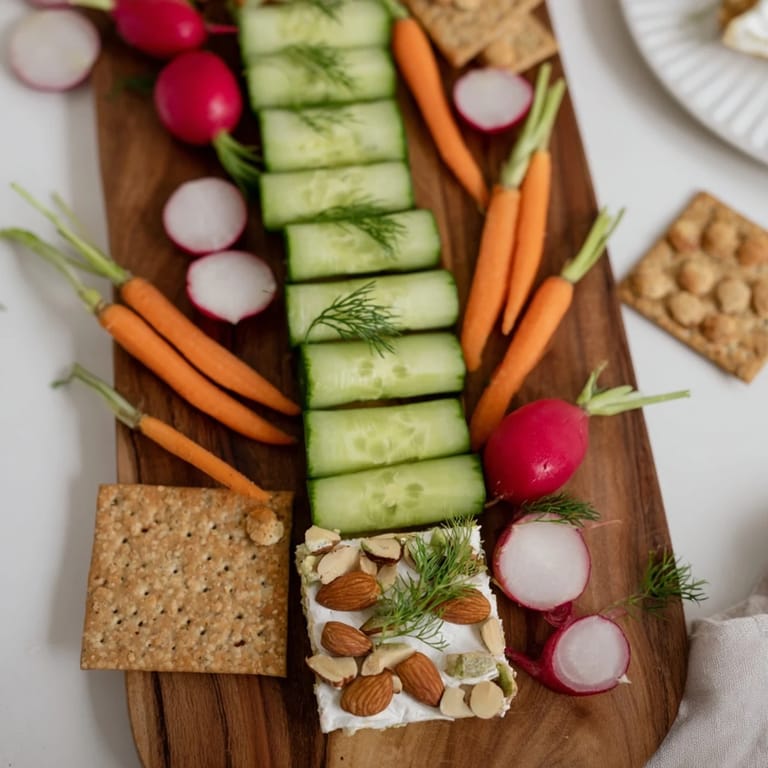
- At one end, layer your first pile starting with cucumber slices as the base, then add crackers, carrots, radishes, grapes, goat cheese rounds, and a small handful of almonds. Work slowly and let the arrangement breathe; nothing should look crowded.
- Mirror the opposite end:
- Flip to the other end and recreate the exact same composition using your remaining ingredients. This is where patience pays off—symmetry is the whole point.
- Honor the emptiness:
- Leave the long middle section completely bare. That space is doing work; it's creating the visual tension that makes both sides matter.
- Add the finishing touch:
- Scatter a few sprigs of fresh herbs over each pile for color and fragrance. Step back and look.
 Save Pin
 The first time someone I cared about sat down and truly looked at this before eating, I understood why plating matters. Food is always communication, but sometimes it's not speaking in words. This dish taught me that silence can be louder than any description.
Seasonal Adjustments
Spring lets you swap in asparagus tips and fresh peas, summer opens doors to heirloom tomatoes and stone fruit, fall invites roasted squash cubes and dried cranberries, and winter brings pomegranate seeds and candied walnuts. The structure stays the same; only the conversation changes with the season.
Wine and Pairing Thoughts
A crisp Sauvignon Blanc feels obvious, but a dry Albariño whispers through the vegetables with more grace. If you're not drinking wine, sparkling water with a slice of lemon plays the same role—cutting through the cheese and awakening your palate between bites. The pairing isn't about matching flavors; it's about rhythm.
The Mindful Moment
This dish is an invitation to eat without distraction, to notice flavors instead of just consuming them. The symmetry asks you to slow down, to appreciate the geometry before the hunger. Serve it on a quiet evening when you're not rushed and when both people at the table can actually be present.
- Start from one side and work your way across, observing how you choose your bites.
- Notice the temperature contrast between cool vegetables and the soft cheese.
- Finish with the herbs for their surprising brightness at the end.
 Save Pin
 This isn't a recipe you'll make every week, but it's a ritual you'll return to when you want the kitchen to feel intentional. Balance, it turns out, is something you build with your hands.
Recipe FAQs
- → What type of board is best for this platter?
A long wooden or slate board (at least 60 cm) works best to showcase the symmetry and space between the two servings.
- → Can the cheese be substituted?
Yes, plant-based cheese can be used for a vegan alternative without compromising texture or flavor balance.
- → How should the ingredients be arranged?
Arrange half of each ingredient neatly at one end, then mirror the exact order on the opposite end, leaving the center empty to emphasize harmony.
- → Are there any suggested accompaniments?
A crisp white wine like Sauvignon Blanc complements the fresh and light flavors on the board.
- → What herbs are ideal for garnish?
Fresh herbs such as chives or dill add subtle aroma and a pop of color to the presentation.