 Save Pin
 There's something about the sound of chicken hitting a hot wok that makes me feel instantly competent in the kitchen, even on days when nothing else has gone right. This noodle bowl came about one Tuesday evening when I was determined to recreate the brightness of a restaurant dish I'd been craving, but with ingredients I already had at home. The magic, I realized, wasn't in any single component but in how the savory-sweet sauce tied everything together, making even simple vegetables taste like they'd been kissed by something special. What started as a quick weeknight solution became the recipe I return to when I want something that feels both comforting and vibrant.
I made this for my neighbor one rainy Saturday, and she arrived with her teenage daughter who is notoriously picky about anything that looks "too healthy." Watching that daughter go back for thirds while genuinely asking about the sauce was the kind of quiet victory that makes cooking worth the effort. There's something about a bowl filled with so many colors and textures that it stops looking like health food and starts looking like actual food worth eating.
Ingredients
- Chicken breast or thighs (500 g, thinly sliced): Thighs stay juicier and more forgiving than breast meat, but either works—just don't slice them paper-thin or they'll disappear during cooking.
- Tamari or low-sodium soy sauce (3 tbsp): This is your umami backbone, so don't skimp on quality; it makes the difference between a good sauce and one that tastes like bottled regret.
- Fish sauce (1 tbsp): I know it smells like a harbor, but trust it—just a tablespoon adds depth that makes people wonder what your secret is.
- Rice vinegar (2 tbsp): The acid that keeps the sauce from becoming cloying; it's the reason everything tastes bright instead of heavy.
- Honey (1½ tbsp): This isn't just sweetness—it balances the saltiness and creates a glaze that clings beautifully to the noodles.
- Toasted sesame oil (2 tbsp): The real kind, from a glass bottle, with a dark amber color; it's aromatic in a way that regular oil could never be.
- Neutral oil (2 tbsp): This stretches the sesame oil so it distributes evenly without burning in the hot pan.
- Garlic and ginger (3 cloves minced, 1 tsp grated): Ginger is optional but worth the thirty seconds it takes to grate—it adds a warmth that lives in the back of your throat.
- Chili flakes or Sriracha (1 tsp): Heat is personal; add less if you're cooking for people who think spice is a conspiracy against flavor.
- Rice noodles (250 g dried): These cook in minutes and have a delicate texture that wheat noodles can't quite match, though either works.
- Fresh vegetables (carrot, cucumber, bell pepper, spring onions, bean sprouts): Buy them the day you cook so they're crisp; wilted vegetables make the whole bowl feel tired.
- Cilantro and sesame seeds: These are the final act, the moment the bowl becomes something worth photographing.
- Lime wedges: That squeeze at the end wakes everything up in a way you won't expect until you taste it.
Tired of Takeout? 🥡
Get 10 meals you can make faster than delivery arrives. Seriously.
One email. No spam. Unsubscribe anytime.
Instructions
- Make the sauce:
- Whisk together tamari, fish sauce, rice vinegar, honey, sesame oil, and neutral oil in a medium bowl until the honey dissolves and everything looks unified and glossy. Stir in the minced garlic, grated ginger, and chili flakes, then divide the mixture in half—one half becomes the marinade, the other stays pure for drizzling at the end.
- Marinate the chicken:
- Toss your sliced chicken with half the sauce and let it sit for fifteen minutes while you handle everything else. This isn't about deep flavor development; it's just enough time for the marinade to start working and for you to handle the vegetables without feeling rushed.
- Cook the noodles:
- Boil the rice noodles according to the package, which is usually about four minutes, then drain and rinse them under cold water until they stop steaming. Cold noodles won't wilt from the hot chicken and sauce; they'll stay al dente and distinct.
- Cook the chicken:
- Heat a large skillet or wok over medium-high heat and get it screaming hot—you want to hear that aggressive sizzle when the chicken hits the pan. Cook for five to seven minutes, stirring occasionally, until the chicken is cooked through and the edges are lightly browned and slightly sticky from the marinade.
- Assemble the bowls:
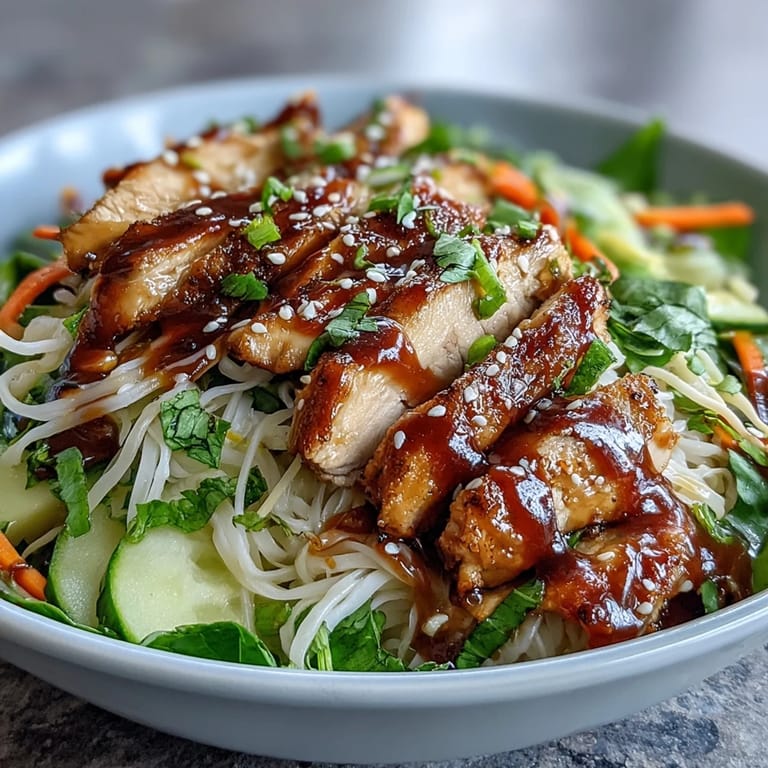
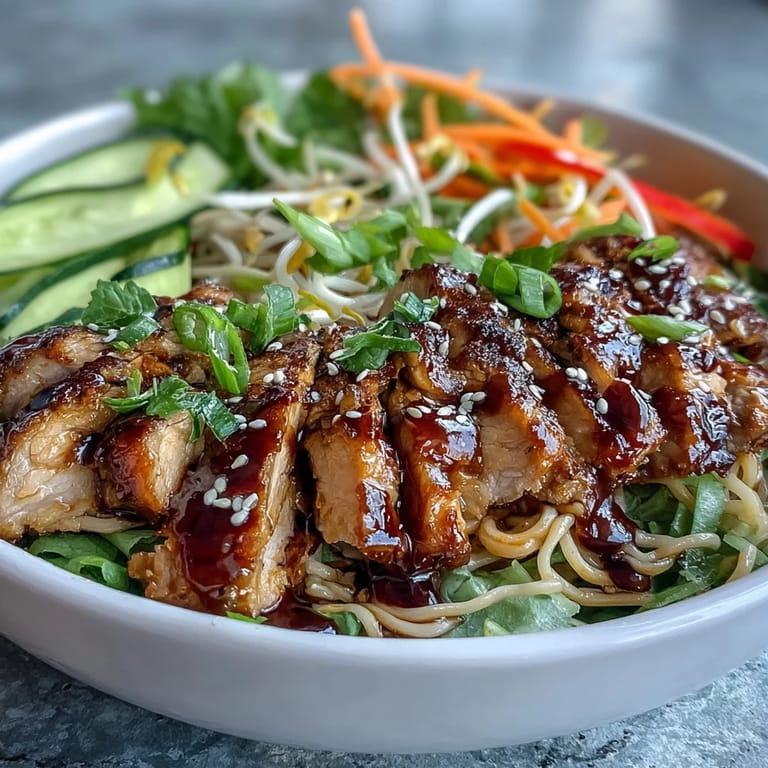
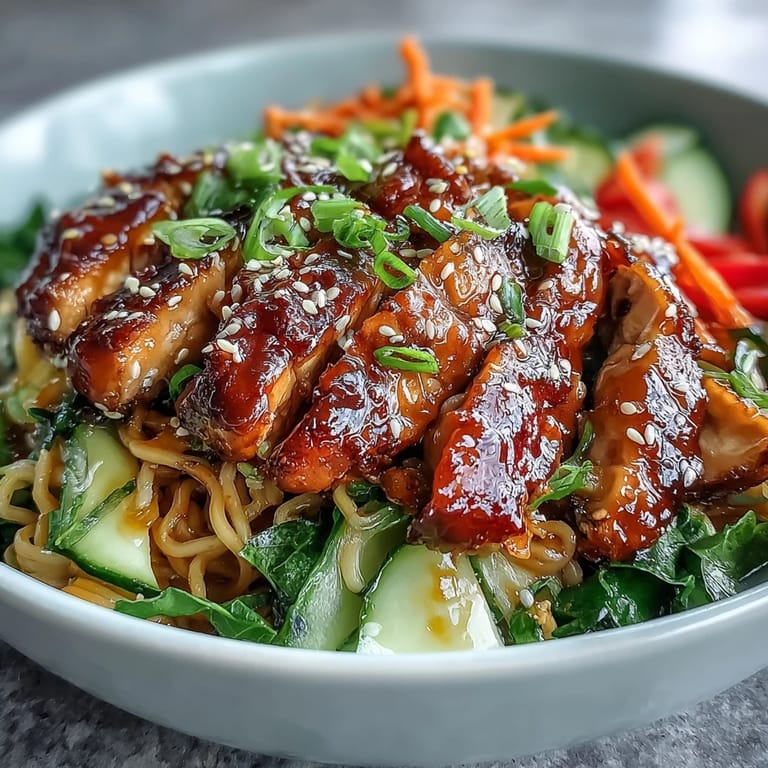
- Divide the noodles among four bowls, then arrange the cooked chicken, julienned carrot, sliced cucumber, bell pepper strips, and bean sprouts on top in whatever arrangement feels right. Think of it like painting with vegetables—there's no wrong way, just your way.
- Finish and serve:
- Drizzle the reserved sauce over each bowl, scatter cilantro and toasted sesame seeds across the top, and add a squeeze of fresh lime juice that ties everything together. Serve immediately with extra chili flakes on the side so everyone can adjust the heat to their own preference.
 Save Pin
 What I love most about this dish is how it became the thing my partner requests when he's had a genuinely terrible day, the same way some people want comfort food that wraps around you like a blanket. There's something about the combination of fresh vegetables, tender chicken, and that glossy sauce that makes everything feel manageable again.
Why This Sauce Works Magic
The sauce isn't complicated, but it's built on a principle that changed how I think about flavor: balance. The salty (tamari and fish sauce) plays against the sweet (honey), the acidic (vinegar) cuts through richness, and the aromatic oils carry everything else. It's the kind of formula that works whether you're cooking for two people or eight, and it's forgiving enough that if you accidentally add a bit more of something, you can usually rescue it by adjusting one of the other components. I've added extra ginger when the sauce felt flat, extra lime juice when it seemed cloying, and the whole thing just absorbs these adjustments like it was designed for them.
Vegetables That Actually Matter Here
Don't treat the vegetables like decorative garnish—they're the textural backbone that keeps this from being just noodles and chicken in sauce. The carrot brings sweetness and snap, the cucumber offers cool contrast, and the bell pepper adds body without overwhelming anything. I learned this the hard way by once substituting everything with shredded cabbage because I was lazy, and while it wasn't bad, it completely flattened the eating experience into one note. The variety is what makes each bite different from the last, which is the difference between a meal that satisfies and one that actually excites you.
Customization That Actually Works
This bowl is a starting point, not a prescription, and some of my favorite versions have been the ones where I worked with what was in my refrigerator instead of following the list exactly. I've added shredded purple cabbage for earthiness, snap peas for a different kind of crunch, even roasted peanuts when I wanted something richer. The sauce ties whatever you choose together, so the real freedom is in knowing that you can change the vegetables without changing the soul of the dish.
- Tofu works beautifully here if you want to skip the chicken—press it first, then cut into cubes and marinate just like the chicken.
- If you're cooking for someone with a fish sauce aversion, use a bit more soy sauce and a splash of Worcestershire sauce to replicate the umami depth.
- Make the sauce up to two days ahead and store it in a jar; it actually tastes better after the flavors have had time to know each other.
 Save Pin
 This noodle bowl has become my answer to the question "what should we make tonight" because it's fast enough for weeknights but interesting enough that it doesn't feel like settling. Make it once and you'll understand why it lives in my rotation.
Recipe FAQs
- → What type of noodles work best for this bowl?
Rice noodles are traditional and absorb flavors beautifully, but wheat noodles, udon, or even soba noodles work well. Rice noodles keep this dish gluten-free when using certified gluten-free tamari.
- → Can I make this ahead for meal prep?
Absolutely. Store cooked components separately in airtight containers: noodles with a splash of oil to prevent sticking, chicken, vegetables, and sauce. Reheat chicken and noodles, then assemble fresh when ready to eat.
- → How can I adjust the spice level?
The chili flakes or Sriracha are optional. Start with ½ teaspoon for mild heat, or omit entirely for a family-friendly version. Serve extra hot sauce on the table so everyone can customize their bowl.
- → What's the purpose of marinating half the sauce?
Dividing the sauce serves two purposes: marinating infuses the chicken with flavor, while the reserved half creates a finishing drizzle that ties all components together. This technique ensures balanced seasoning throughout.
- → Can I use other proteins?
Yes. Shrimp cooks quickly and pairs perfectly with these flavors. For a vegetarian version, use firm tofu pressed and sliced, swapping fish sauce for vegetarian fish sauce or additional tamari. Beef strips also work beautifully.
- → Why rinse rice noodles with cold water?
Cold water stops the cooking process immediately, preventing mushy noodles. It also washes away excess starch so the noodles don't clump together, keeping each strand separate and ready to absorb the savory sauce.