 Save Pin
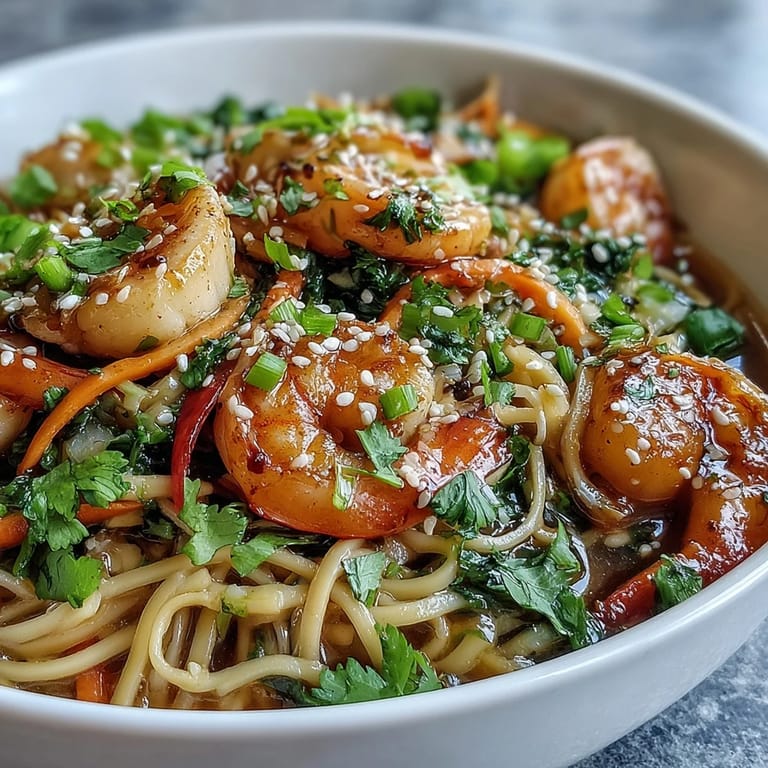
 My neighbour came home from a cooking class in Bangkok with this glazed look in her eyes and immediately started describing how a simple bowl of noodles could taste like pure comfort wrapped in aromatic steam. She made it for me that weekend, and I watched her move through the kitchen with this quiet confidence, layering flavours like she was conducting something. The shrimp turned pink in seconds, the scallops stayed buttery tender, and I realised then that this dish wasn't about complexity—it was about knowing when to stop and let the ingredients breathe.
I made this for my sister on a rainy Tuesday when she mentioned missing fresh seafood from her time living in Singapore. The moment she tasted it, her shoulders dropped and she went quiet—that kind of quiet that means food just transported her somewhere. We sat at the kitchen counter eating straight from the pot, talking about places we'd never been, and somehow this bowl became the conversation starter we didn't know we needed.
Ingredients
- Large shrimp (200 g): Choose ones with a firm curl and look for a slight translucence—overcooked shrimp become rubbery and regretful, so buy the biggest you can find because they forgive timing mistakes better than small ones.
- Sea scallops (200 g): Pat them bone dry before cooking or they'll steam instead of sear; this tiny step changes everything about the final texture.
- Rice noodles or soba noodles (200 g): Rice noodles give you that delicate, almost melting quality while soba brings earthiness; pick based on your mood.
- Carrot, julienned (1 medium): Cut them thin enough that they soften in the broth but hold their brightness and slight bite.
- Red bell pepper, thinly sliced (1): The sweetness balances the fish sauce's funkiness in a way that feels almost magical.
- Snow peas (100 g): Keep them whole or halved so they stay crisp and give you something to chew against the silky noodles.
- Baby bok choy, halved (4): These wilt quickly and absorb flavour like tiny sponges; don't skip them.
- Spring onions, sliced (2): The raw bite at the end brings everything into focus.
- Fresh ginger, grated (1 tablespoon): Use a microplane so it releases into the oil without any fibrous texture; this is non-negotiable.
- Garlic cloves, minced (2): Mince them fine so they dissolve into the aromatics rather than sitting as visible chunks.
- Low-sodium broth (1 liter): Start with low-sodium because you'll be adding fish sauce and soy sauce, and undersalted is easier to fix than oversalted.
- Soy sauce (2 tablespoons): Use a good one; the cheap stuff tastes metallic in broths.
- Fish sauce (1 tablespoon): Yes, it smells like low tide in a fish market, but trust it—it's the backbone of umami here.
- Sesame oil (1 tablespoon): Toast the sesame seeds yourself if you want to know exactly where the nuttiness comes from.
- Rice vinegar (1 tablespoon): This brightens everything at the last moment.
- Chili paste (1 teaspoon, optional): Sambal oelek or gochujang work beautifully; add it at the end so you control the heat.
- Fresh cilantro (optional): Not everyone loves it, so taste first before committing.
- Toasted sesame seeds: Toast them yourself in a dry pan until they smell nutty and fragrant.
- Lime wedges: The acid cuts through richness in the most elegant way.
Tired of Takeout? 🥡
Get 10 meals you can make faster than delivery arrives. Seriously.
One email. No spam. Unsubscribe anytime.
Instructions
- Cook your noodles first:
- Follow the package timing because undercooked noodles turn mushy once they hit the hot broth. Rinse them with cold water immediately so they don't clump together into one sad nest.
- Build your aromatics:
- Heat sesame oil over medium heat until it shimmers, then add ginger and garlic, stirring constantly for about one minute—you'll know it's ready when your kitchen smells like someone's cooking something important. Watch it carefully because burnt garlic tastes bitter and ruins the entire mood.
- Create your flavour base:
- Pour the broth in slowly while stirring, then add soy sauce, fish sauce, and rice vinegar, letting everything marry together as it heats. Bring it to a gentle simmer rather than a rolling boil because you're building layers, not rushing.
- Cook vegetables in stages:
- Add the harder vegetables (carrots, bell pepper, snow peas, bok choy) and simmer for three to four minutes until they're tender but still have personality. This is where patience pays off—three minutes is the difference between crisp and mushy.
- Add your seafood with care:
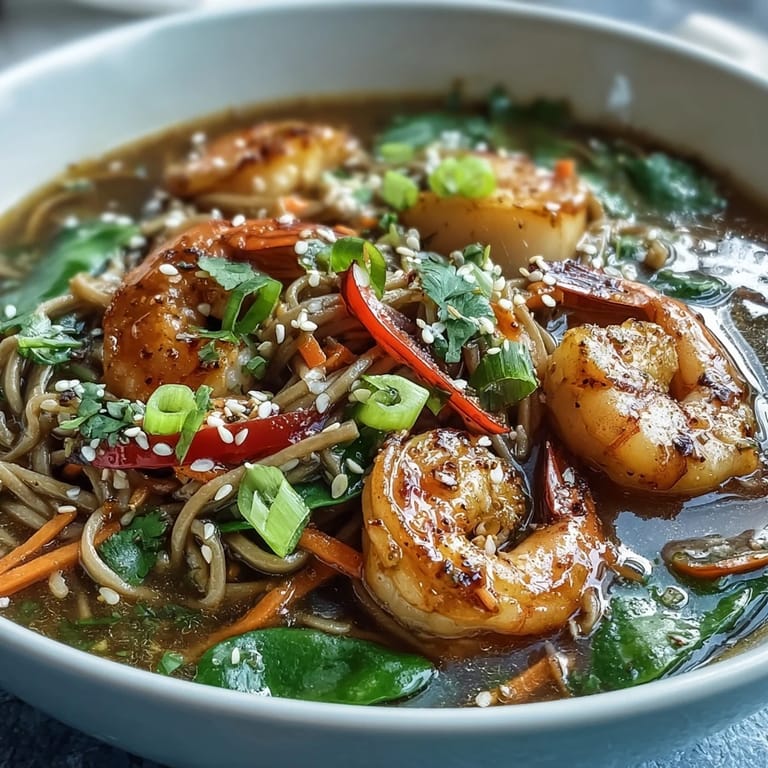
- Lay the shrimp and scallops into the simmering broth gently and let them cook for two to three minutes until the shrimp turns fully opaque and the scallops look slightly translucent in the centre. This is the moment where everything can go wrong, so set a timer and don't wander off.
- Taste and adjust:
- Before serving, taste the broth—it should make you pause and think about whether you want to add heat with chili paste. Sometimes you don't, and that's okay too.
- Assemble with intention:
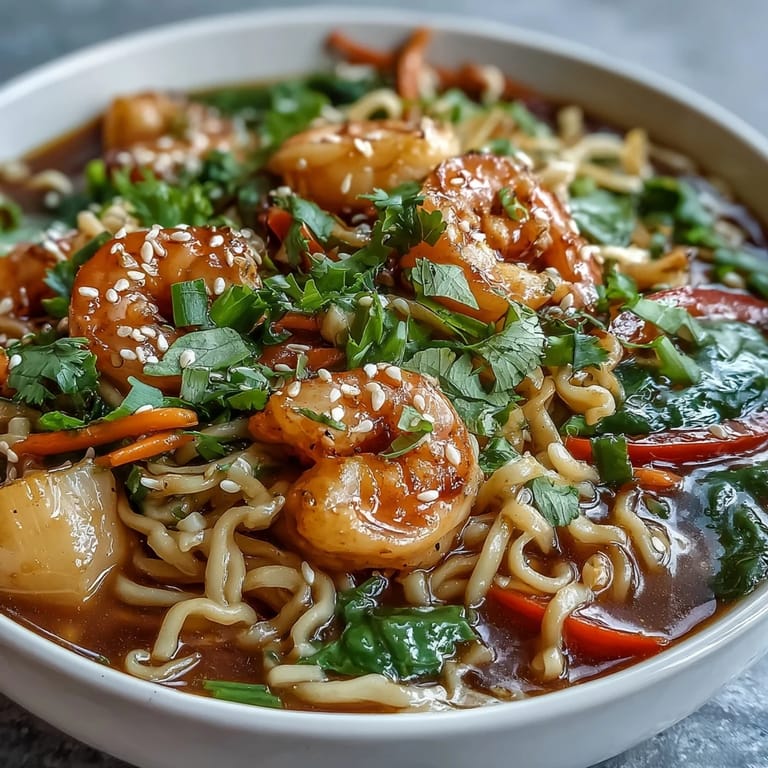
- Divide noodles among bowls, pour the broth and vegetables over them, then add seafood on top so it's visible and appetizing. Ladle everything with respect, as if you're serving something you care about.
- Finish with ceremony:
- Top each bowl with spring onions, cilantro if you're using it, toasted sesame seeds, and a squeeze of lime right before eating. This final moment transforms everything from good to memorable.
 Save Pin
 There was this moment when my partner took the first spoonful and closed their eyes, and I realised this dish had become my go-to for when I wanted to cook something that felt like care without tasting like effort. It's the kind of bowl that makes people sit longer at the table.
Why the Order of Operations Matters
The way you layer this dish isn't just technique; it's the difference between a bowl that tastes confused and one that sings. Starting with aromatics means the ginger and garlic infuse the entire broth before anything else joins, so every vegetable and piece of seafood already tastes like they belong together. I learned this when I once dumped everything in at once and ended up with a broth that tasted like separate ingredients fighting for attention instead of dancing together.
Adjusting Heat Without Apology
Chili paste is listed as optional, and I mean that genuinely—sometimes the gentle warmth of ginger is enough, and sometimes you want your bowl to have a little kick that lingers on your lips. I keep sambal oelek and gochujang on hand because they taste different (one is bright and sharp, the other is sweet and fermented), and I add them based on what mood I'm in. If you're cooking for others, pass the paste on the side and let people decide their own adventure.
Making This Dish Your Own
The structure here is solid, but it's also honest—it welcomes changes without falling apart. I've added shiitake mushrooms when they were on sale, thrown in baby corn when I had it, and once used udon noodles instead of rice noodles because that's what was in the pantry, and it was honestly better. The broth is forgiving enough that you can play with it and still end up with something that tastes intentional.
- If you want something vegetarian, firm tofu pressed and cubed works beautifully in place of seafood, and it actually soaks up more flavour.
- For a creamier version, stir in a splash of coconut milk at the end, which sounds like it shouldn't work but absolutely does.
- Keep lime wedges within arm's reach because the acid is what brings the whole bowl into focus at the very end.
 Save Pin
 This bowl became something I make when I want to cook something that feels restaurant-quality without the performance anxiety. Every time I make it, it tastes like someone cares.
Recipe FAQs
- → What type of noodles work best?
Rice noodles and soba both work beautifully here. Rice noodles offer a delicate texture that absorbs the savory broth, while soba brings a nutty buckwheat flavor. Udon or egg noodles make excellent alternatives if you prefer a chewier bite.
- → How do I prevent overcooking the seafood?
Add the shrimp and scallops during the final 2-3 minutes of simmering. Watch closely—shrimp turn pink and opaque quickly, while scallops feel firm to the touch when done. Remove from heat immediately to maintain their tender texture.
- → Can I make this vegetarian?
Absolutely. Replace the seafood with firm tofu cubes, adding them during the last 5 minutes of cooking. Use vegetable broth instead of chicken, and consider adding mushrooms or baby corn for extra substance and umami flavor.
- → How spicy is this dish?
The base version offers mild heat from fresh ginger and garlic. Add chili paste to taste if you enjoy more spice—the amount is completely adjustable. A teaspoon provides gentle warmth, while doubling creates noticeable heat that balances the rich broth.
- → Can I prepare components ahead?
Yes. Julienne the vegetables and grate the ginger up to a day in advance. Cook the noodles ahead, rinse them thoroughly to prevent sticking, and store them separately. The broth base can be partially prepared, then finish with fresh seafood just before serving.
- → What garnishes enhance the flavors?
Fresh cilantro adds herbal brightness, while toasted sesame seeds contribute nutty crunch. Lime wedges provide acidity that cuts through the rich broth. Extra sliced spring onions, chili oil, or pickled vegetables make excellent additions for those who enjoy more complexity.