 Save Pin
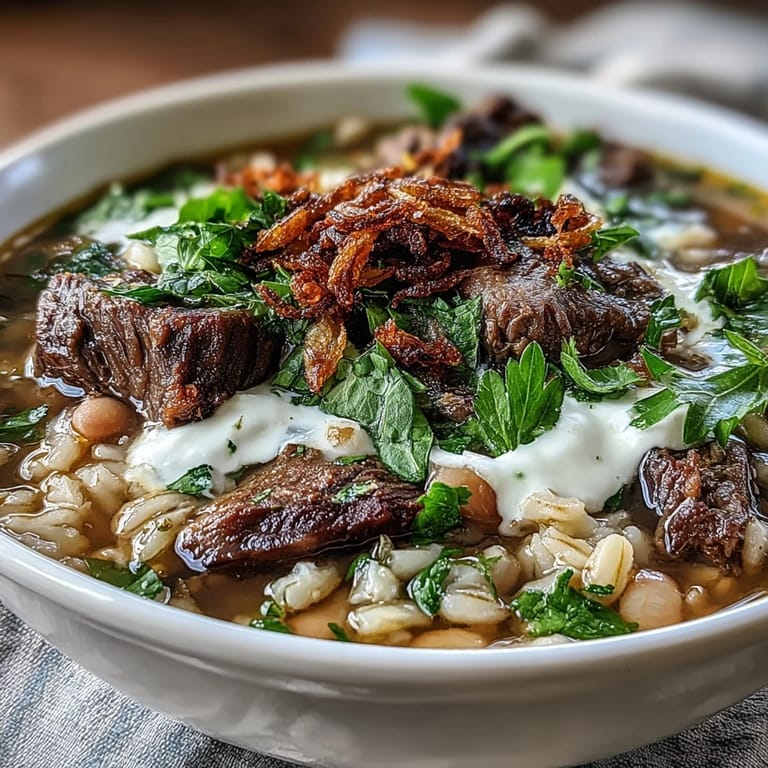
 My neighbor brought over a thermos of this soup on a cold Tuesday, and I watched steam rise from the bowl like it was releasing some kind of culinary secret. The first spoonful hit differently—it wasn't just warm, it was alive with herbs and tender beef that seemed to dissolve on my tongue. She told me it was Persian, her grandmother's recipe, and suddenly I understood why people write love letters to soup. That afternoon changed everything about how I cook.
I made this for my book club last month and watched everyone stop mid-conversation when they tasted it. One friend asked if I'd been secretly attending culinary school, which made me laugh—I just remembered my neighbor's advice and paid attention to the sizzle of the onions. By the end of dinner, three people had asked for the recipe, and the pot was scraped completely clean.
Ingredients
- Beef stew meat (500 g, cut into 2 cm cubes): Look for pieces with some marbling—they'll stay tender during the long simmer and create a richer broth than lean cuts.
- Pearl barley (1/2 cup, rinsed): Rinsing removes the starch that makes barley gluey, and it adds a subtle chew that makes every spoonful interesting.
- Dried lentils (1/2 cup, rinsed): Brown or green lentils hold their shape better than red ones, and they quietly thicken the soup as they cook.
- Dried white beans or cannellini beans (1/2 cup, soaked overnight and drained): Soaking isn't just tradition—it cuts cooking time and makes them digest more easily.
- Large onion (1, finely chopped): The size matters here because you need enough to create that golden, sweet base that carries the whole flavor profile.
- Medium carrots (2, diced): Cut them roughly the same size so they cook evenly and don't turn mushy before the lentils are done.
- Celery stalks (2, diced): This is your aromatic backbone—don't skip it, and don't store-bought pre-cut versions if you can help it.
- Garlic cloves (2, minced): Fresh garlic matters enormously here; it opens up completely during cooking and becomes almost sweet.
- Fresh parsley (1/2 cup, chopped): Add this late in cooking so it stays bright and herbaceous instead of becoming a dull shadow of itself.
- Fresh cilantro (1/2 cup, chopped): Some people skip this, but it's the Persian element that makes this soup unmistakably authentic.
- Fresh dill (1/4 cup, chopped): The dill adds a grassy, almost floral note that balances the earthiness of the legumes.
- Fresh chives (1/4 cup, chopped): They're delicate, so add them at the very end or scatter them on top to keep their oniony freshness.
- Dried mint (2 tbsp, for garnish and fried onions): Buy it at a Persian or Middle Eastern market if you can—it's more fragrant than what you'll find in regular supermarkets.
- Sour cream (200 g) or Persian kashk: If you can find kashk, use it—it's tangier and more authentic, but sour cream works beautifully too and is easier to find.
- Olive oil (2 tbsp): Use a good quality oil here; it's a key flavor player, not just cooking medium.
- Butter (1 tbsp, for fried onions): Butter browns the onions better than oil alone and gives them a richer, deeper color.
- Ground turmeric (1 tsp): This is the spice that gives Persian food its signature warmth—don't be shy with it.
- Ground black pepper (1/2 tsp): Freshly ground makes a noticeable difference in a soup like this where spice isn't buried in richness.
- Salt (1 1/2 tsp, plus more to taste): Start with this amount and taste as you go—the stock you use will affect how much salt you really need.
- Beef or vegetable stock (2 liters): Make your own if you have time; store-bought works, but homemade stock is where subtle depth comes from.
Tired of Takeout? 🥡
Get 10 meals you can make faster than delivery arrives. Seriously.
One email. No spam. Unsubscribe anytime.
Instructions
- Brown the beef:
- Heat olive oil in your pot until it shimmers—you want it hot enough that the beef sizzles the moment it touches the surface. Don't crowd the pan or move the meat around too much; let it sit for a couple minutes so it develops a golden crust that holds the flavor in.
- Build the flavor base:
- Once the beef is out, use the same pot to cook the onions until they're soft and turning golden at the edges—this takes patience, maybe 6 minutes. The garlic, turmeric, and pepper go in for just a minute, just long enough to wake them up and fill the kitchen with their perfume.
- Add the vegetables:
- Carrots and celery join next, cooking for 3 minutes so they soften slightly but don't fall apart. This short cooking time keeps them from disappearing into the soup later.
- Combine everything and simmer:
- Return the beef to the pot along with the barley, lentils, beans, and stock, then bring it to a boil before dropping the heat low and covering it. The long simmer—about 1 hour 30 minutes—is where the magic happens; the beef becomes impossibly tender and everything melds together into something greater than its parts.
- Add the fresh herbs:
- After the long simmer, stir in the parsley, cilantro, dill, and chives, then let everything cook together for just 10 more minutes. This timing keeps the herbs tasting fresh instead of cooked to death.
- Make the mint-fried onions:
- While the soup finishes, melt butter in a small skillet and add a thinly sliced onion, cooking it low and slow until it's deeply golden and crispy—this takes about 10 minutes and requires patience. When the onions are almost ready, stir in the dried mint and cook for 1 more minute until it releases its aroma.
- Finish and serve:
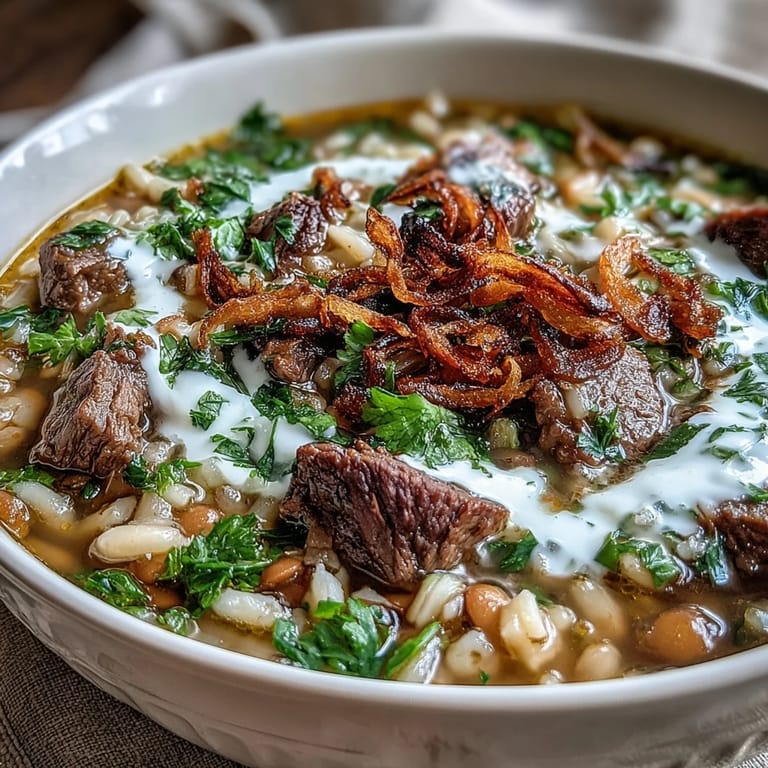
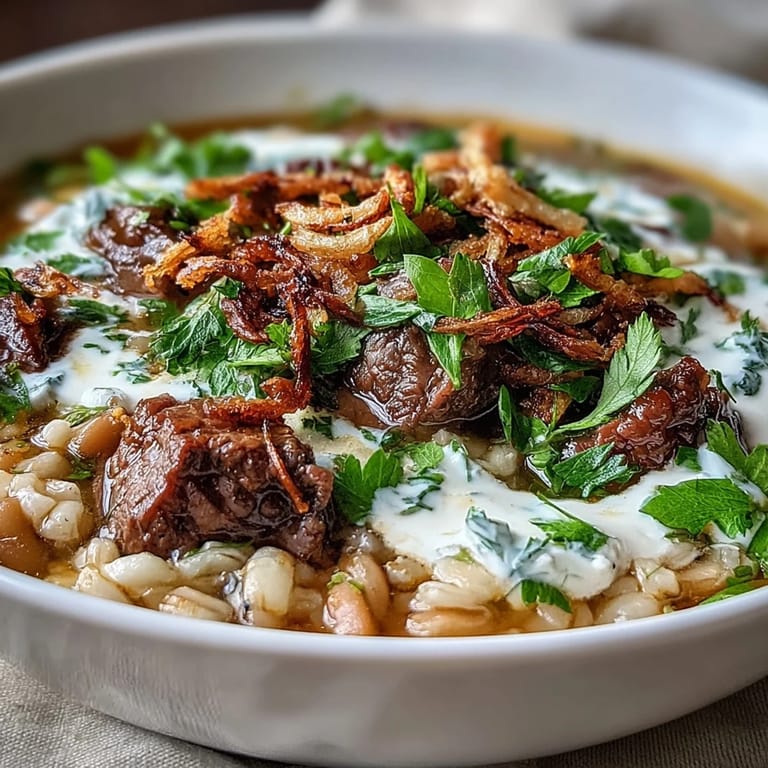
- Taste the soup and adjust the salt—you might need a bit more depending on your stock. Ladle the soup into bowls, swirl a generous spoonful of sour cream into the center of each one, and crown it with a handful of those fragrant mint-fried onions.
 Save Pin
 My daughter asked for a second bowl last week, which she hasn't done with homemade soup in years. She said it tasted like something from a restaurant but also like home, and I realized that's exactly when cooking stops being about following steps and becomes something you're proud of.
Why the Herbs Make All the Difference
This soup could be forgettable without the herbs—just a brown, heavy bowl of stuff. But fresh parsley, cilantro, dill, and chives transform it into something that tastes alive, like you're eating a garden that's been gently warmed instead of cooked down. I used to think herbs were optional, a last-minute thought, but they're absolutely essential here. The fresh chlorophyll cuts through the richness of the beef and sour cream, making your palate reset with every spoonful.
The Secret Power of Mint-Fried Onions
These onions are what separate this soup from the dozens of other barley soups you might have eaten. The butter browns them more deeply than oil alone, and the slow cooking makes them sweet and almost caramel-like, then the dried mint adds this unexpected floral note that feels sophisticated without being fussy. I started making extra of these to keep in a jar—they elevate morning grain bowls, roasted vegetables, even hummus. Once you taste the difference they make, you'll find yourself adding them to everything.
Making It Your Own
The beauty of this soup is that it's flexible enough to bend to what you have in your kitchen. Some weeks I add spinach or beet greens instead of (or alongside) the fresh herbs, and it deepens the color and adds earthiness. Other times I make it vegetarian by swapping in vegetable stock and adding a bit more depth with soy sauce or nutritional yeast. You can also make it ahead and freeze it—the flavors actually improve after a day or two as everything gets to know each other better.
- Kashk is worth hunting down at a Persian market if you want the most authentic version, but sour cream works beautifully as a substitute.
- Don't be afraid to add extra stock if you prefer a brothier soup, or simmer it uncovered longer if you like it thicker.
- Taste and adjust the salt at the end—it's the easiest way to make the whole thing taste more like itself.
 Save Pin
 This soup has become my answer to almost everything—when someone's sick, when the weather turns cold, when I want to feel like I've accomplished something in the kitchen. It's the kind of dish that makes you understand why people talk about food with such reverence.
Recipe FAQs
- → Can I make this soup ahead of time?
Yes, this soup actually tastes better the next day as flavors meld together. Store in an airtight container in the refrigerator for up to 3 days. The barley will continue to absorb liquid, so you may need to add more stock when reheating.
- → What can I substitute for sour cream?
Persian kashk (fermented whey) provides the most authentic tangy flavor. Greek yogurt or labneh make excellent alternatives. For a dairy-free version, try coconut yogurt or simply omit the creamy element and increase the herbs.
- → Do I really need to soak the beans overnight?
Yes, soaking dried white beans overnight ensures they cook evenly and become tender without requiring excessive cooking time. If you forget, use canned white beans instead and add them during the last 30 minutes of simmering.
- → Can I freeze this soup?
This soup freezes well for up to 3 months. However, avoid adding the sour cream topping before freezing—add it fresh when reheating. The texture of barley may soften slightly after freezing, but the flavor remains excellent.
- → What bread pairs best with this soup?
Crusty sourdough or artisan bread works wonderfully for dipping. For an authentic Persian experience, serve with sangak (a sesame-covered flatbread) or lavash bread. The bread helps balance the rich, tangy broth.
- → How can I make this vegetarian?
Replace beef with extra mushrooms or root vegetables like parsnips and turnips for heartiness. Use vegetable stock instead of beef broth. The barley and beans already provide substantial protein and texture.