 Save Pin
 There's something almost meditative about standing at the stove for forty minutes, watching onions transform from crisp and sharp to something buttery and deeply golden. I discovered French onion soup not in Paris, but in my grandmother's kitchen on a cold November afternoon when she'd run out of fancy ingredients and decided to work with what she had—which was mostly onions, good butter, and time. The soup that emerged was so rich and satisfying that I understood then why the French had built an entire classic around something so humble. Every time I make it now, I'm trying to recreate that exact moment of surprise, when the kitchen smells like caramel and comfort at once.
I made this soup for my partner on our first winter together, and I remember being slightly anxious about whether the cheese would melt evenly or if the whole thing would somehow fall flat. When those bowls came out of the broiler with the cheese bubbling and just barely golden at the edges, the look on their face made me realize that sometimes the simplest recipes carry the most meaning. That soup became our winter tradition, something we'd make when the days got short and we needed something warm and substantive.
Ingredients
- Yellow onions: Three large ones, thinly sliced—use yellow rather than red because they caramelize more sweetly and won't turn the broth purple-tinged.
- Unsalted butter: One tablespoon provides richness without introducing salt we can control later.
- Olive oil: One tablespoon mixed with butter prevents the butter from burning during the long caramelization.
- Garlic: Two cloves minced—wait until the onions are nearly done to add it, or it can turn bitter and harsh.
- Sugar: One teaspoon stirred in halfway through cooking helps the natural sugars in the onions caramelize faster and deeper.
- Salt and pepper: Half a teaspoon salt during cooking and a quarter teaspoon black pepper at the end—taste as you go since stock saltiness varies.
- All-purpose flour: Two tablespoons create a light thickener that gives body without making the soup heavy or murky.
- Dry white wine: Half a cup adds acidity that brightens everything and helps lift the flavors—use something you'd actually drink.
- Beef or vegetable stock: Five cups (1.2 liters) forms the savory backbone; beef stock leans richer, vegetable stock lets the onions sing.
- Fresh thyme and bay leaf: These aromatic herbs quietly deepen the flavor without announcing themselves—remove them before serving so no one bites into a leaf.
- French baguette: Four one-inch slices toasted until golden provide textural contrast and prevent sogginess if you work quickly.
- Gruyère cheese: One cup grated—its nuttiness complements caramelized onions perfectly, and it melts to a creamy, bubbly texture that holds together on the bread.
Tired of Takeout? 🥡
Get 10 meals you can make faster than delivery arrives. Seriously.
One email. No spam. Unsubscribe anytime.
Instructions
- Start the onion magic:
- Heat butter and olive oil in a large pot over medium heat, then add your sliced onions and stir so they're all coated. You're looking for them to soften first—they'll release their moisture and seem like they're steaming rather than caramelizing, and that's exactly right.
- Caramelize with patience:
- Stir every few minutes for 35 to 40 minutes total, scraping up the golden bits that stick to the bottom. About halfway through, sprinkle in the sugar and salt—you'll notice the onions suddenly smell sweeter and start turning a deeper amber color, which means the natural sugars are finally breaking down.
- Finish with aromatics:
- Add minced garlic and cook for just one minute until fragrant, being careful not to let it brown. The smell will shift from onion-sweet to something more savory and complex.
- Make the roux:
- Sprinkle flour over the onions and stir constantly for two minutes—this cooks out the raw flour taste and helps thicken the final soup. The mixture will look slightly thick and pasty, which is exactly what you want.
- Deglaze and build depth:
- Pour in the white wine and scrape the bottom of the pot with a wooden spoon, releasing all those caramelized bits—they're pure flavor. Watch the wine reduce by half, about two minutes, and the alcohol smell will fade as it cooks off.
- Add the broth and simmer:
- Pour in the stock, add the thyme sprigs and bay leaf, and bring everything to a gentle simmer. Let it bubble quietly for 20 to 25 minutes uncovered so the flavors meld and concentrate slightly, then fish out the herbs and season with pepper and additional salt to taste.
- Toast the bread:
- While the soup simmers, arrange baguette slices on a baking sheet, brush both sides lightly with olive oil, and broil under high heat for about one minute per side until they're golden and crisp. Don't walk away—they can burn in seconds.
- Assemble and finish:
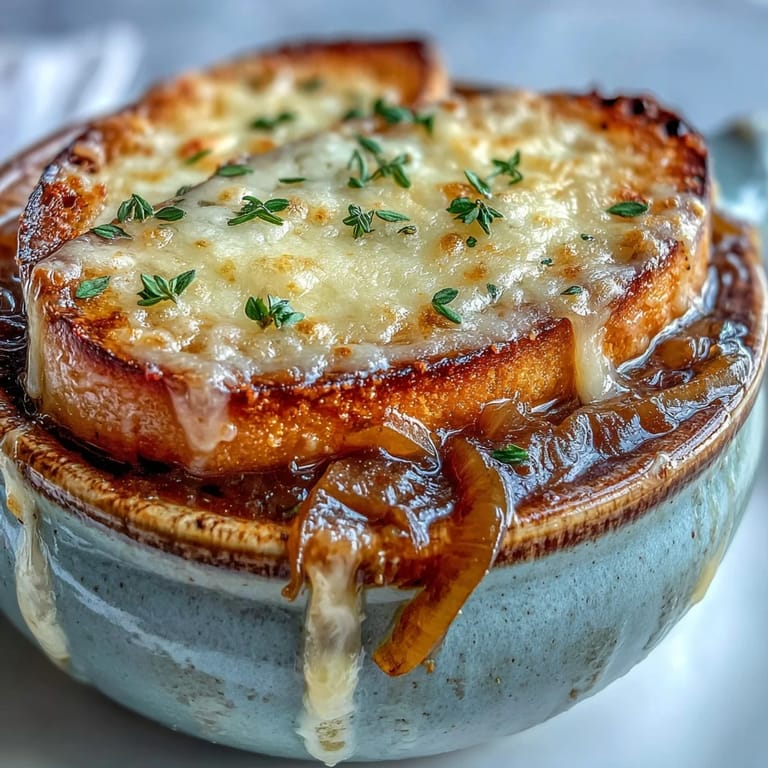
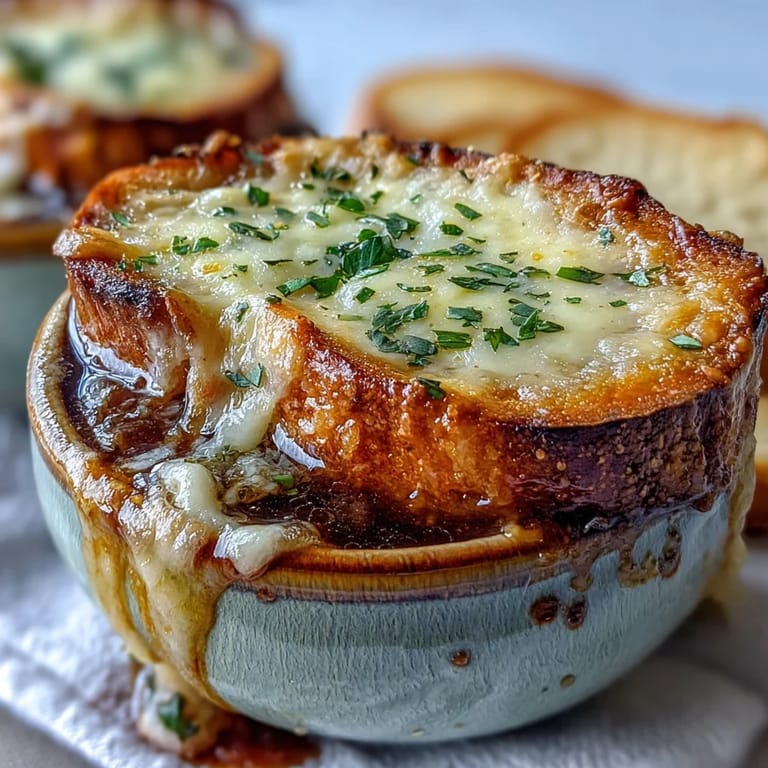
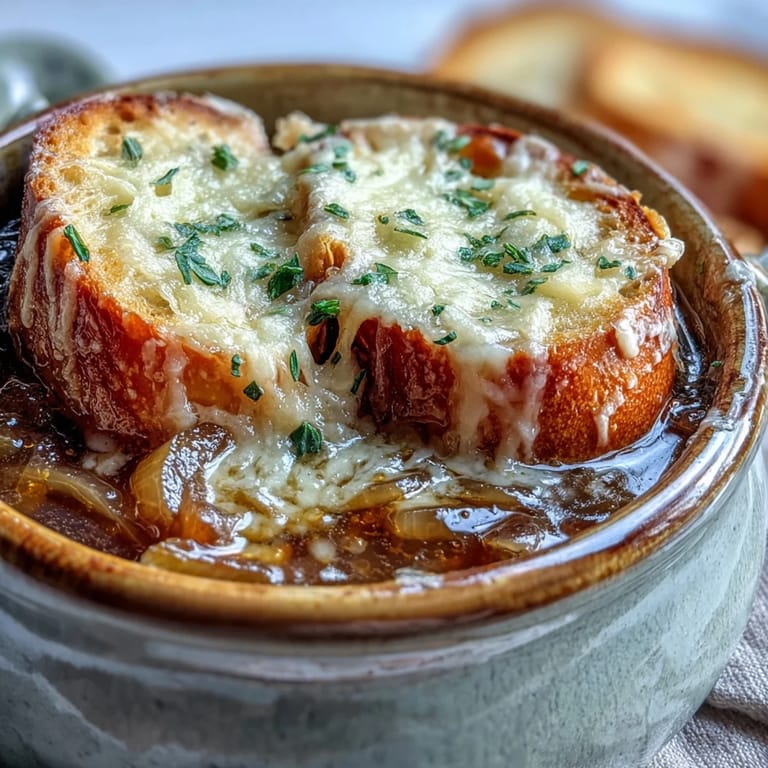
- Ladle hot soup into oven-safe bowls, top each with a toasted bread slice, then pile the grated Gruyère generously on top. Place the bowls on a baking sheet and broil for 2 to 3 minutes just until the cheese melts, bubbles at the edges, and turns golden—this final broil is what makes the whole dish feel special and intentional.
 Save Pin
 There's a moment when you pull those bowls from under the broiler and the cheese is still actively bubbling, the bread is soaked in soup but somehow still holding its structure, and the whole thing smells like caramelized onions and toasted bread—that's when you realize this isn't just soup, it's a small ceremony of comfort. Serving it immediately, while everything is at that perfect temperature, means the person eating it gets the full experience: the contrast between the crispy bread and the creamy cheese and the rich, silky broth beneath.
The Art of Caramelization
Caramelizing onions is one of those cooking techniques that seems mysterious until you've done it once, and then it becomes almost automatic. The key is understanding that it's a gradual process where the onion's natural sugars break down and brown, creating compounds that taste deeply savory and complex. I used to think I was doing something wrong when the onions went from golden to deeper amber, but that darker color is actually a sign you're heading in the right direction. The smell will also shift from sharp and onion-like to sweet and almost nutty, which is your cue that the magic is happening.
Wine and Stock Choices
The white wine and stock you choose become the voice of the final soup, so it's worth thinking about them for a moment. I've made this with everything from a sharp Sauvignon Blanc to a buttery Chardonnay, and both worked, but the lighter wine let the onions shine while the heavier wine added its own richness. For stock, I learned that a good beef stock gives the soup a deeper, almost meaty quality, while vegetable stock keeps the focus on the onions and caramelization—neither is wrong, just different paths to flavor. Store-bought stock is fine, but taste it first to gauge saltiness, because you'll be cooking it down slightly and salt concentrates.
Cheese, Bread, and The Final Moment
The topping is what transforms this from a simple soup into something memorable, so I've learned to treat it with the same care as everything that came before it. The bread needs to be thick enough that it doesn't dissolve into mush but thin enough that it drinks up the soup, and toasting it first prevents that soggy texture entirely. Gruyère is traditional for a reason—it melts into a creamy, almost nutty coating that feels luxurious—but I've had beautiful results with Emmental or even a sharp Comté if that's what you have on hand.
- Always use oven-safe bowls for the final broil, or your soup stays in the pot and the cheese toasts separately, losing that integrated, bubbly magic.
- If your broiler runs hot, keep the bowls a little farther away or reduce the time slightly so the cheese doesn't burn before the bread softens.
- Serve immediately with a spoon and a small fork, because the bread will slide around and you'll need both tools to wrangle it.
 Save Pin
 This soup reminds me that sometimes the best dishes are built on restraint and patience rather than complexity or technique, and that making something delicious for yourself or someone you care about is always worth the time it takes. When you smell those onions caramelizing and taste the richness of the final bowl, you'll understand why this has been a French standard for generations.
Recipe FAQs
- → How long does it take to caramelize onions properly?
Plan for 35–40 minutes over medium heat. Stir frequently to prevent sticking and ensure even browning. The patience pays off with deep, complex flavor.
- → Can I make this ahead of time?
Absolutely. The base actually improves after 1–2 days in the refrigerator. Add the bread and cheese just before serving for the best texture.
- → What cheese works best for topping?
Gruyère is traditional for its nutty flavor and excellent melting qualities. Emmental, Comté, or Swiss make fine alternatives if needed.
- → Why add sugar during caramelization?
A touch of sugar helps onions brown evenly and develop that deep mahogany color. It's optional but enhances the natural sweetness beautifully.
- → Can I freeze this soup?
Freeze the broth base without toppings for up to 3 months. Thaw overnight, reheat gently, and add fresh bread and cheese when serving.
- → What wine pairs well with this dish?
A crisp white like Chardonnay or light red such as Pinot Noir complements the rich, savory flavors without overpowering them.