 Save Pin
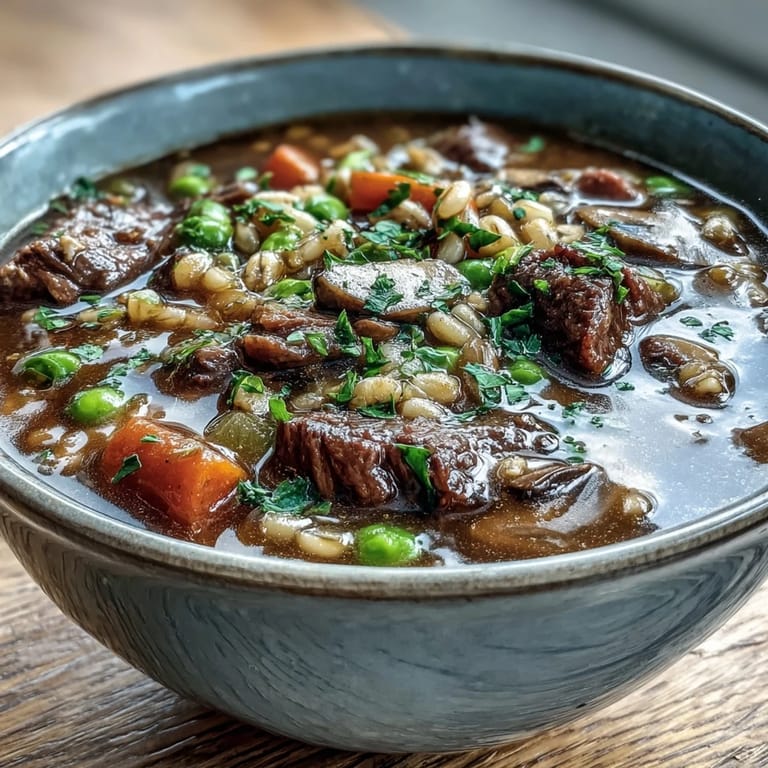
 My neighbor knocked on the door one October evening with a pot of beef and barley soup, steam still rising from under the lid, and I realized right then that this wasn't just comfort food—it was a love language. She'd learned it from her Polish grandmother, but the beauty of this soup is that it belongs to anyone willing to let beef, barley, and time do their work together. The first spoonful changed how I thought about weeknight cooking; suddenly, effort and reward felt perfectly balanced.
I made this for my sister during a particularly rough winter when she was dealing with the aftermath of a move. She sat at my kitchen counter in a hoodie, still in boxes-and-exhaustion mode, and after one bowl she actually smiled. That's when I understood: this soup doesn't just warm your stomach, it says someone cares enough to spend two hours watching a pot bubble on the stove.
Ingredients
- Beef stew meat (1 lb): Cut your pieces to roughly 1-inch cubes so they cook evenly and absorb the broth without falling apart into stringy bits.
- Pearl barley (3/4 cup): Rinsing removes the starch coating and prevents the soup from becoming gluey—trust me on this one, I learned the hard way.
- Carrots (2 medium): Diced into uneven chunks is actually better than perfect cubes; they soften at different rates and create texture.
- Celery stalks (2): The holy trinity starts here—celery, onion, and carrot are your flavor foundation, so don't skip any.
- Onion (1 large): Chopped roughly is fine; it will soften into the broth and become almost invisible but essential.
- Garlic (2 cloves): Minced fine so it disperses throughout rather than creating little chunks of raw bite.
- Potatoes (1 cup): Peel and dice to roughly the same size as the beef; they'll thicken the soup naturally as they break down.
- Mushrooms (1 cup): Sliced rather than diced adds an earthy richness that deepens the entire flavor profile.
- Frozen peas (1 cup): Added near the end to keep them bright and slightly firm rather than mushy.
- Diced tomatoes (1 can, optional): The acidity cuts through the richness; if your broth is mild, this makes a noticeable difference.
- Beef broth (8 cups): This is not the place to skimp—good broth is the foundation; if yours tastes thin, the whole soup suffers.
- Bay leaves (2): Added whole so you remember to fish them out before serving; they season gently without overpowering.
- Dried thyme (1 tsp): Earthy and subtle, it belongs in soup more than almost any other dish.
- Dried parsley (1 tsp): Adds a gentle herbaceous note that brightens the heavy beef flavors.
- Olive oil (2 tbsp): High-heat oil for searing the meat; this browning step is where flavor begins.
- Salt and black pepper: Taste as you go; add at the end rather than the beginning so you're not over-seasoning.
Tired of Takeout? 🥡
Get 10 meals you can make faster than delivery arrives. Seriously.
One email. No spam. Unsubscribe anytime.
Instructions
- Sear the beef until deeply golden:
- Heat oil in your pot until it shimmers, then add beef in a single layer without crowding—you want sizzle, not steam. Let each side develop a brown crust before flipping, about 5 minutes total. This step isn't just flavor; it's the whole soul of the soup.
- Build your flavor base with vegetables:
- In the same pot with all those lovely browned bits stuck to the bottom, add onions, carrots, celery, and mushrooms. Stir frequently as they soften and begin releasing their own juices, about 5 minutes. You'll notice the pot smells completely different now—deeper, more alive.
- Toast the garlic briefly:
- Add minced garlic and stir constantly for just 1 minute so it wakes up without burning or becoming bitter. This quick step makes garlic taste sweet rather than sharp.
- Combine everything into the broth:
- Return the beef to the pot, then add potatoes, pearl barley, tomatoes if using, and the full amount of broth along with bay leaves, thyme, and parsley. Stir until the barley is distributed and nothing is sticking to the bottom. Bring it to a boil, which takes about 10 minutes.
- Simmer low and slow until beef is tender:
- Reduce heat to low, cover, and let it bubble gently for 1 hour, stirring occasionally so the barley doesn't settle and stick. The beef should be fork-tender, and the barley will have absorbed much of the broth. Peek occasionally—the sound of a gentle simmer is your guide, not a rolling boil.
- Finish with peas and seasoning:
- After the hour is up, stir in the peas and simmer uncovered for another 20 to 30 minutes until the barley is completely tender and the peas are heated through. Taste now, and season with salt and pepper—you may need more than you think. The soup should taste rich and balanced, with no single flavor overwhelming the others.
- Serve immediately after removing bay leaves:
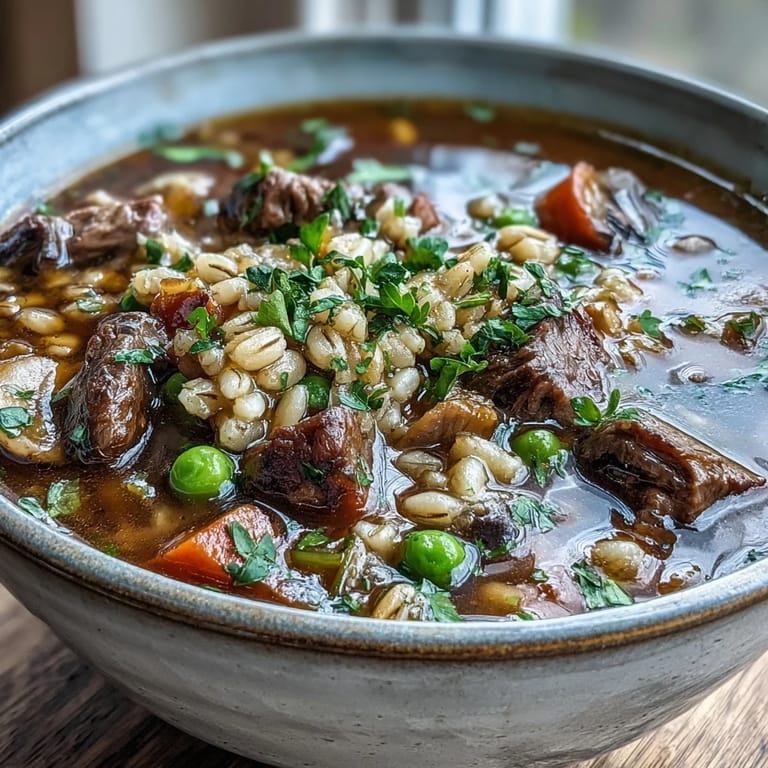
- Fish out the bay leaves carefully, ladle into bowls, and serve while steaming. A crusty piece of bread is not optional; it's part of the deal.
 Save Pin
 The real magic happened when my father tasted this for the first time and went quiet for a moment, the way people do when they're transported somewhere. He said it reminded him of his mother's kitchen, though his mother never made this—it just tasted like home in an abstract, unexpected way. That's when I realized beef and barley soup speaks a universal language that has nothing to do with authenticity and everything to do with care.
Why Barley Is Worth Your Time
Pearl barley isn't trendy, and it doesn't have the health halo of fancier grains, but it's secretly one of the best ingredients you can add to soup. It swells and softens without disintegrating, creating a texture that's almost creamy without any cream. The first time I made this soup with barley instead of rice, I understood why it's been in soups for centuries—it simply works.
Storing and Reheating Without Losing Anything
This soup actually tastes better the next day once the flavors have merged and mellowed. Store it in airtight containers in the refrigerator for up to 4 days, or freeze it for up to 3 months—I use mason jars and leave about an inch of headroom so the liquid has space to expand. When reheating, do it low and slow on the stovetop with a splash of extra broth, stirring occasionally, rather than microwaving, which can make the beef tough.
Making It Your Own and Variations to Try
The beauty of this soup is that it's forgiving enough to adapt without losing its soul. I've added parsnips instead of potatoes when I found them at the farmers market, thrown in a handful of spinach near the end, and once even substituted half the beef with diced turkey when that's what I had on hand. The core ratio of meat, grain, and vegetables stays constant—that's what makes it reliable.
- Try swapping in root vegetables like parsnips, turnips, or rutabaga for variation without changing the technique.
- For a lighter version, use half the beef and bulk it up with extra mushrooms or add white beans instead.
- A splash of red wine stirred in after browning the meat adds complexity and depth that's hard to achieve any other way.
 Save Pin
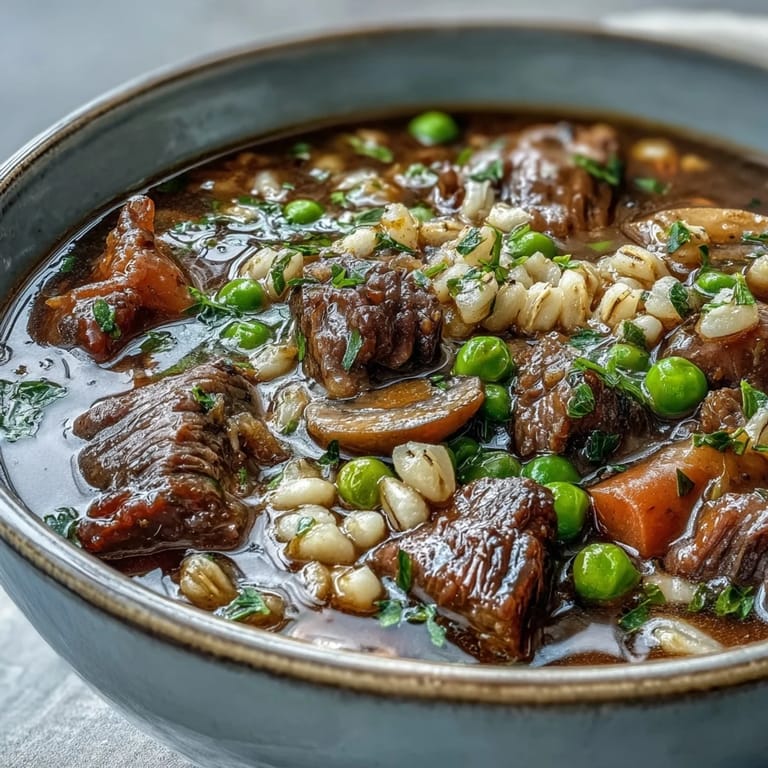
 This soup isn't complicated, but it asks for patience and presence—two things that feel increasingly rare. That trade-off, though, is exactly what makes it worth making.
Recipe FAQs
- → How long does beef and barley soup take to cook?
The total cooking time is approximately 1 hour 40 minutes. The beef and barley need to simmer slowly to become tender, with the barley absorbing flavors and thickening the broth naturally.
- → Can I make this soup in a slow cooker?
Yes. Brown the beef first, then add all ingredients to your slow cooker. Cook on low for 7-8 hours or high for 4-5 hours. Add the frozen peas during the last 30 minutes.
- → Does pearl barley need to be soaked before cooking?
No soaking required. Simply rinse the pearl barley before adding it to the soup. It will cook directly in the broth, becoming tender while naturally thickening the liquid.
- → What cut of beef works best?
Beef chuck stew meat is ideal because it becomes tender during long simmering. Look for well-marbled pieces with some fat, which keeps the meat moist and adds depth to the broth.
- → How should I store leftovers?
Cool completely and refrigerate in airtight containers for up to 4 days. The barley will continue absorbing liquid, so you may need to add more broth when reheating. Freeze for up to 3 months.
- → Can I use other grains instead of barley?
Pearl barley is traditional for its texture and ability to thicken the broth. You could substitute with farro or brown rice, though cooking times and liquid absorption will vary slightly.