 Save Pin
 My kitchen smelled like roasted sweet potato and cumin on the afternoon a friend stopped by unannounced, asking if I had anything plant-based to offer. I had quinoa, some black-eyed peas in the pantry, and vegetables starting to wrinkle in my crisper drawer. Rather than panic, I began layering—grains first, then the golden roasted vegetables I pulled from the oven, the warm spiced peas, and finally a drizzle of tahini that transformed everything into something unexpectedly complete. She sat at my counter watching it come together, and by the time I finished, she was asking for the method. That bowl became the recipe I made again and again.
The first time I served this to my family at a potluck, my uncle—skeptical about vegetarian meals—went back for seconds without comment. Afterward, he admitted the tahini dressing surprised him, that he'd expected something thin and forgettable but found it rich and grounding instead. That moment made me realize bowls like this aren't about what's missing; they're about what you've gathered together with intention.
Ingredients
- Quinoa or brown rice: This is your foundation, so choose whichever grain feels right for your kitchen—quinoa fluffs into delicate pillows while brown rice offers earthiness that grounds the bowl.
- Sweet potato, bell pepper, red onion, and zucchini: These vegetables caramelize beautifully at high heat, turning slightly charred at the edges where all the flavor concentrates.
- Olive oil, smoked paprika, salt, and pepper: The paprika adds a whisper of smoke that reminds me of cooking over actual fire, even though you're just using an oven.
- Black-eyed peas: Canned works perfectly fine if you're short on time; just rinse them well so they don't taste tinny.
- Ground cumin and garlic powder: These warm the peas from the inside out, making them taste intentional rather than like an afterthought.
- Baby spinach or kale: Either works—spinach wilts slightly from the warm grain and peas, while kale holds its shape and adds textural contrast.
- Avocado and fresh herbs: These arrive at the very end, bringing brightness and a reminder of what fresh tastes like.
- Tahini, lemon juice, maple syrup, water, garlic, and salt: Whisk these together slowly and you'll watch a separation of oil and liquid gradually smooth into something creamy and cohesive—like witnessing an emulsion form in real time.
Tired of Takeout? 🥡
Get 10 meals you can make faster than delivery arrives. Seriously.
One email. No spam. Unsubscribe anytime.
Instructions
- Heat your oven and prep the vegetables:
- Set the temperature to 425°F and while it preheats, chop everything into roughly even pieces so they cook at the same pace. Tossing them with olive oil and seasonings takes just a minute, but the even coating makes all the difference in how they caramelize.
- Roast until golden:
- Spread the vegetables across your sheet pan in a single layer and slide them into the oven for 25 minutes, stirring once halfway through so they brown evenly. You'll know they're ready when the sweet potato is fork-tender and the edges of everything have taken on that appealing darkened color.
- Start your grain:
- While vegetables roast, rinse your quinoa or rice under cold water in a fine-mesh sieve until the water runs clear. In a saucepan, combine with water and salt, bring to a boil, then reduce heat and let it simmer covered—the steam does the work while you attend to other tasks.
- Warm the peas:
- In a small skillet over medium heat, add your black-eyed peas with cumin and garlic powder, stirring gently for a few minutes until heated through and fragrant. This isn't about cooking them further; it's about waking up their flavor with spices.
- Make the tahini dressing:
- In a bowl, combine tahini, lemon juice, maple syrup, water, minced garlic, and salt and whisk slowly but steadily. The mixture will seem separated at first, almost crumbly, but keep whisking and it transforms into something silky and pourable—add more water if it's too thick.
- Assemble your bowl:
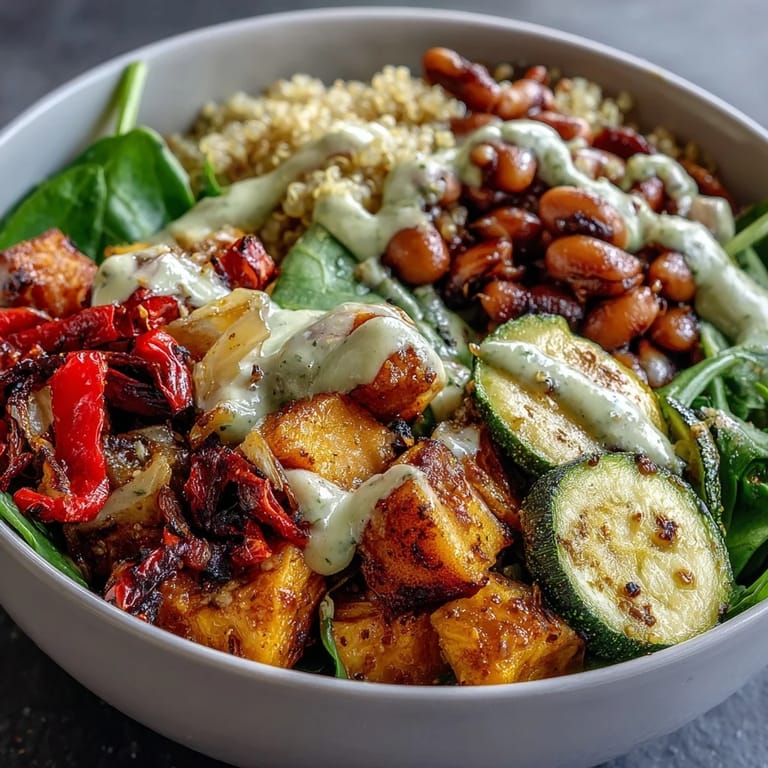
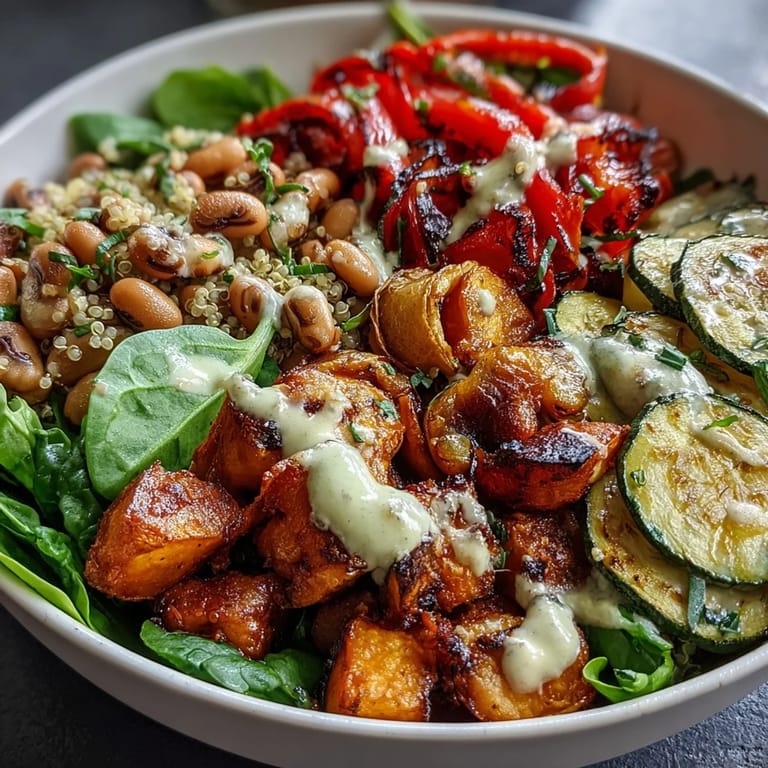
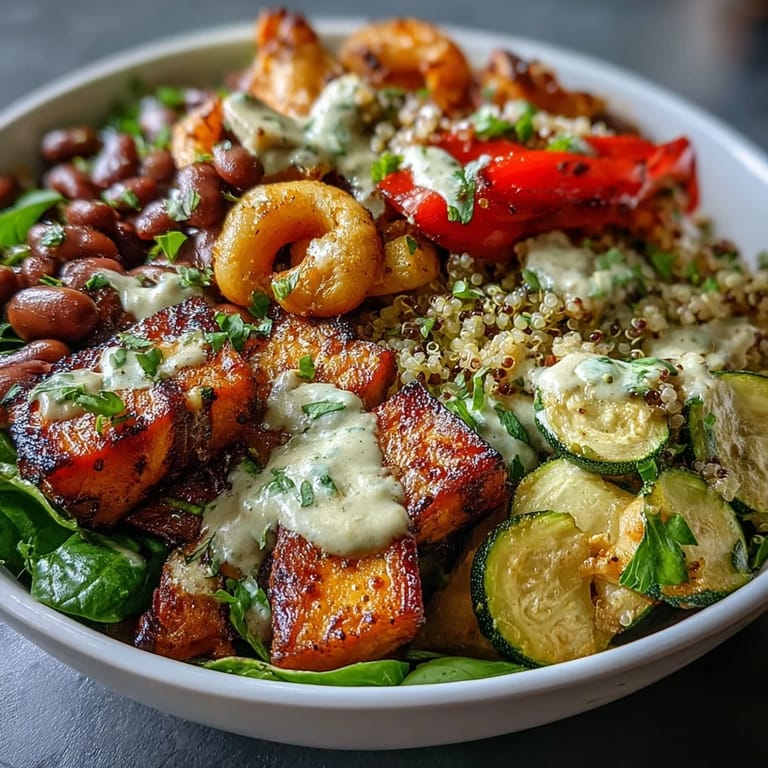
- Divide your cooked grain among bowls, then arrange roasted vegetables, warmed peas, and fresh greens on top in whatever pattern feels balanced to you. The arrangement doesn't matter for taste, only for how it makes you want to eat it.
- Finish and serve:
- Drizzle the tahini dressing across everything, top with avocado slices and a scatter of fresh herbs, and eat while the grain is still warm and the greens haven't completely wilted into the heat.
 Save Pin
 There's a quiet satisfaction in eating from a bowl where every element pulls its weight—the grain absorbs the dressing, the peas provide protein and earthiness, the roasted vegetables add sweetness and texture, and the fresh herbs and avocado remind you that salads don't have to be cold or sparse. This is the kind of meal that made me understand why people talk about Buddha bowls the way they do.
Why This Bowl Works as a Complete Meal
On a Wednesday evening when I was exhausted from work and craving something that felt both luxurious and reasonable, I assembled one of these bowls and realized I didn't need anything else—no bread, no side dish, nothing. The combination of grain, legume, vegetables, and healthy fat was genuinely complete in a way that made the meal feel intentional rather than hurried. That's the design of a well-built bowl; it satisfies in multiple ways at once.
Customizing Your Bowl for the Season
The beauty of this recipe is how it adapts without losing its character. In summer, I swap the roasted vegetables for raw ones—sliced cucumber, cherry tomatoes, fresh corn—and the whole thing becomes lighter and brighter. Come autumn and winter, I lean into roasting root vegetables like carrots, beets, and parsnips, which deepen in flavor as the weather gets colder and I crave something more substantial.
Building Flavor Without Overwhelm
I learned early on that layering flavors in a bowl requires restraint as much as generosity. The tahini dressing is the backbone—it needs to taste good on its own before it meets the other components—and the spices in the peas and roasted vegetables should complement rather than shout over one another. The fresh herbs and lemon in the dressing provide brightness that prevents the whole thing from feeling heavy, even though it's genuinely filling.
- Toast your cumin in a dry skillet for 30 seconds before adding it to the peas to deepen its flavor significantly.
- If you can't find black-eyed peas, chickpeas or black beans work beautifully and cook in the same amount of time.
- Make extra tahini dressing to keep in your refrigerator for the week—it tastes even better the next day as flavors meld.
 Save Pin
 This bowl is less a recipe and more a permission slip to trust that vegetables and grains and legumes, combined with intention and a good dressing, can be exactly what your body and mind need on any given day. Make it once, then make it again with whatever you have on hand.
Recipe FAQs
- → Can I use different grains instead of quinoa?
Yes, brown rice, farro, or wheat berries work well. Adjust cooking time accordingly and rinse grains before cooking for best texture.
- → What vegetables can I substitute?
Any seasonal roasting vegetables work beautifully. Try Brussels sprouts, cauliflower, carrots, or butternut squash based on what's available.
- → How long does this keep in the refrigerator?
Stored in airtight containers, components stay fresh for 4-5 days. Keep dressing separate and add fresh herbs just before serving.
- → Can I use canned black-eyed peas?
Absolutely. Rinse and drain canned peas thoroughly, then warm with spices. This shortcut reduces prep time significantly.
- → Is the tahini dressing make-ahead friendly?
Yes, whisk together and refrigerate for up to a week. The dressing may thicken—simply whisk in additional water to loosen.
- → How can I add more protein?
Add roasted chickpeas, hemp seeds, or serve with marinated tofu. The black-eyed peas already provide 14g protein per serving.