 Save Pin
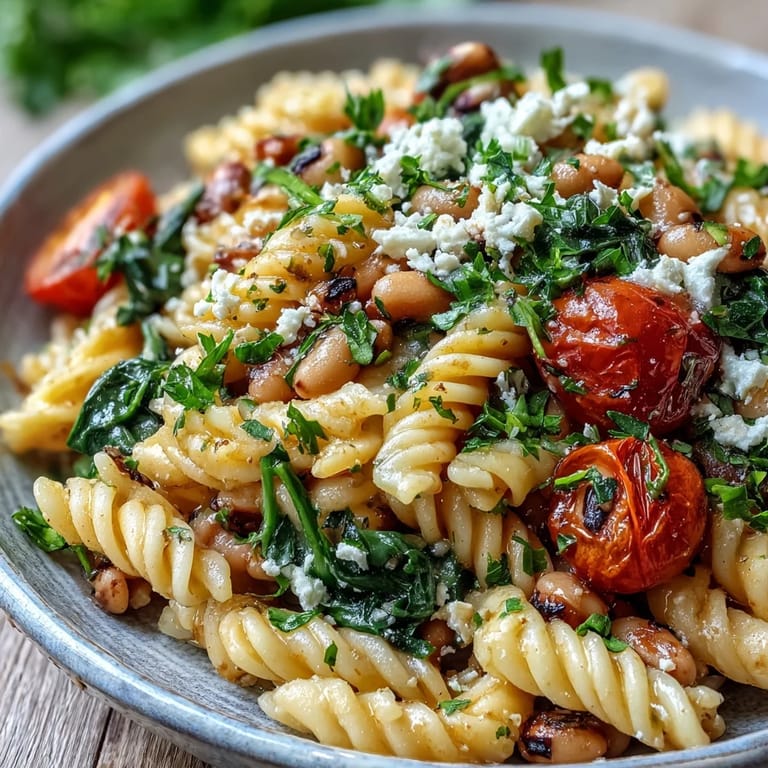
 There's something about the way black-eyed peas soften into a dish that makes everything taste more intentional, more considered. I discovered this pasta combination on a Tuesday afternoon when I had nothing but pantry staples and a vague craving for something that felt both light and grounding. The black-eyed peas came from a can I'd been meaning to use, the garlic was already sliced, and somehow by the time the pasta hit the water, I wasn't cooking dinner anymore—I was creating something that would make my kitchen smell like a Mediterranean coastline.
I made this for a small gathering last spring when the spinach was finally fresh again and people were tired of heavy food. Everyone went quiet for a moment after the first bite, not because it was fancy, but because it tasted like the season—bright and purposeful. Someone asked for the recipe that night, and I realized I'd just handed them permission to eat something wholesome that actually tastes good.
Ingredients
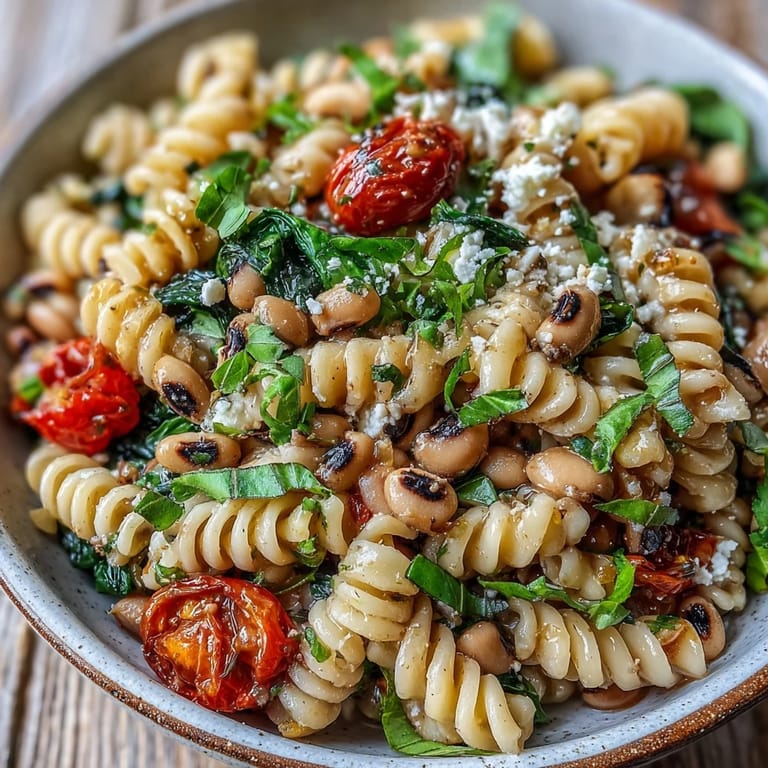
- Short pasta (penne, fusilli, or farfalle): 300 g (10 oz) keeps the dish from feeling heavy, and the shape matters more than you'd think—use whatever catches your hand in the pantry, but the ridges help hold onto the olive oil and herbs.
- Black-eyed peas: 1 can (400 g/14 oz), drained and rinsed, or 250 g (1 ½ cups) cooked—they're the backbone here, creamy enough to make you forget you're eating something virtuous.
- Extra-virgin olive oil: 3 tablespoons, and don't skimp on quality; this is your base flavor, the thing that carries everything else forward.
- Garlic cloves: 3, finely sliced rather than minced, so you get little pockets of garlic flavor instead of a uniform heat.
- Red onion: 1 small one, thinly sliced, for sweetness and color that doesn't disappear when it cooks.
- Fresh oregano or dried: 1 tablespoon fresh or 1 teaspoon dried—oregano is the heartbeat of this dish, the thing that makes it taste intentionally Mediterranean rather than accident.
- Fresh parsley and basil: 2 tablespoons each, chopped, and add these at the end so they stay bright and alive in the bowl.
- Cherry tomatoes: 1 cup, halved, for bursts of acid that wake up your palate with each bite.
- Baby spinach leaves: 1 cup, wilted in at the last second so it stays tender and vivid green.
- Sea salt and freshly ground black pepper: ½ teaspoon salt plus more to taste, and ¼ teaspoon pepper; taste as you go because seasoning is a conversation, not a destination.
- Red pepper flakes: 1 pinch (optional) if you want a whisper of heat that lingers.
- Lemon: ½ lemon for zest and juice, the final note that ties everything into brightness and prevents the dish from settling into dullness.
- Feta cheese: 50 g (⅓ cup) crumbled (optional), for tanginess that plays against the earthiness of the black-eyed peas.
Tired of Takeout? 🥡
Get 10 meals you can make faster than delivery arrives. Seriously.
One email. No spam. Unsubscribe anytime.
Instructions
- Start the pasta:
- Fill a large pot with salted water and bring it to a rolling boil—the water should taste like the sea, not quite briny but insistent. Add the pasta and cook according to package instructions until it's al dente, tender but with a slight resistance when you bite it, then drain it while reserving ¼ cup of that starchy water because that's liquid gold for binding everything together.
- Build the base:
- While the pasta cooks, heat the olive oil in a large skillet over medium heat and listen for it to shimmer—that's your signal that it's ready. Add the sliced garlic and red onion, and let them soften for 2 to 3 minutes until the kitchen fills with that unmistakable smell that makes you hungry.
- Add the tomatoes:
- Stir in the cherry tomatoes and give them another 3 to 4 minutes to collapse slightly, releasing their juice into the oil. This step is where the dish starts to taste like something rather than just ingredients.
- Bring in the beans:
- Add the black-eyed peas along with the oregano, salt, pepper, and red pepper flakes if you're using them, stirring everything together and cooking for about 2 minutes. The beans should warm through and start to absorb the flavors around them.
- Combine and wilt:
- Toss the cooked pasta into the skillet with that reserved cooking water, stirring well so every strand gets coated. Add the spinach and cook for just about 1 minute, until it's wilted but still vivid green.
- Finish with brightness:
- Remove from heat and stir in the lemon zest and juice along with the fresh parsley and basil, tasting and adjusting the salt and pepper as you go. This moment is when the dish transforms from good to something you'll think about for days.
- Serve and garnish:
- Divide among bowls and top with crumbled feta if you're using it, then serve immediately while everything is still warm and the herbs are still fragrant.
 Save Pin
 There was a moment during that dinner last spring when someone went back for seconds and just said, 'This tastes like you know what you're doing,' which made me laugh because I'd pulled it together in under half an hour with no real plan. That's when I understood that cooking like this—simple, honest, paying attention to what's happening in the pan—is its own kind of confidence.
Why Black-Eyed Peas Matter More Than You Think
Black-eyed peas are quietly one of the best-kept secrets in vegetarian cooking, and I think people overlook them because they're not trendy or Instagram-friendly. They have a creamy texture that somehow feels indulgent without any cream, and they're packed with protein and fiber in a way that makes you feel genuinely nourished rather than just full. The earthiness they bring to this dish is the thing that keeps it grounded, preventing it from dissolving into something too light or airy—they're the foundation that lets everything else shine.
The Lemon-Herb Finish That Changes Everything
I've made this dish without lemon before, thinking the acidity from the tomatoes would be enough, and it was fine but forgettable. The moment I started adding fresh lemon zest and juice at the end, something shifted—the dish suddenly felt intentional and complete, like every flavor came into sharp focus. The fresh herbs added at the last second perform a similar magic, staying bright and alive instead of becoming muted and cooked into submission.
Making It Your Own and Cooking Flexibly
This recipe is a beginning, not an ending—it's built to be flexible because that's when cooking becomes joyful instead of restrictive. I've made it with grilled chicken stirred in at the end, with crispy chickpeas instead of black-eyed peas, and once with roasted zucchini because that's what was in the garden. The core of it—the garlic, the lemon, the herbs—stays the same, but everything else is negotiable.
- Try adding crispy chickpeas or white beans if black-eyed peas aren't calling to you on a given day.
- Swap the spinach for arugula if you want something peppery, or leave it out entirely if greens don't feel right in the moment.
- If feta doesn't appeal to you, crumbled goat cheese or even a drizzle of balsamic vinegar creates entirely different magic.
 Save Pin
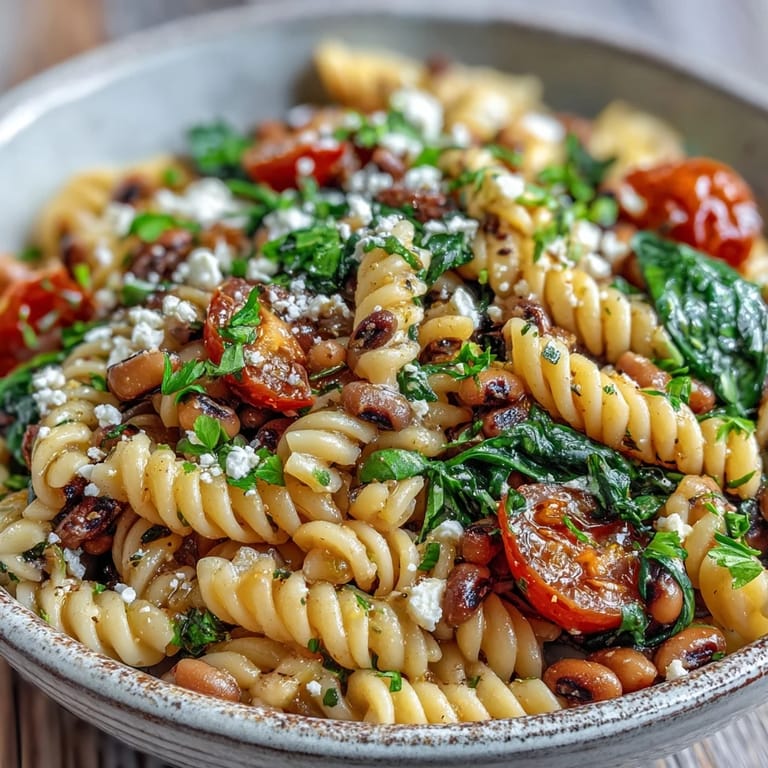
 This is the kind of dish that feels both nourishing and joyful, the kind that reminds you why you love to cook in the first place. Make it when you need something real, something that tastes like care even when you've barely tried.
Recipe FAQs
- → Can I use dried black-eyed peas instead of canned?
Yes, soak dried black-eyed peas overnight and cook until tender before adding to the skillet. This takes longer but allows you to control the sodium level.
- → What pasta shapes work best?
Short pasta varieties like penne, fusilli, or farfalle are ideal because they catch the black-eyed peas and vegetables. The curves and ridges help hold the olive oil-based sauce.
- → How can I add more protein?
Grilled chicken, shrimp, or even roasted chickpeas pair wonderfully. You can also increase the black-eyed peas or add white beans for additional plant-based protein.
- → Is this suitable for meal prep?
Absolutely. The dish keeps well refrigerated for 3-4 days. Reheat gently with a splash of olive oil or water to refresh the pasta, though it's also delicious at room temperature.
- → Can I make this gluten-free?
Simply substitute the regular pasta with certified gluten-free pasta. The rest of the ingredients naturally contain no gluten, making this an easy adaptation.
- → What herbs can I substitute?
Fresh marjoram or thyme work well instead of oregano. For parsley and basil, try fresh cilantro or mint for a different flavor profile. Dried herbs can replace fresh at one-third the amount.