 Save Pin
 My roommate came home from work with that unmistakable sniffles-and-sneezes kind of cold, and instead of watching her disappear into her room with a box of tissues, I decided to do what my grandmother always did: I made soup. Not just any soup, but the kind loaded with golden turmeric, fresh ginger that makes your kitchen smell like a warm embrace, and shredded chicken that practically melts into each spoonful. There's something about standing over a pot of simmering broth, watching those little ditalini pasta shells dance around, that makes you feel like you're actually doing something to help someone feel better.
The first time I made this, my roommate actually sat at the kitchen table instead of hiding away, and we talked while the soup bubbled away. She said it was the first thing that tasted good to her in days, and when she asked for seconds, I knew I'd made the right call reaching for the turmeric instead of the canned stuff.
Ingredients
- Boneless, skinless chicken breasts (2, about 400 g): These cook quickly and shred beautifully, giving you tender pieces that disappear into the broth without any chewy bits.
- Olive oil (1 tablespoon): Just enough to get a light golden sear on the chicken, building flavor from the start.
- Medium onion, diced (1): The backbone of the soup's flavor base, softening into sweet, mellow notes.
- Large carrots, peeled and sliced (2): They add natural sweetness and stay slightly tender, which is exactly what you want in a soup.
- Celery stalks, sliced (2): Don't skip this—it's the secret ingredient that makes the broth taste like real comfort.
- Garlic cloves, minced (4): Fresh garlic turns the broth into something that actually feels medicinal in the best way.
- Fresh ginger, grated (1 tablespoon, or 1/2 teaspoon ground): If you can find fresh, use it—the warmth it brings is different from the ground version and worth the extra effort.
- Fresh turmeric, grated (1 teaspoon, or 1/2 teaspoon ground): This is what gives the soup its golden color and immune-boosting reputation; fresh has a brighter, more subtle taste than ground.
- Low-sodium chicken broth (8 cups): Use the good stuff here—your soup is only as flavorful as your broth.
- Ditalini pasta (3/4 cup): Those tiny tubes catch the broth, making every spoonful substantial and satisfying.
- Bay leaf (1): A quiet flavor enhancer that you'll forget is there until you notice how much better the broth tastes.
- Salt and black pepper (1 teaspoon salt, 1/2 teaspoon pepper): Taste as you go—you might need more depending on your broth.
- Fresh parsley, chopped (2 tablespoons): Added at the end for brightness and a color pop that makes the bowl look alive.
- Lemon juice (from 1/2 lemon): The final touch that wakes up all the other flavors and adds a zing that says this soup knows what it's doing.
Tired of Takeout? 🥡
Get 10 meals you can make faster than delivery arrives. Seriously.
One email. No spam. Unsubscribe anytime.
Instructions
- Sear the chicken:
- Heat the olive oil in a large pot over medium heat and lay the chicken breasts in. Don't move them around—let them sit for 2–3 minutes until they're lightly golden, then flip and repeat. You're not cooking them through; you're just building a little color and flavor.
- Build the flavor base:
- In the same pot, add the diced onion, carrots, and celery, stirring everything together and letting it soften for about 5 minutes. The vegetables will start to smell sweet and caramelized, which is exactly right.
- Wake it up with aromatics:
- Stir in the minced garlic, grated ginger, and turmeric, and let them sizzle for just 1 minute. Your kitchen will smell incredible—that's the signal you're doing this right.
- Bring it together:
- Return the chicken to the pot, pour in the chicken broth, add the bay leaf, and bring everything to a boil. Once it's bubbling, turn the heat down to a simmer, put the lid on, and let it do its thing for 20 minutes while the chicken cooks through gently.
- Shred and return:
- Take the chicken breasts out and let them cool just enough to handle, then use two forks to pull them apart into tender, bite-sized pieces. Toss them back into the pot—they'll keep soaking up all that golden broth.
- Add the pasta:
- Stir in the ditalini pasta along with the salt and pepper, and let it cook uncovered for 8–10 minutes until it's soft but still has a tiny bit of bite. Taste it as it cooks—the pasta will absorb salt, so don't oversalt early on.
- Finish and taste:
- Remove the bay leaf, stir in the fresh parsley and lemon juice, and give it a final taste. This is your moment to adjust the seasoning, adding a pinch more salt or pepper if it needs it.
 Save Pin
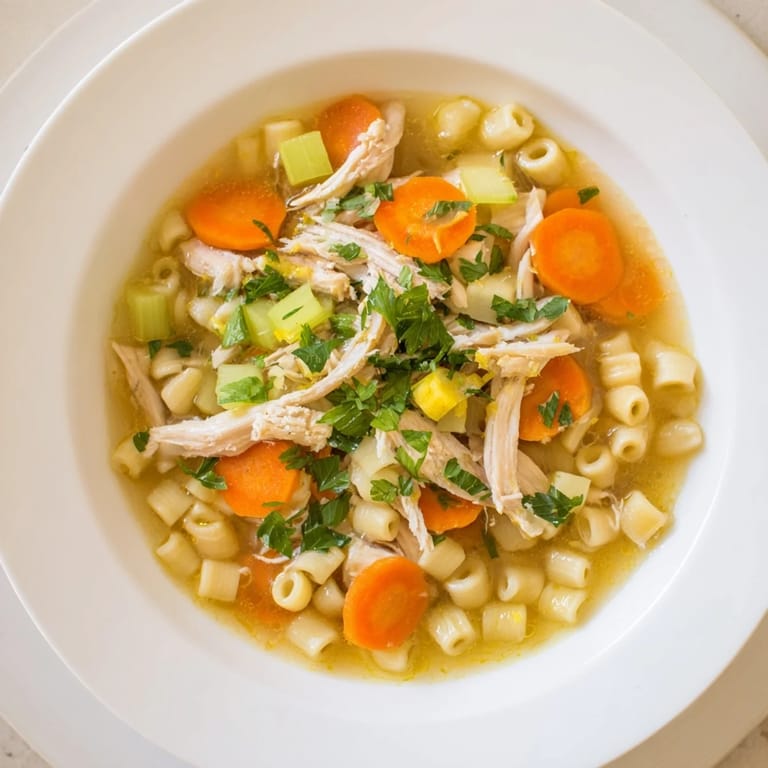
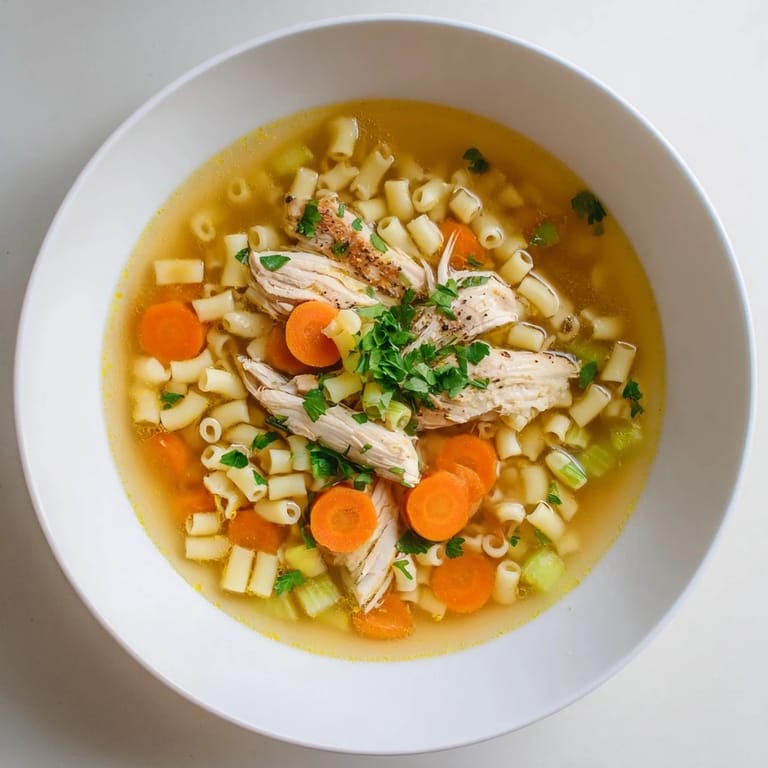
 There's a moment in every good soup where it stops being ingredients in a pot and becomes something that has presence. This one hits that mark when the turmeric-stained broth fully wraps around the shredded chicken and pasta, turning the whole thing golden and inviting. My roommate recovered, obviously, but she still asks me to make this soup every winter—not because she's sick, but because she knows it tastes like someone caring.
When to Make This Soup
This is the soup you make when someone you care about isn't feeling great, but it's also the one you make for yourself on a cold Tuesday night when you need something warm and real. It works just as well as a light dinner when you're not sick as it does as medicine when you are, which is the mark of a recipe worth keeping around.
Customizing Your Bowl
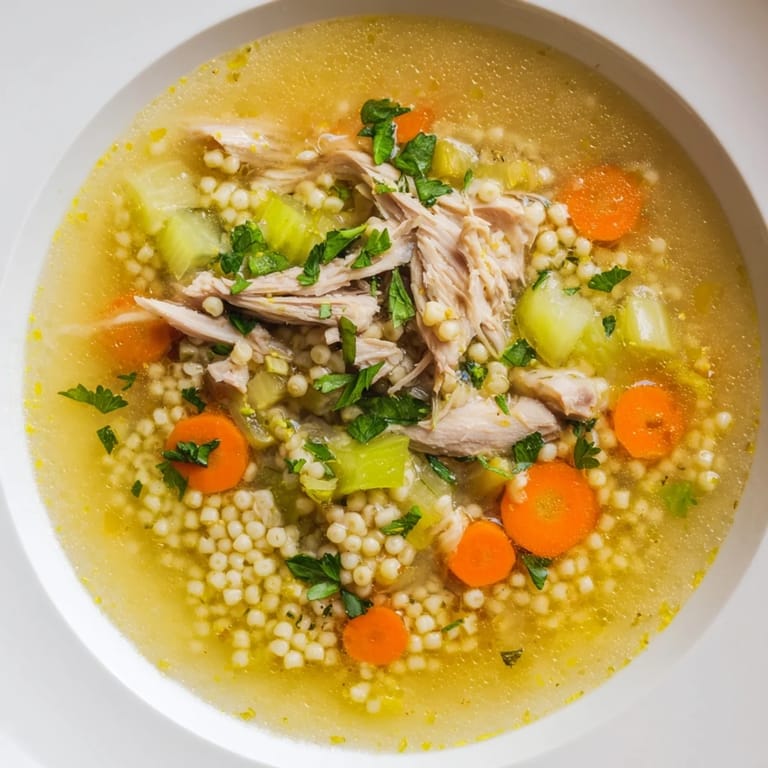
The beauty of this soup is that it's forgiving and flexible, which means you can bend it to your mood. Spinach wilts right in at the end and adds iron, a pinch of cayenne brings heat if you want it, and if you hate ditalini, orzo or small pasta shells swap in without any fussing. I've made it with rotisserie chicken when I was tired, with extra turmeric when I felt a cold coming on, and with whatever vegetables I had in the fridge that needed using.
Serving and Storage Tips
Serve it hot in deep bowls with crusty bread for dipping—that's non-negotiable. This soup keeps beautifully in the fridge for up to 4 days, and it actually tastes better the next day when the flavors have had time to get to know each other.
- If you're making it ahead, store the pasta separately and add it when you reheat so it doesn't turn to mush.
- A drizzle of good olive oil and an extra sprinkle of fresh parsley right before serving makes it feel special every time.
- Freeze it in portions without the pasta, then add fresh pasta when you thaw and reheat for the best texture.
 Save Pin
 There's something quietly powerful about a soup that tastes good and actually does something kind for your body at the same time. This one has earned its place as my go-to recipe for the moments that matter.
Recipe FAQs
- → What type of pasta is best for this soup?
Ditalini pasta is ideal for its small size and shape, which holds broth well. Orzo or small shells can be good substitutes.
- → How does turmeric enhance the flavor?
Turmeric adds a warm, earthy note and subtle color, complementing the garlic and ginger for a balanced taste.
- → Can I prepare the chicken differently?
Searing the chicken first locks in juices and adds flavor, but poaching directly in broth works too for a tender result.
- → What is the best way to ensure the pasta stays al dente?
Cook the ditalini uncovered after adding it to the simmering broth, checking doneness around 8–10 minutes.
- → How can I boost the nutritional value further?
Adding greens like spinach or a pinch of cayenne pepper toward the end enhances vitamins and adds a gentle kick.