 Save Pin
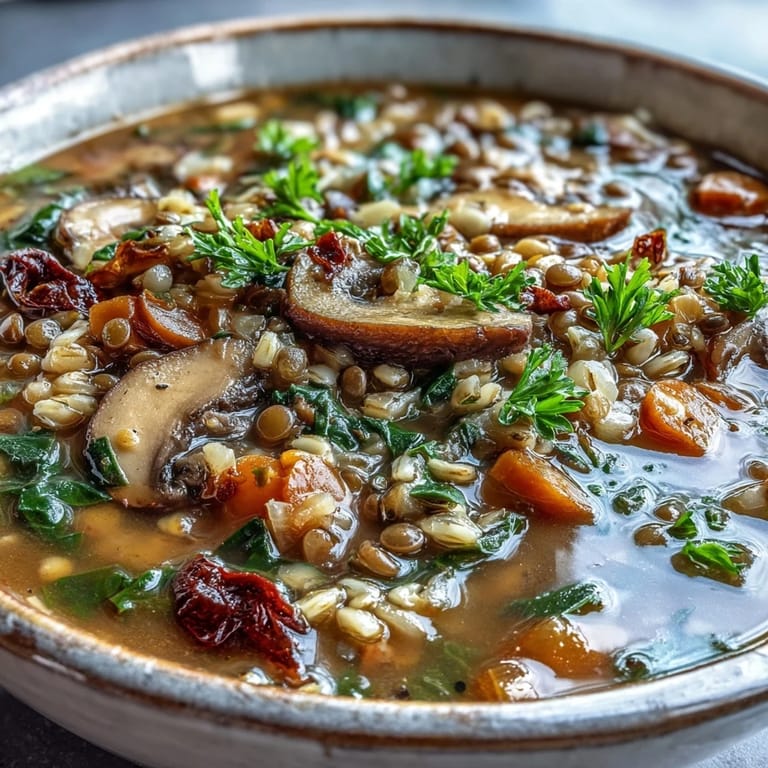
 There's something about a bowl of lentil soup that stops time—at least it did for me on a gray November afternoon when I was sorting through my pantry and discovered three different legumes staring back at me. I'd been meaning to use them all, and suddenly it clicked: why choose when you could build something greater by combining them? That's how this double lentil and mushroom barley soup came to life, born from the practical chaos of a well-stocked kitchen and the kind of happy accident that tastes intentional.
My neighbor knocked on the door mid-October with that look people get when their kitchen is cold and their heart is colder, asking if I had something warm. I ladled this into a container while it was still steaming, and watching her face change from tired to genuinely comforted made me realize this soup wasn't just about nutrition—it was about showing up for people in the simplest, most honest way.
Ingredients
- Red lentils: They dissolve into velvet while cooking, creating natural creaminess without any dairy—a trick I learned after my first batch was too watery.
- Brown lentils: These keep their shape and add earthiness, the grounding force that keeps the soup from feeling one-dimensional.
- Pearl barley: Rinsing it first prevents that starchy cloudiness that used to frustrate me until someone finally explained why it mattered.
- Yellow onion, garlic, carrots, and celery: This aromatic foundation is your soup's backbone, and taking time to let them soften properly builds the flavor you'll taste in every spoonful.
- Cremini mushrooms: They brown and shrink, concentrating their umami in a way that makes the whole pot taste more sophisticated than it has any right to be.
- Collard greens: Added near the end so they stay green and tender, bringing a slight bitterness that balances the earthiness beautifully.
- Vegetable broth: Quality matters here more than quantity; a good broth carries the whole dish on its shoulders.
- Smoked paprika and thyme: These aren't just seasonings—they're the whisper of something deeper, something that makes people ask what's in here.
Tired of Takeout? 🥡
Get 10 meals you can make faster than delivery arrives. Seriously.
One email. No spam. Unsubscribe anytime.
Instructions
- Build Your Base:
- Heat the olive oil over medium heat and let the onions soften for those full three minutes—don't rush it. When you add the garlic, carrots, and celery, you're creating the aromatic foundation that will carry through every spoonful.
- Brown the Mushrooms:
- This step takes longer than you'd think, but it's where the magic happens; the mushrooms release their water and then brown in the oil, concentrating all their savory depth. Stir occasionally so they color evenly and release all that umami into your pot.
- Combine and Simmer:
- Once you add the lentils, barley, and seasonings, give everything a good stir so each piece gets coated. When the broth comes to a boil and you lower the heat to a gentle simmer, you're essentially letting time do the hard work for you.
- Add the Greens:
- After thirty minutes, the lentils and barley should be getting tender; adding the collard greens now means they'll wilt perfectly without turning into sad shadows of themselves. The soup will taste brighter, fresher, more alive the moment they hit the pot.
- Finish and Taste:
- Before serving, fish out those bay leaves and taste carefully—this is your moment to adjust salt and pepper so everything sings. The soup will thicken slightly as it cools, so don't be alarmed if it looks thinner than you expected when it's bubbling.
 Save Pin
 One winter, my daughter came home from school asking why the cafeteria soup tasted like sadness, and I made this that evening just to show her what soup could be. She's been asking for it ever since, which tells me something about food that goes beyond nutrition facts—it's about care showing up in a bowl.
The Magic of Layering Legumes
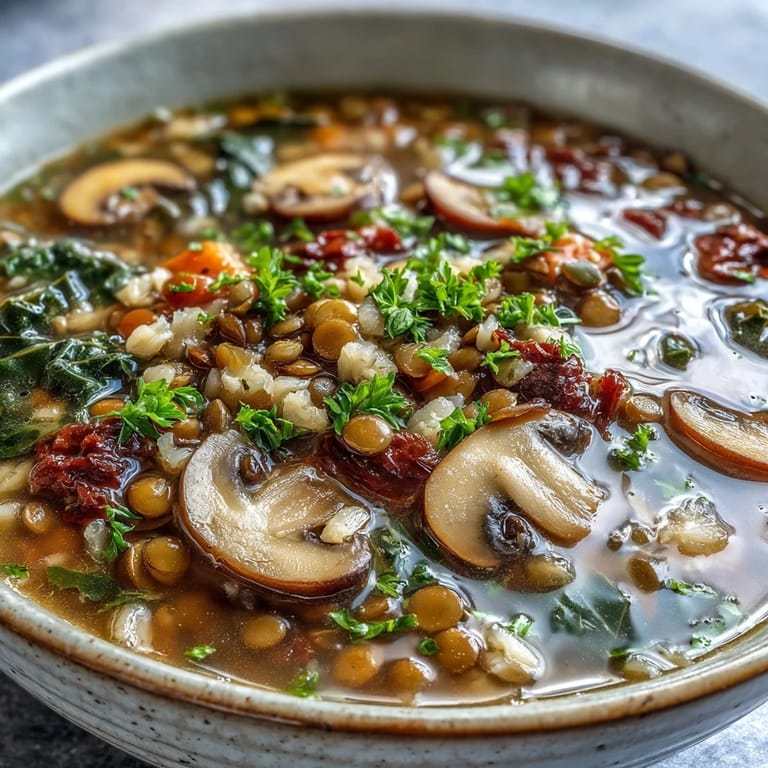
Using two types of lentils was a revelation for me because they perform different jobs in the same pot. The red lentils break down and thicken the broth naturally while the brown lentils hold their form, giving you texture variation that keeps eating interesting. Combined with barley, which adds a slight chew and nutty flavor, you've got a soup that's never boring, never one-note, always surprising.
Customizing Without Losing the Soul
The beauty of this soup is that it's forgiving in ways that feel important to me. Short-grain brown rice works if you're avoiding gluten, though the barley's nuttiness is something special. Swiss chard or kale can absolutely replace collard greens, and honestly, I've added spinach in desperate moments and it turned out fine.
Pairing and Serving Wisdom
This soup gets better with time, something I discovered when I made a big batch and kept eating it for four days straight. Serve it hot with crusty whole-grain bread that you can drag through the broth, and if you're feeling fancy, a squeeze of fresh lemon juice just before eating brightens everything unexpectedly.
- Cold soup becomes thick and rich the next day—thin it gently with water or broth if needed and reheat slowly.
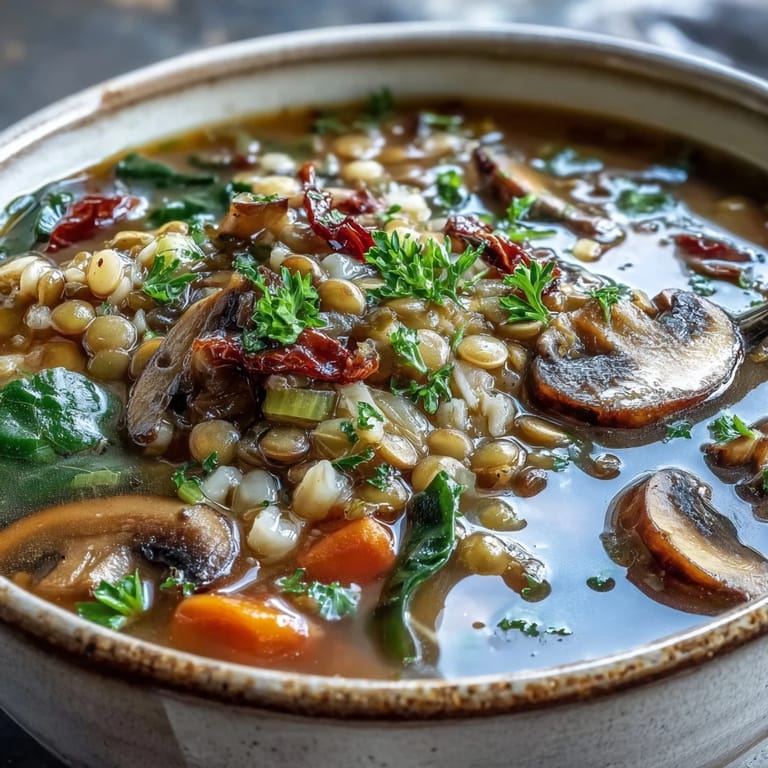
- A drizzle of good olive oil and some fresh parsley on top turns a simple bowl into something that feels intentional and cared for.
- Store it in the fridge for up to five days or freeze it for months, which means you're always just a thaw away from something nourishing.
 Save Pin
 This soup taught me that the most nourishing meals are often the simplest ones, built from humble ingredients that know how to work together. Make it, share it, and watch how something this ordinary becomes exactly what someone needed.
Recipe FAQs
- → Can I make this gluten-free?
Yes, simply substitute pearl barley with short-grain brown rice or quinoa. Ensure your vegetable broth is certified gluten-free as well.
- → How long does this soup keep in the refrigerator?
This soup stores well for 4-5 days in an airtight container. The barley and lentils will continue absorbing liquid, so you may need to add more broth when reheating.
- → Can I use different greens instead of collard greens?
Absolutely. Swiss chard, kale, or spinach work beautifully. Add tender greens like spinach in the last 2-3 minutes of cooking to prevent wilting.
- → Can I freeze this soup?
Yes, it freezes well for up to 3 months. The texture may change slightly upon reheating, but the flavor remains excellent. Thaw overnight in the refrigerator before warming.
- → What type of mushrooms work best?
Cremini or button mushrooms are ideal for their earthy flavor and meaty texture. Portobello mushrooms also work well—just chop them into smaller pieces before adding.
- → Do I need to soak the lentils and barley beforehand?
No soaking required. Red and brown lentils and pearl barley cook directly in the soup, absorbing flavors from the broth and vegetables as they simmer.