 Save Pin
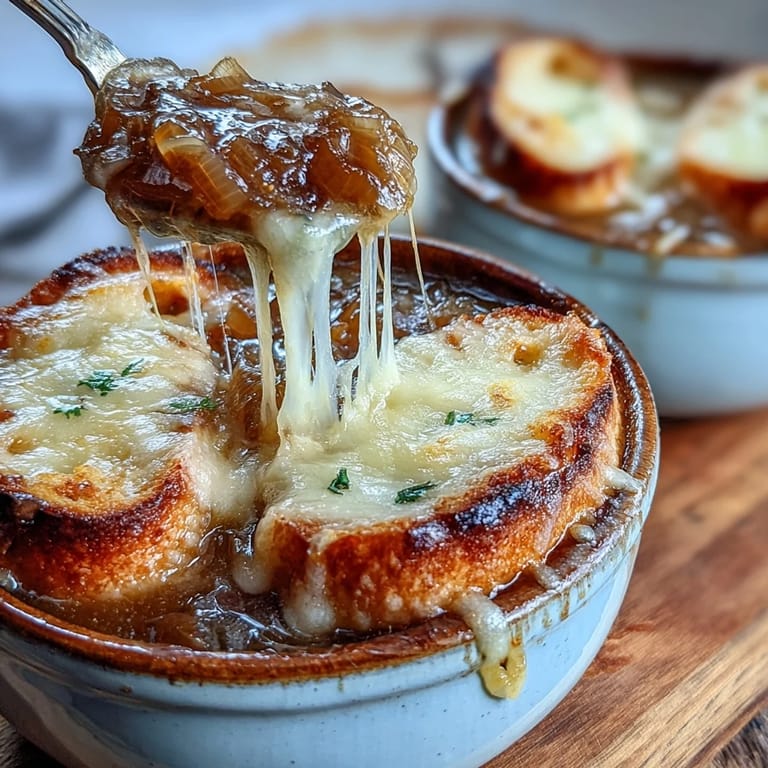
 There's something about a bowl of French onion soup that stops time. My first proper encounter with it happened on a gray Paris afternoon when I ducked into a small bistro on Rue de Rivoli, rain-soaked and uncertain, and found myself face-to-face with this golden, bubbling masterpiece. The cheese stretched like silk, the broth tasted like it had been simmering since morning, and I realized right then that some dishes aren't just food—they're an experience you can hold in a spoon. Now whenever I make it at home, that same magic finds its way into my kitchen.
I made this for a dinner party on the first genuinely cold night of autumn, when everyone arrived in wool coats and tired sighs. By the time I set down those bowls with their crackling cheese tops, the whole mood shifted—suddenly it was less about making conversation and more about closing eyes and savoring. My neighbor actually said the smell alone was worth the visit, and I knew I'd found something worth repeating.
Ingredients
- Yellow onions, thinly sliced: The foundation of everything—use at least four large ones because they'll shrink dramatically as they caramelize, and those golden bits are where the magic lives.
- Leeks, white and light green parts only, thinly sliced: They add a subtle sweetness that onions alone can't provide, but always clean them thoroughly between layers where soil hides.
- Shallots, thinly sliced: These bring a gentle complexity that deepens the flavor without overwhelming, so don't skip them even if you're already using onions.
- Garlic cloves, minced: Add them only after the onions are golden, or they'll burn and turn bitter before the soup finishes cooking.
- Unsalted butter and olive oil: The combination helps the alliums brown evenly while the butter adds that rich, toasted note you can't replicate any other way.
- High-quality beef broth: This is where the soup lives or dies—use something you'd actually want to drink on its own, not the metallic stuff in a can.
- Worcestershire sauce and soy sauce: These are umami amplifiers that most people don't taste directly, but they're what makes you keep going back for another spoonful.
- Dry white wine: It cuts through the richness and adds brightness, so don't use anything you wouldn't drink yourself.
- Fresh thyme and bay leaf: Together they add herbal depth without interfering with the caramelized onion star of the show.
- Baguette, sliced thin: The toasted rounds should be crispy enough to hold up to the hot broth but still absorb its flavor when you bite through the melted cheese.
- Gruyère cheese, grated: Its nuttiness and meltability make it irreplaceable here, though Swiss works in a pinch.
- Parmesan cheese, grated: Optional, but a light layer adds a salty edge that makes the Gruyère taste even better.
Tired of Takeout? 🥡
Get 10 meals you can make faster than delivery arrives. Seriously.
One email. No spam. Unsubscribe anytime.
Instructions
- Start with heat and patience:
- Melt the butter and warm the olive oil in your heavy pot over medium heat, then add your sliced onions, leeks, and shallots all at once. You'll watch them collapse and glisten, and that's when the caramelization magic begins—keep stirring every few minutes so they brown evenly without sticking or burning.
- Build the golden foundation:
- This takes 35 to 40 minutes, which feels impossibly long until you taste what those patient minutes create. The onions should be deep amber, almost mahogany in places, when you add the minced garlic for its final 2-minute moment.
- Wake the pot with wine:
- Pour in your white wine and immediately start scraping the bottom with a wooden spoon, pulling up all those caramelized bits that have stuck to the pot—that's pure concentrated flavor. The wine will hiss and steam, filling your kitchen with a sharp, promising aroma.
- Build the broth foundation:
- Stir in the beef broth, Worcestershire sauce, soy sauce, fresh thyme, and bay leaf, then bring everything to a gentle simmer. Let it bubble softly, uncovered, for 30 minutes while you steal glances at how the flavors are marrying together.
- Taste and adjust:
- Remove from heat, fish out the bay leaf, then taste carefully and season with salt and pepper—you'll probably need less salt than you expect because the broth already brings its own savory depth.
- Toast the bread:
- While the soup simmers, preheat your broiler and arrange baguette slices on a sheet, then slip them under the heat for just a minute or two per side until they're golden and slightly firm—they'll continue crisping as they cool.
- Assemble in bowls:
- Ladle the hot soup into oven-safe bowls, nestle the toasted baguette slices on top, then pile on a generous handful of grated Gruyère and a light shower of Parmesan if you're using it. The cheese should cover the bread and rise slightly above the rim.
- Finish under the broiler:
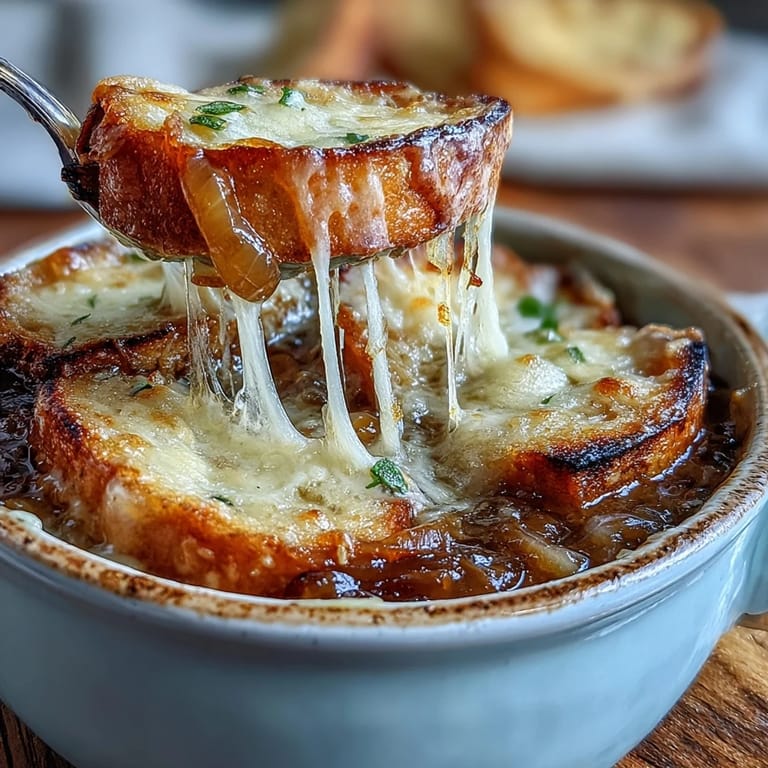
- Slide the bowls under your preheated broiler for 3 to 5 minutes, watching closely as the cheese bubbles, browns in spots, and creates a slightly golden crust. Your kitchen will smell so impossibly good you might find yourself standing right in front of the oven.
- Serve with reverence:
- Let them cool just long enough that you won't burn your mouth on the first spoonful, then eat immediately while the cheese is still stretchy and the broth still steaming.
 Save Pin
 My grandmother always said that French onion soup was proof that the most elegant dishes often come from knowing when to slow down. Watching someone taste this for the first time, seeing their eyes widen at that first spoonful, reminds me that she was absolutely right.
The Caramelization Secret
The hour you spend caramelizing onions isn't wasted time—it's where the entire personality of this soup develops. Those golden, sticky layers on the bottom of the pot are actually sweet compounds and proteins that have undergone a chemical transformation called the Maillard reaction, creating flavors that literally cannot exist in raw onions. This is why even the simplest French onion soup tastes like it's been simmering in a Parisian kitchen for generations. Every stir, every minute of patience, adds dimension you simply cannot rush.
Wine and Umami Layers
The white wine isn't there for fanciness—it's there to cut through the richness and add brightness that makes you keep wanting more. Then the Worcestershire and soy sauce slip in quietly, doing their umami work without announcing themselves, which is exactly how they should be. Combined with the caramelized onions, which are already naturally rich in umami compounds, you end up with a soup that tastes like someone spent all day making it even though you didn't.
Cheese, Bread, and the Final Moment
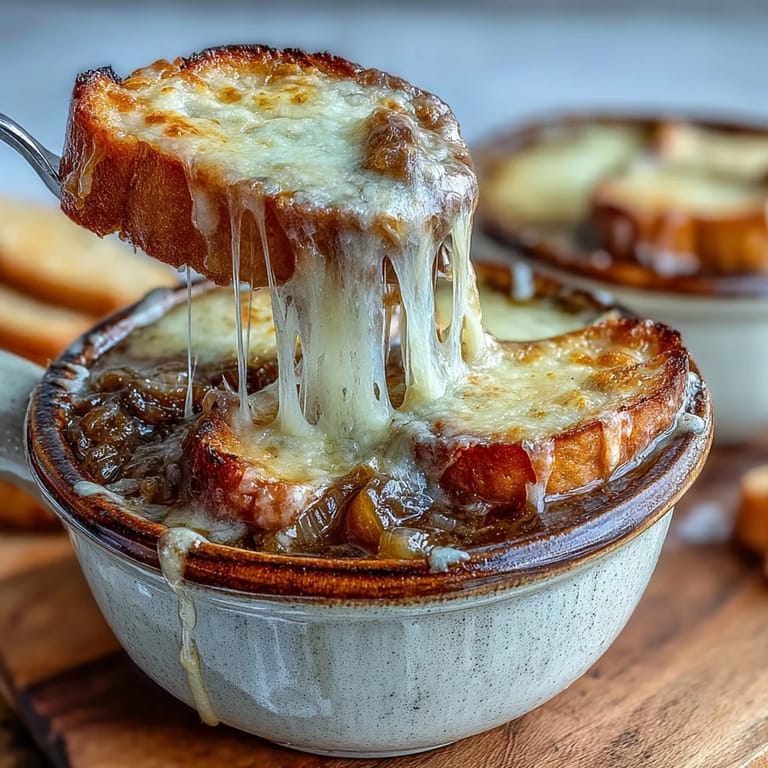
Everything leading up to the broiler is important, but this final step is where the soup becomes what you came for. The Gruyère has to be thick enough to form that golden, slightly crispy top while still draping the bread beneath it, and the bread has to be toasted first or it'll turn to soggy sadness. That moment when you lift the spoon and cheese stretches like silk, when you taste the contrast between melted cheese and crispy bread and hot, savory broth—that's the whole point.
- Never skip toasting the bread separately or it will absorb broth and disintegrate instead of providing structure and texture.
- If your cheese isn't browning enough under the broiler, move the bowls closer to the heat source but watch them closely because it can go from perfect to burnt in seconds.
- The soup tastes even better the next day after the flavors have melded overnight, so don't hesitate to make it ahead and reheat gently before broiling.
 Save Pin
 This soup has a way of making people feel cared for without any fuss—just the smell alone tells them someone spent time on them. Make it when someone needs comfort, or make it for yourself on nights when you need to remember that good things are worth the wait.
Recipe FAQs
- → How long does it take to caramelize the onions properly?
Patience is key here. The onions need about 35–40 minutes over medium heat to reach that deep golden brown color and develop the proper sweetness. Don't rush this step—it's where most of the flavor comes from.
- → Can I make this vegetarian?
Absolutely. Simply substitute the beef broth with a high-quality vegetable broth and use a vegetarian Worcestershire sauce or omit it entirely. The result remains deliciously satisfying.
- → What cheese works best for the topping?
Gruyère is the traditional choice for its excellent melting properties and nutty flavor. Swiss or Emmental make fine substitutes. Adding Parmesan creates an extra savory dimension.
- → Why add soy sauce and Worcestershire?
Both ingredients add layers of umami that enhance the savory depth without overpowering the onion flavor. They're secret ingredients that many professional kitchens use.
- → Can I make this ahead of time?
The soup base actually improves after a day or two in the refrigerator. Store the soup separately from the bread and cheese, then assemble and broil just before serving for the best texture.
- → What type of onion works best?
Yellow onions are ideal for their balanced sweetness and flavor profile. The combination of onions, leeks, and shallots creates a more complex allium flavor than using just one variety.