 Save Pin
 There's something about cooking entirely in white that makes you slow down. I wasn't trying to be precious about it—my partner had mentioned wanting an all-white dinner, something that felt almost otherworldly, and I found myself standing in the kitchen wondering how to make elegance taste as good as it looks. The cauliflower purée came first, creamy and almost cloud-like, and then I realized the real magic wasn't in complexity but in restraint. Sometimes the most dramatic dishes whisper instead of shout.
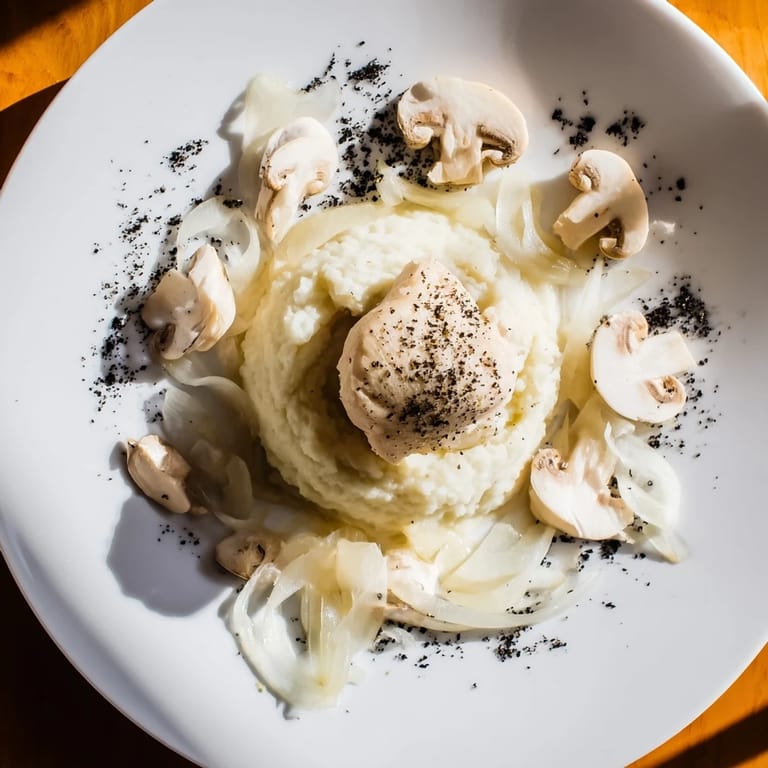
I made this for a dinner party on a winter evening when the whole point was to escape the usual chaos for a few hours. My guests arrived expecting comfort food, but when I set down these pristine white plates with their dramatic pepper shadows, the conversation actually paused. That's when I knew the dish had worked—not because it was fancy, but because it had stopped everyone from rushing through the moment.
Ingredients
- Boneless, skinless chicken breasts (4 small, about 150 g each): Small breasts poach evenly and stay tender; avoid large ones that'll dry out in the middle before the edges are done.
- Cauliflower (1 medium head, about 700 g): This becomes the soul of the dish, so don't skip on quality—look for firm, bright florets with no browning.
- White button mushrooms (250 g, sliced): They stay pale and delicate when sautéed gently; cremini will work but adds color you don't want here.
- White onion (1 small, finely chopped): Milder than yellow onions and keeps the color palette clean.
- Garlic (2 cloves, minced): Add it late in the mushroom cooking so it doesn't brown and discolor everything.
- Heavy cream (120 ml): This is what makes the purée silky; don't substitute with half-and-half or the texture suffers.
- Unsalted butter (30 g) and cream cheese (30 g): Together they create richness and a subtle tang that keeps the purée from feeling one-note.
- Extra-virgin olive oil (2 tablespoons): Use a good one you'd actually taste; it makes the mushrooms sing.
- Low-sodium chicken broth (500 ml): Clear or white broth only—any golden color ruins the visual story.
- Freshly cracked black pepper (1 teaspoon): This is the only shadow on the plate, so crack it yourself right before serving; pre-ground looks like dust.
- Salt, to taste: Season gradually throughout cooking rather than all at once.
Tired of Takeout? 🥡
Get 10 meals you can make faster than delivery arrives. Seriously.
One email. No spam. Unsubscribe anytime.
Instructions
- Start the chicken:
- Bring your broth to a gentle simmer in a medium saucepan and add salt. Slide the chicken breasts in carefully—they should barely move in the liquid, not roll around violently. Cover and let them poach low and slow for 12–15 minutes; you're listening for barely a whisper of a simmer, not a boil.
- Build the purée:
- While the chicken cooks, boil your cauliflower until it's completely tender—a fork should slide through with zero resistance. Drain it thoroughly (any water left behind dilutes the cream), then blend it with the cream, butter, and cream cheese until it's impossibly smooth. Taste and adjust salt; the warmth of the blender will fade, so season it as if it's cooled slightly.
- Sauté the mushrooms:
- Heat olive oil in a large skillet over medium-high heat and let it shimmer for a moment. Add your onion and let it turn translucent and soft—this takes about 2 minutes and matters more than people realize. Add the mushrooms and let them cook undisturbed for a couple minutes before stirring; you want them to release their moisture and turn golden, not gray.
- Finish the mushrooms with care:
- Stir in the garlic at the very last moment—just until fragrant—and season lightly with salt. The whole step should take 5–6 minutes total; overcooked mushrooms get dark and bitter, which defeats the whole visual purpose.
- Plate with intention:
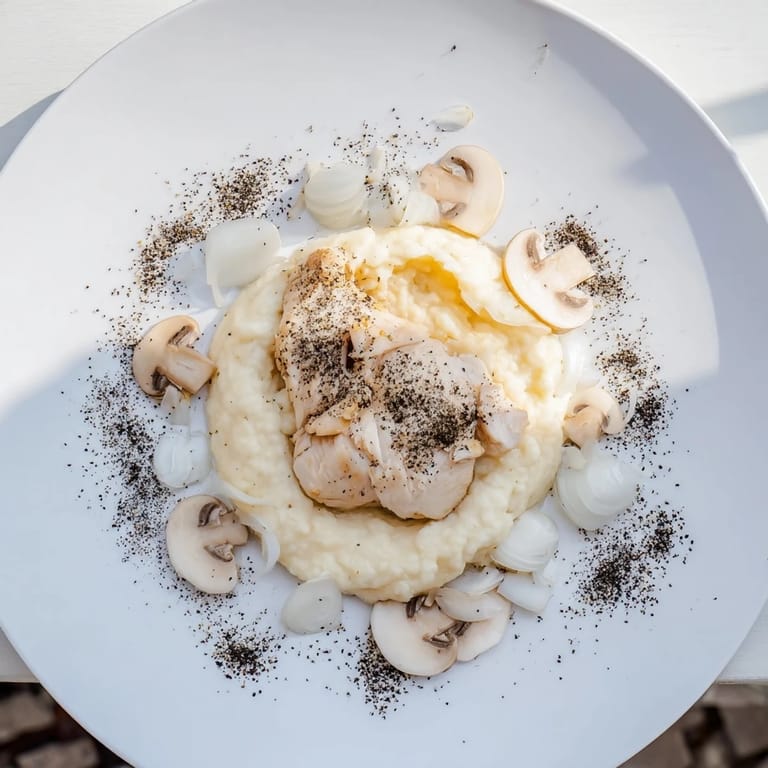
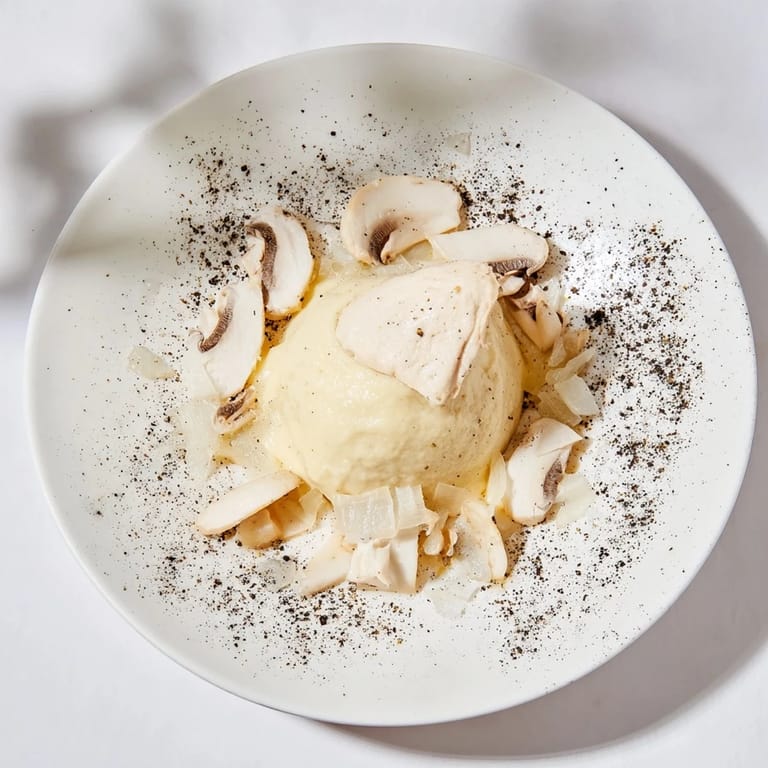
- Spoon a generous mound of cauliflower purée onto each plate—think generous, not timid. Set one chicken breast on top, scatter the mushrooms around it artfully, and then take a moment. That final crack of black pepper goes around the plate, creating shadows that frame everything else; sprinkle it as if you're painting, not seasoning.
 Save Pin
 I remember plating this dish for the first time and suddenly understanding why restaurants spend so much time thinking about whitespace. The emptiness of the plate became part of the design. My hands moved slower, more deliberately, and by the time I finished, I wasn't just cooking anymore—I was creating something that existed in that space between food and art.
The Story Behind the Name
Calling it the Ghostly Gala felt right because there's something almost ethereal about cooking in monochrome. White meals aren't common, and when you serve one, people notice. It's not about being pretentious; it's about choosing restraint. I kept thinking about old black-and-white photographs while I made this—how they capture emotion through contrast rather than color. That's what the black pepper does here; it's not a flavor choice as much as a visual one, a small rebellion against all the whiteness that came before it.
Making It Your Own
This dish is austere enough that small changes make big impressions. Some people infuse the chicken broth with a crushed garlic clove or a bay leaf before poaching, which adds aroma without coloring the liquid. You could even add a whisper of white wine to the broth if you wanted something a touch more complex. For vegetarians, thick slices of roasted celeriac or firm tofu poached in vegetable broth work beautifully and have an almost creamy texture that mirrors the chicken. The point isn't to follow rules but to understand why each element is there—so you know what you can play with.
The Moment It Became Perfect
I had made this three times before something shifted. On the fourth try, I finally understood that the beauty wasn't in perfection—it was in the intentionality. A mushroom placed just slightly off-center, a pepper crack that caught the light, a purée spoon that left a small swirl. Those imperfect moments are what made it real. This is the kind of dish that teaches you the difference between cooking something and owning it.
- Pair this with a crisp Sauvignon Blanc or a dry Riesling that won't compete with the delicate flavors.
- Serve this to people you want to slow down with, not to impress with technique.
- Remember that plating takes an extra two minutes, and those two minutes change everything.
 Save Pin
 This meal taught me that the most elegant things aren't always the most complicated. Sometimes simplicity is the hardest choice to make, and the most worth making. Serve this when you want the table to feel less like dinner and more like a moment.
Recipe FAQs
- → How do I poach chicken perfectly for this dish?
Simmer chicken breasts gently in low-sodium broth with a pinch of salt, keeping the heat low to ensure the meat remains tender and moist without overcooking.
- → What makes the cauliflower purée so creamy?
Blending cooked cauliflower with heavy cream, butter, and cream cheese creates a silky smooth purée with rich flavor and velvety texture.
- → Why are cracked black pepper shadows added off the food?
Sprinkling cracked black pepper around the dish (not on top) creates dramatic visual contrasts that enhance the ethereal, ghostly presentation.
- → Can I substitute chicken with a vegetarian option?
Yes, thick slices of roasted celeriac or tofu poached in vegetable broth make excellent alternatives while maintaining texture and flavor harmony.
- → What wine pairs well with this dish?
A crisp Sauvignon Blanc or a dry Riesling complements the creamy and delicate flavors without overwhelming the palate.
- → How do I keep the mushrooms pale and tender?
Sauté mushrooms over medium-high heat with onions and garlic until soft and lightly golden, taking care not to brown them deeply.