 Save Pin
 I discovered honey mustard salmon by accident on a Tuesday evening when I had salmon thawing and nothing else seemed right. The honey caught my eye in the pantry, and I wondered what would happen if I mixed it with the sharp mustard sitting next to it. Twenty minutes later, my kitchen smelled incredible, and my family actually asked for seconds before I'd even sat down. That's when I knew I'd stumbled onto something special.
I made this for my sister's book club gathering last spring, and everyone assumed I'd spent the afternoon in the kitchen. The compliments kept coming, and honestly, the best part was how simple it was to pull off while still chatting and enjoying wine. That night taught me that good food doesn't need to be complicated to feel thoughtful.
Ingredients
- Salmon fillets (4, about 6 oz each): Look for fillets with a bright color and firm texture; skin-on keeps the fish moist during baking, but skinless works just fine if that's your preference.
- Dijon mustard (3 tbsp): This is your backbone, giving you that sophisticated tang that honey alone could never deliver.
- Whole grain mustard (2 tbsp): The seeds add texture and a slightly earthier flavor that rounds out the sharpness of the Dijon.
- Honey (3 tbsp): Use real honey, not the squeezable kind with additives, because you'll taste the difference in how it caramelizes.
- Olive oil (1 tbsp): Just enough to help the sauce coat evenly and prevent the mustard from tasting too intense.
- Lemon juice (1 tbsp): Fresh is crucial here; bottled will feel flat and dusty by comparison.
- Garlic (2 cloves, minced): Minced small so it distributes throughout the sauce and doesn't overpower the delicate fish.
- Salt and pepper (½ tsp salt, ¼ tsp black pepper): Season to taste once you've mixed everything together, because the mustards already carry some saltiness.
Tired of Takeout? 🥡
Get 10 meals you can make faster than delivery arrives. Seriously.
One email. No spam. Unsubscribe anytime.
Instructions
- Heat your oven and prep your stage:
- Preheat to 400°F and line your baking sheet with parchment paper; this saves you from scrubbing later and ensures the salmon doesn't stick.
- Mix the golden glaze:
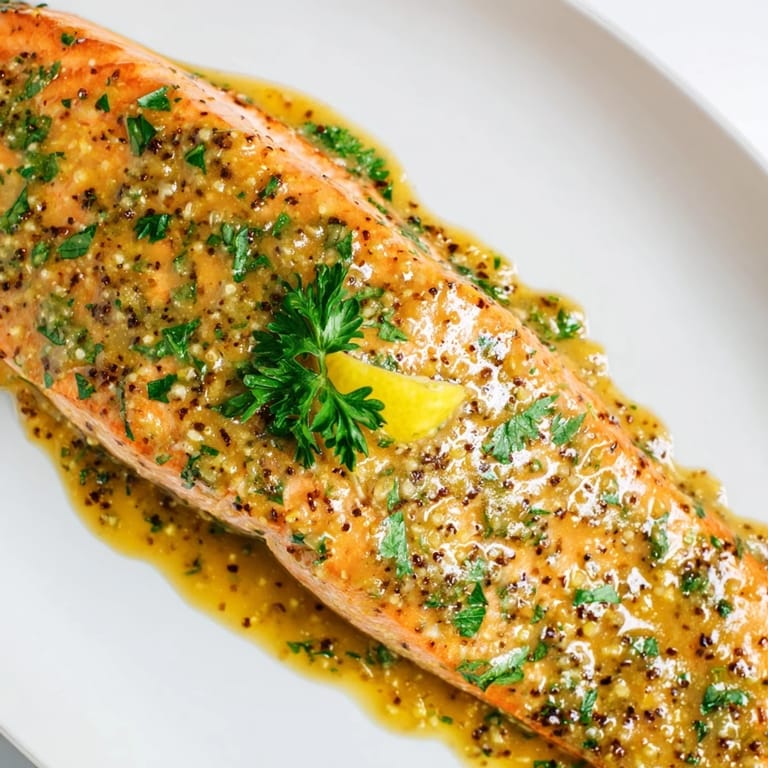
- In a small bowl, whisk both mustards with honey, olive oil, lemon juice, and garlic until you have something that looks glossy and well blended. Taste it straight from the spoon—it should make your mouth wake up with sweet and sharp in equal measure.
- Arrange and dry:
- Place salmon fillets on your prepared sheet and pat them completely dry with paper towels; moisture is the enemy of a good glaze.
- Coat generously:
- Spoon the sauce over each fillet, spreading it to cover the tops and letting some drip down the sides.
- Bake until flaky:
- Slide the sheet into the oven for 15 to 20 minutes, depending on the thickness of your fillets; you'll know it's done when the salmon flakes easily with a fork and the center is opaque.
- Finish and serve:
- Pull it from the oven, scatter chopped parsley over the top if you want that fresh green pop, and serve with lemon wedges on the side.
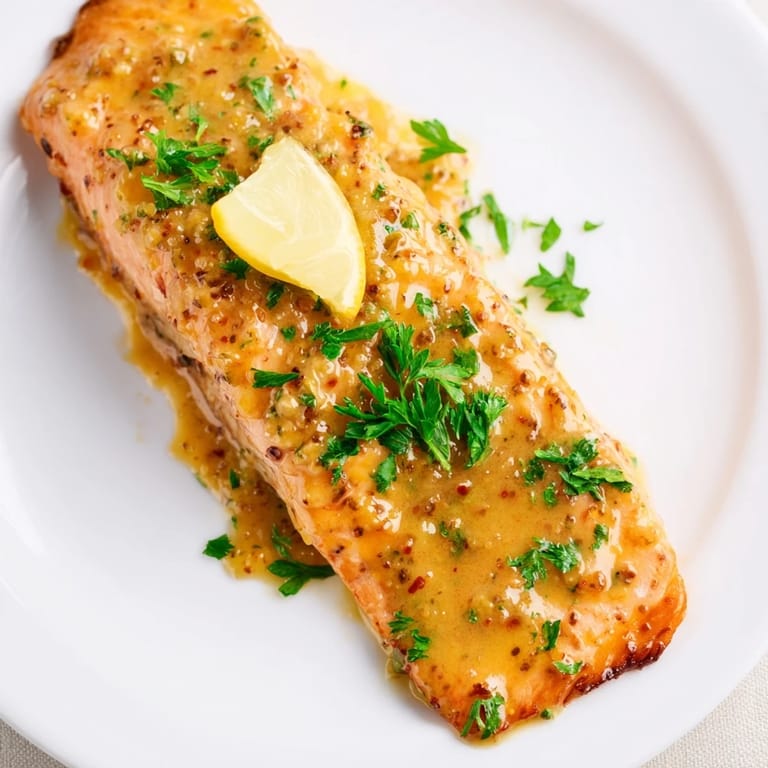 Save Pin
 The first time I served this to my partner, he looked genuinely surprised when I told him it came together in under 30 minutes. That's the moment I realized this recipe had become my secret weapon for making ordinary nights feel a little less ordinary.
The Caramelization Magic
If you want the sauce to develop an even richer, slightly caramelized finish, slide the baking sheet under the broiler for the last minute or two of cooking. Keep a close eye on it, though—you're looking for the edges of the glaze to turn golden and bubbly, not charred. I learned this trick the hard way after one batch got too dark, but now it's my favorite move when I want to elevate the whole dish.
What to Serve Alongside
This salmon plays beautifully with almost anything on the side because the sauce is sweet and tangy without being heavy. I usually go for roasted asparagus or a simple green salad to balance the richness, but I've also done it with rice pilaf when I wanted something warmer. The beauty is that you can build your plate around whatever produce is fresh that week.
Customizing to Your Taste
This sauce is forgiving enough to adjust without losing its soul. If you find mustard too bold, swap in regular yellow mustard for the Dijon; if you want it sweeter, a touch more honey won't hurt. I've also played around with adding a pinch of smoked paprika or a tiny dash of hot sauce for people who like a little depth and heat.
- For a milder sauce, use regular yellow mustard instead of Dijon and reduce the amount by a tablespoon.
- If you prefer more citrus brightness, a small squeeze of fresh ginger can add unexpected complexity.
- Remember that broiling for just one to two minutes makes all the difference in achieving that caramelized top.
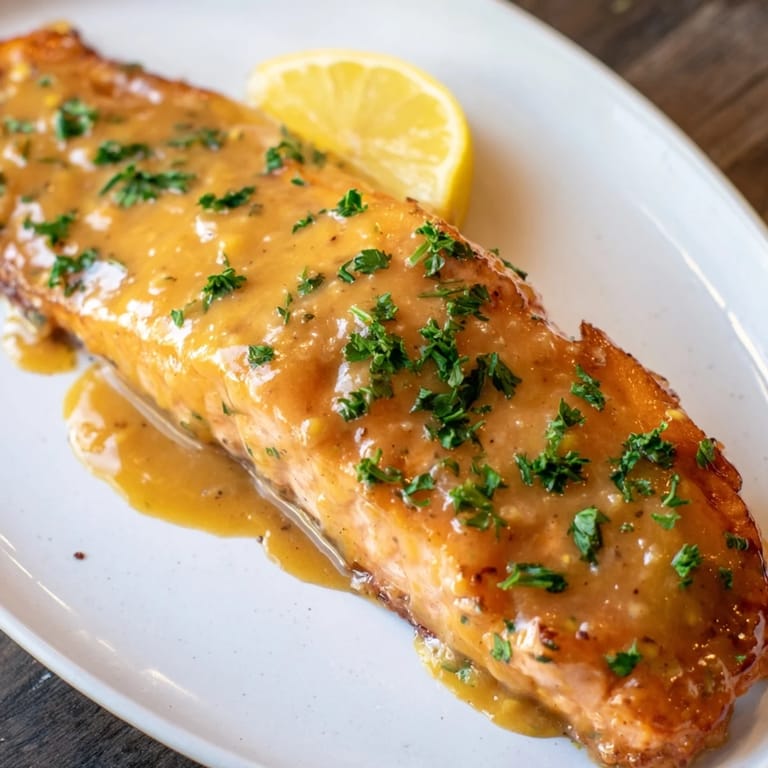 Save Pin
 This recipe has become my go-to because it proves that delicious food doesn't require hours in the kitchen or a list of obscure ingredients. Every time I make it, I'm reminded that the best meals are often the simplest ones.
Recipe FAQs
- → What type of salmon works best for this dish?
Both skin-on and skinless fillets work well, allowing for crispy edges or easier serving depending on preference.
- → How can I achieve a caramelized finish?
Broil the salmon for the last 2 minutes after baking to add a golden caramelized top.
- → Can I adjust the sweetness or tanginess of the glaze?
Yes, altering the amount of honey or mustard balances sweetness and tang to your taste.
- → What sides complement this honey mustard salmon?
Rice, quinoa, roasted vegetables, or fresh salads pair beautifully with the rich, glazed salmon.
- → Is this dish suitable for gluten-free diets?
Yes, all ingredients are gluten-free, making this salmon dish suitable for gluten-sensitive individuals.
- → Can I substitute Dijon mustard with a different type?
Regular yellow mustard can be used for a milder flavor without compromising the overall taste.