 Save Pin
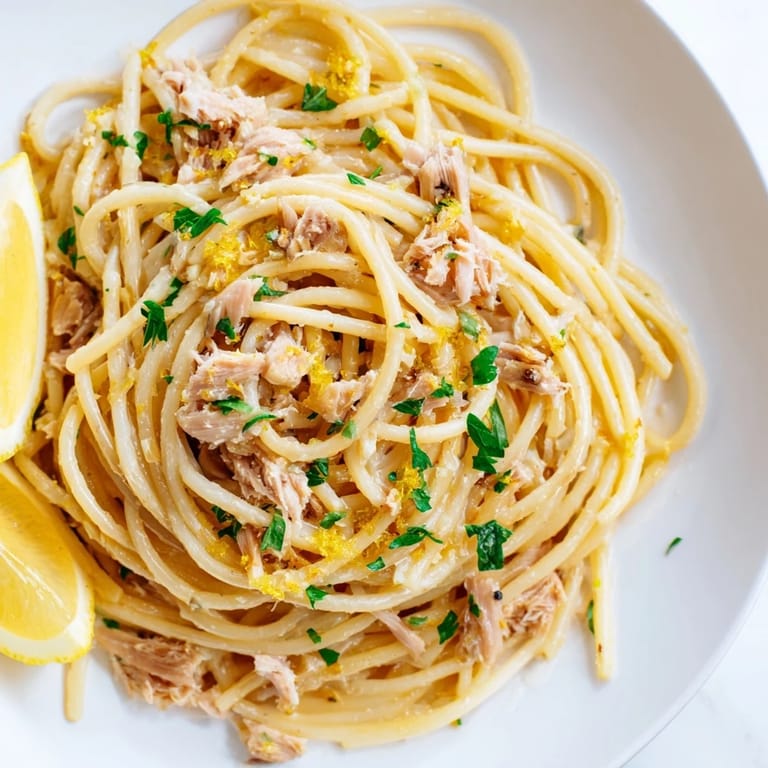
 There's something about lemon and garlic that pulls me into the kitchen on nights when I need dinner fast. This spaghetti came together one Wednesday after I found two cans of good tuna hiding in the back of my pantry and half a lemon on the counter. The smell of garlic hitting hot oil, followed by that bright citrus note, reminded me why some of the simplest dishes feel like a small celebration.
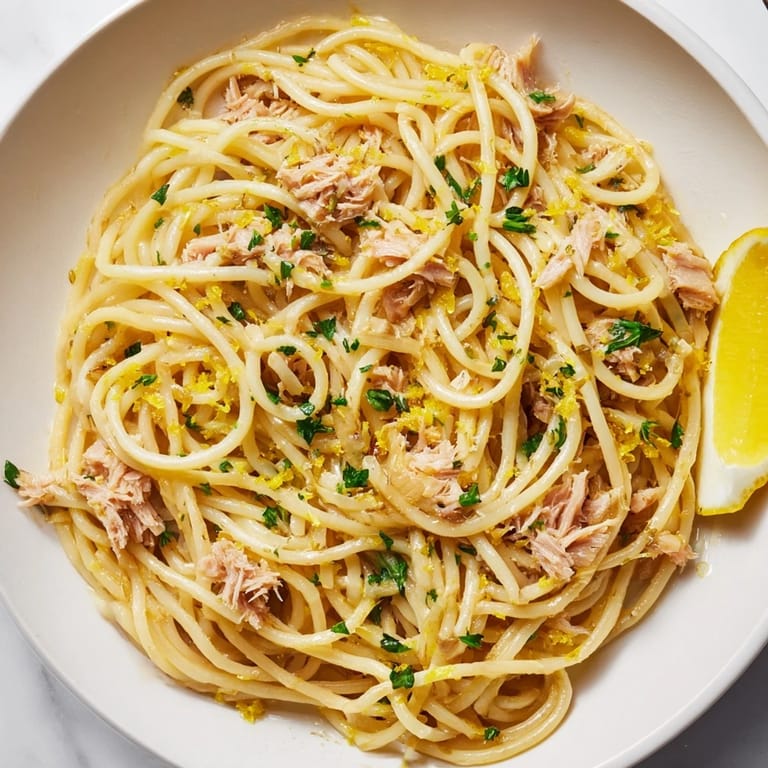
I made this for a friend who'd been working long hours and said she couldn't face another takeout meal. Watching her twirl the first bite on her fork and taste that combination of tender pasta, flaky tuna, and bright lemon—she looked genuinely relieved. Sometimes food is just food, but sometimes it's exactly what someone needed that day.
Ingredients
- Spaghetti (400 g): Use dried pasta; it holds up better to the light sauce and cooks to the right texture in about 12 minutes.
- Olive oil (2 tbsp): Good oil matters here since it's not hidden in cream—it's the base of your whole sauce.
- Garlic (3 cloves, finely sliced): Slice it thin so it cooks evenly and releases its flavor without turning bitter or brown.
- Lemon (1, zested and juiced): The zest brings concentrated flavor; the juice adds brightness—use both for real citrus depth.
- Canned tuna in olive oil (2 × 160 g cans): Drain it well but save that flavorful oil for cooking if you like; flake it gently by hand to keep it tender.
- Red pepper flakes (1/2 tsp, optional): Just a whisper of heat balances the lemon and adds dimension without overwhelming anything.
- Fresh flat-leaf parsley (1/4 cup, chopped): Add it at the end so it stays bright green and herbaceous; dried parsley won't give you the same life here.
- Pasta cooking water (1/4 cup reserved): This starchy water is your secret—it helps the sauce coat the noodles instead of sliding off.
- Salt and freshly ground black pepper: Taste as you go; the lemon is acidic, so you won't need much salt.
Tired of Takeout? 🥡
Get 10 meals you can make faster than delivery arrives. Seriously.
One email. No spam. Unsubscribe anytime.
Instructions
- Boil the pasta:
- Bring a large pot of salted water to a rolling boil and cook the spaghetti to al dente—tender but still with a tiny bit of resistance when you bite it. Before you drain it, scoop out and reserve 1/4 cup of that starchy cooking water; it's liquid gold for pulling everything together.
- Sauté the garlic:
- While the pasta cooks, pour olive oil into a large skillet over medium heat. Add your sliced garlic and listen for the gentle sizzle—this should take about 1 to 2 minutes until it's fragrant and just turning golden at the edges, but never brown or crispy.
- Build the sauce:
- Add the drained tuna to the garlic oil, breaking it up gently with the back of a wooden spoon so it stays flaky. Stir in the lemon zest, lemon juice, and red pepper flakes if you're using them, and let everything warm together for 2 to 3 minutes.
- Bring it together:
- Add your cooked spaghetti directly to the skillet with the tuna. Toss everything gently, adding reserved pasta water a splash at a time until the sauce clings lightly to each strand instead of pooling at the bottom.
- Finish and season:
- Fold in the fresh parsley and taste carefully—adjust salt and pepper until it feels right. The lemon already brings acidity, so you're just balancing flavors at this point.
- Serve:
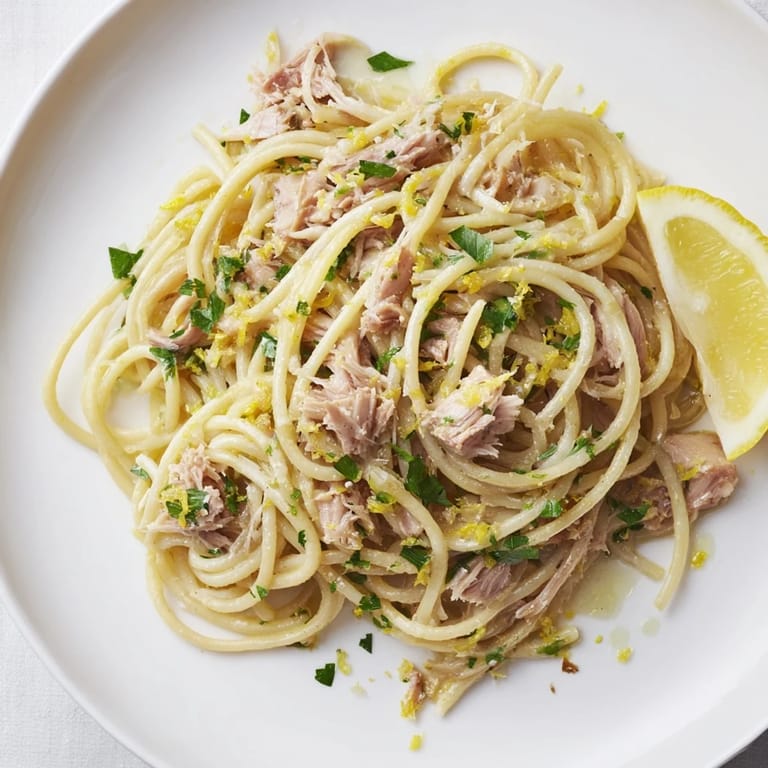
- Divide among bowls, scatter extra parsley on top, and set lemon wedges on the side so everyone can add more brightness if they want it.
 Save Pin
 This pasta reminds me that some of my favorite meals have been the ones I almost didn't make—the kind that came together because I stopped overthinking and just cooked what was in front of me. There's real freedom in that.
Why This Works
The magic is in restraint. This dish has no cream, no butter, no complicated technique—just olive oil, lemon, and good tuna allowed to shine. The pasta water does the heavy lifting, emulsifying everything into a silky coating that feels rich even though it's not. Every element tastes like itself while also tasting like part of something bigger, which is exactly what good cooking should do.
When to Make This
Wednesday nights when energy is low but hunger is real. Friday nights when you want something fast so you can relax sooner. Summer when you crave light, fresh food that doesn't heat up the kitchen. Winter when lemon feels like a small bright moment in shorter days. Basically whenever you need proof that simple food can be deeply satisfying.
Small Details That Matter
The difference between good and forgettable often lives in the smallest choices. Use a microplane or fine grater to get real lemon zest, not those pale shreds from a channel zester. Let the garlic actually perfume the oil instead of rushing it. Taste the lemon juice before you add it—some lemons are more sour than others, and your hand should guide the amount. These aren't rules; they're just attention, and attention is what makes you fall in love with cooking again.
- Fresh lemon is non-negotiable; bottled juice tastes flat and hollow next to the brightness you need here.
- If you love anchovies, a finely chopped one stirred in adds a deeper savory note that plays beautifully against the citrus.
- Leftovers actually taste better the next day as the flavors settle, though they're best enjoyed at room temperature or gently warmed.
 Save Pin
 This is the kind of meal that sneaks into your regular rotation and stays there. It asks very little of you but gives back something warm and real.
Recipe FAQs
- → How do you keep tuna flaky in the dish?
Drain the tuna well and gently break it up with a spoon while gently warming it in olive oil to maintain a tender, flaky texture.
- → Can I use fresh tuna instead of canned?
Fresh tuna can be seared and flaked for this dish, but canned tuna in olive oil offers convenience and rich flavor ideal for quick preparation.
- → What type of lemon should I use?
Use fresh lemons with bright, firm skin for zest and juice to provide the best citrus aroma and acidity balance.
- → How do I prevent the garlic from burning?
Cook the garlic over medium heat just until fragrant and lightly softened, stirring constantly to avoid browning and bitterness.
- → What does pasta water add to the dish?
Adding reserved pasta water helps emulsify the olive oil and lemon juices with the pasta, creating a lightly coated and silky sauce.