 Save Pin
 There's something about the way a Mediterranean salad comes together that reminds me of a lazy afternoon spent at a friend's kitchen table, watching her casually chop vegetables while telling stories about a trip to Greece. She didn't measure anything, didn't stress about perfection, just threw tomatoes and cucumbers into a bowl with the confidence of someone who'd eaten this salad a hundred times. That's when I realized this wasn't really a recipe to follow—it was a way of cooking that celebrates simplicity and the quality of what you're working with.
I made this for a potluck once on a sweltering summer evening, and it was the first thing to disappear. One guest came back asking if I'd add more feta next time, and another asked if the olives were really necessary. Those conversations taught me that this salad invites customization—people aren't just eating it, they're thinking about it, mentally adjusting it to their preferences.
Ingredients
- Ripe tomatoes: Choose ones that smell sweet when you bring them close to your face; they should give slightly when you squeeze them gently, not rock hard.
- Cucumber: A crisp one snaps cleanly when you bend it; watery varieties sometimes make the salad soggy if it sits around.
- Red onion: Slicing it thin and using it raw brings a sharp, clean bite that balances all the creamy and salty elements.
- Feta cheese: The crumbly kind works best here because it distributes better than blocks, but don't over-crumble—you want some actual texture.
- Kalamata olives: Those briny, slightly meaty olives are the soul of this; they're worth seeking out instead of settling for canned black ones.
- Extra virgin olive oil: This is where you shouldn't compromise—good olive oil tastes peppery and fruity, not like neutral oil with a fancy label.
- Red wine vinegar: It brings a gentle acidity that doesn't overpower; white vinegar would feel too harsh.
- Dried oregano: A small amount goes a long way, and it ties everything back to Mediterranean cooking in one little pinch.
Tired of Takeout? 🥡
Get 10 meals you can make faster than delivery arrives. Seriously.
One email. No spam. Unsubscribe anytime.
Instructions
- Gather and prep your vegetables:
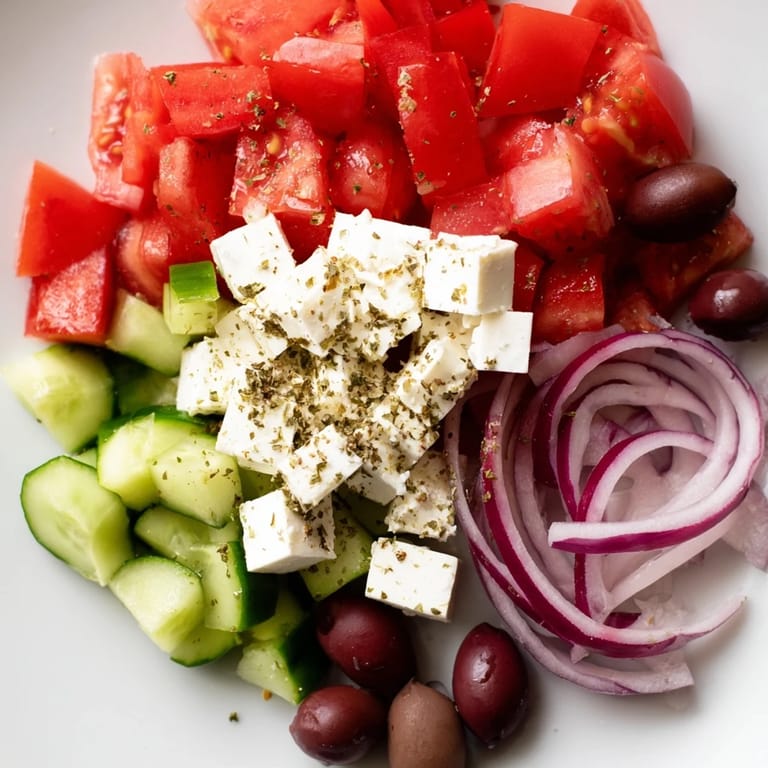
- Wash everything, then lay out your cutting board and knife. Dice the tomatoes into rough pieces about the size of your thumbnail—don't overthink this, they don't need to be perfect. Cucumber goes the same way, and the red onion should be thin enough that you can almost see through the slices.
- Build the salad base:
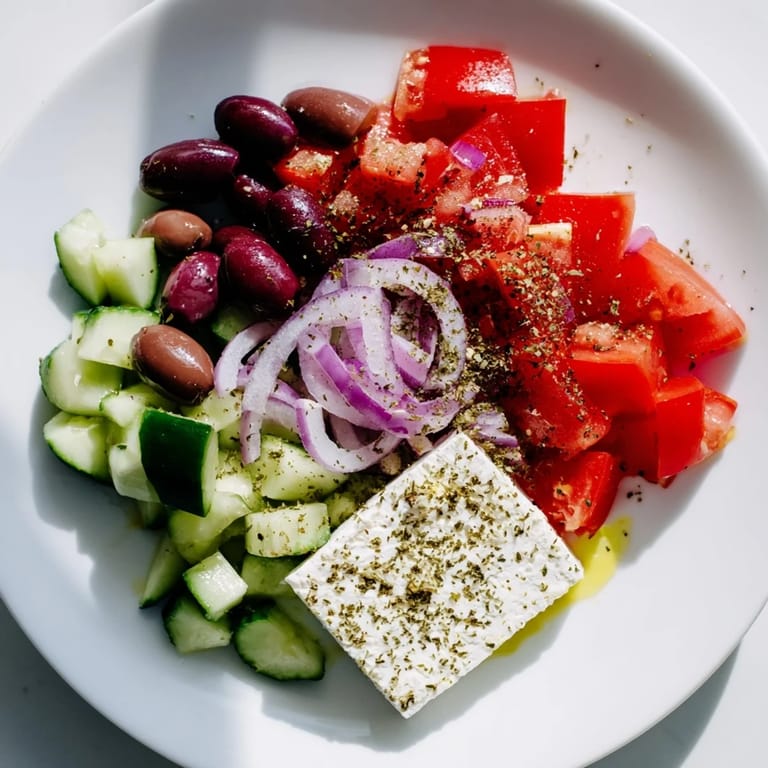
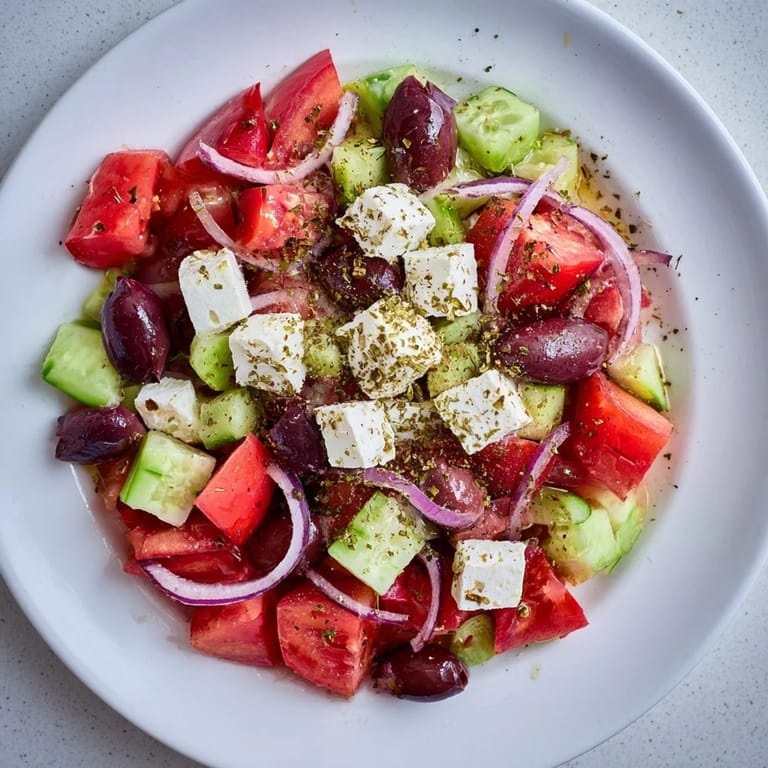
- Throw the tomatoes, cucumber, onion, and olives into a large bowl. This is the moment where the colors start looking inviting, and you'll notice how much of the bowl they actually fill. It's tempting to start eating here, but resist.
- Add the feta gently:
- Scatter the crumbled feta over the vegetables without stirring. Just let it sit there for a moment—it looks beautiful against the reds and greens, and this is your only chance to see them separated before they get mixed together.
- Make the dressing:
- In a small bowl, whisk the olive oil, vinegar, and oregano together until they start looking a little cloudy and emulsified. Taste it straight from the spoon—it should make your mouth water a bit, with a good balance of richness and tang. Adjust salt and pepper until it tastes like something you'd want on everything.
- Bring it together:
- Pour the dressing over the salad and give it a gentle toss with two spoons or your hands. Don't mash everything around like you're angry at it; let the ingredients tumble around and get coated without turning into mush. A few pieces of feta breaking apart is fine—it actually makes the dressing creamier.
- Final touch and serving:
- If you're using fresh herbs, tear or chop them roughly and sprinkle them on top. Serve right away while everything is still cold and crisp, or cover and refrigerate for a few hours if your guests aren't there yet.
 Save Pin
 There was a moment last summer when my neighbor and I were sitting on a porch eating this salad, and she just looked at the bowl and said, 'This is why I love summer.' Nothing fancy happened—just fresh food, good company, and the satisfaction of knowing that sometimes simple is exactly what you need.
Variations and Additions
Bell peppers bring a sweet crunch that some people miss, and roasted chickpeas can turn this from a side dish into something you'd actually call lunch. Capers add a briny funk that competes with the olives for your attention, so use one or the other, not both. If you're feeling adventurous, a handful of fresh dill or basil completely changes the personality of the salad, taking it from Greek-inspired to something more Italian.
Making It Your Own
The beauty of this salad is that it's not precious—it genuinely wants you to adjust it. Some people add a splash of lemon juice instead of vinegar, others toss in some chickpeas or white beans to make it heartier. I once added a drained can of artichoke hearts because that's what I had, and it became my favorite version for weeks.
Timing and Storage
This salad actually gets better if you make it a few hours ahead—the flavors marry together and the vegetables soften just slightly while staying fresh. Just hold off on the herbs and any garnishes until right before serving; they'll turn brown and sad if they're sitting around soaking in vinegar. If you somehow have leftovers, eat them the next day for lunch, though they'll start to get watery by day three no matter how carefully you stored them.
- Make it up to 4 hours ahead, but add fresh herbs only when you're ready to serve.
- Store in an airtight container in the coldest part of your fridge to keep everything as crisp as possible.
- If it does get watery, drain some liquid and add a fresh squeeze of vinegar and a drizzle of oil to brighten it back up.
 Save Pin
 This is the kind of salad that makes you understand why people move to places with Mediterranean climates. It's not trying to impress anyone—it's just good, honest food that tastes exactly like what it is.
Recipe FAQs
- → What type of olives are best for this salad?
Kalamata olives are recommended for their rich, briny flavor that complements the other fresh ingredients.
- → Can I use a different cheese instead of feta?
Yes, you can substitute with a similar crumbly cheese like goat cheese or a vegan feta alternative if preferred.
- → How should the dressing be prepared?
Whisk together extra virgin olive oil, red wine vinegar, dried oregano, salt, and pepper until well combined, then toss with the salad ingredients.
- → Is this suitable for gluten-free diets?
Yes, all ingredients are naturally gluten-free, making this salad safe for gluten-sensitive individuals.
- → Can I add other vegetables to enhance the salad?
Absolutely. Sliced bell peppers or capers can be included for extra flavor and texture.