 Save Pin
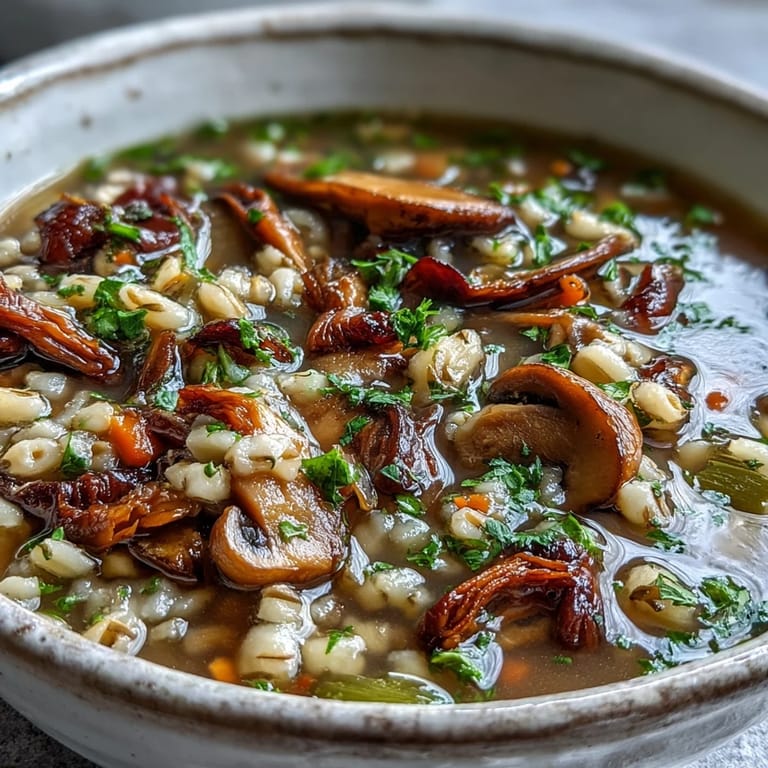
 My grandmother kept a mason jar of dried shiitake mushrooms in her pantry, and on gray afternoons when the kitchen felt too quiet, she'd steep them in boiling water until the whole room smelled like the forest floor after rain. That broth became the soul of her mushroom barley soup, a dish so humble it never seemed fancy, yet somehow it was the one everyone asked her to make. Years later, I recreated it almost by accident, hunting through my spice drawer on a chilly evening, and realized how little you actually need to turn simple ingredients into something that tastes like home.
I made this soup for a friend who'd just moved into her first apartment with nothing but a hot plate and determination, and watching her taste it straight from the pot—eyes closing, shoulders dropping—reminded me that the best recipes aren't about impressing anyone. They're about feeding people when they need it most, and this one does exactly that without pretension or fuss.
Ingredients
- Dried shiitake mushrooms (1 oz): These little powerhouses pack more flavor than you'd think possible; soaking them creates a golden, earthy broth that's the backbone of everything else.
- White mushrooms, sliced (8 oz): Fresh mushrooms add body and texture that balance the deeper notes from the shiitake, and they soften beautifully as the soup simmers.
- Pearl barley, rinsed (3/4 cup): Rinsing removes excess starch so it won't cloud your broth, and the barley becomes tender without turning to mush if you give it time.
- Olive oil (2 tbsp): Keep the heat moderate so the oil doesn't smoke and turn bitter; it just needs to coax the vegetables into softness.
- Onion, carrots, and celery (1 medium onion, 2 carrots, 2 stalks): This classic trio builds a savory foundation; don't skip dicing them evenly so they cook at the same pace.
- Garlic cloves, minced (3 cloves): Mince it fine and add it after the softer vegetables so it doesn't burn and turn acrid.
- Low-sodium vegetable broth (8 cups): Low-sodium lets the mushrooms and herbs shine without overwhelming salt; you can always taste and adjust at the end.
- Bay leaves, dried thyme, and dried parsley (2 bay leaves, 1 tsp each herb): These three dried herbs work together to create that classic deli-style depth without being aggressive or one-note.
- Salt and pepper: Season gradually throughout cooking and finish with a final taste; this is where you make it truly yours.
- Fresh parsley for garnish: A sprinkle of green on top looks alive and adds a bright note that cuts through all that richness.
Tired of Takeout? 🥡
Get 10 meals you can make faster than delivery arrives. Seriously.
One email. No spam. Unsubscribe anytime.
Instructions
- Wake up the dried mushrooms:
- Pour boiling water over your dried shiitake and let them sit for 20 minutes—you'll watch them plump up and soften, releasing all that concentrated mushroom essence into the water below. Strain that liquid through a fine sieve to catch any grit, then slice the mushrooms into bite-sized pieces.
- Sauté your vegetables:
- Heat olive oil in a large pot over medium heat, then add your diced onion, carrots, and celery, letting them cook for about 5 minutes until the edges turn golden and they smell sweet. This is the moment the kitchen really comes alive—it's the smell that tells you everything is starting.
- Add the garlic:
- Stir in your minced garlic and cook for just 1 minute until it becomes fragrant but hasn't browned. If it looks like it's starting to color, you've waited too long; it'll taste bitter.
- Build layers with the mushrooms:
- Toss in your fresh white mushrooms and the sliced shiitake, then let them cook for about 5 minutes, stirring occasionally, until they release their liquid and darken slightly. The pot will fill with that earthy mushroom steam, and you'll know everything is coming together.
- Combine barley, liquid, and seasonings:
- Add your rinsed pearl barley along with the reserved mushroom soaking liquid and all 8 cups of vegetable broth, then stir in the bay leaves, thyme, parsley, and a generous pinch of salt and pepper. Give it a good stir so nothing sticks to the bottom.
- Simmer low and long:
- Bring it to a boil, then immediately lower the heat to a gentle simmer, cover the pot, and let it bubble quietly for 50 to 60 minutes, stirring every 15 minutes or so. You're waiting for the barley to turn tender and creamy while all those flavors marry together into something cohesive and warm.
- Finish and adjust:
- Fish out the bay leaves, take a spoonful, taste it carefully, and add more salt and pepper if it needs it—sometimes it will, sometimes it won't, and that's the beauty of cooking. If it seems too thick, add a splash of extra broth; if it's too thin, you can let it simmer uncovered for a few more minutes.
- Serve with grace:
- Ladle the soup into bowls, scatter fresh parsley over the top if you have it, and serve it hot, maybe with some good rye bread alongside.
 Save Pin
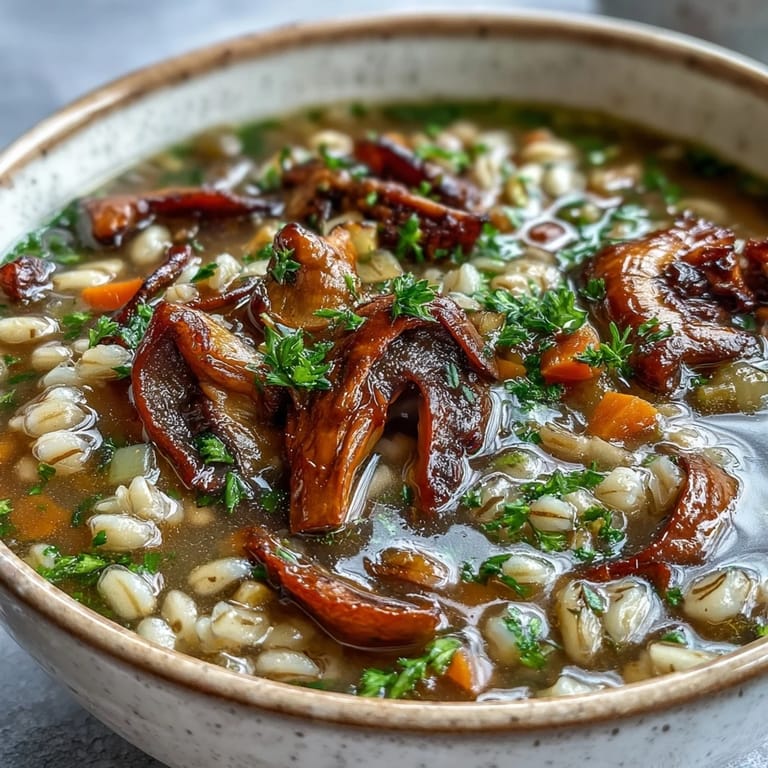
 There's a moment in cooking, usually around the 40-minute mark of simmering, when you lift the lid and the steam hits your face and suddenly the kitchen smells exactly like where you want to be. This soup creates that moment reliably, every single time, and that's when you know you've made something worth making.
Why Dried Shiitake Changes Everything
The first time I tasted a properly made mushroom soup, I couldn't quite identify what made it taste so deep and satisfying—it wasn't just mushrooms, but it wasn't meat either. It turns out dried shiitake contain compounds that enhance umami, that fifth taste that makes your mouth feel fuller and more satisfied even though you're eating vegetables. Fresh mushrooms alone can't achieve that same richness no matter how long you simmer them, so that dried mushroom soaking liquid isn't optional; it's the secret handshake that makes this soup taste like a deli's version, not your first attempt.
The Pearl Barley Question
Pearl barley confuses people because they think it's fancy or requires special treatment, but it's actually one of the most forgiving grains in your pantry. It doesn't break down or turn mushy in the way that, say, regular rice might; instead it becomes tender with a slight bite that adds texture and body. Rinsing it first removes the starch that would otherwise cloud your beautiful broth, leaving it clear and inviting in the bowl.
Stretching and Storing This Soup
One of my favorite things about this recipe is how easily it bends to what you have on hand and what your situation calls for. If you want something heartier, dice up a potato or parsnip and add it with the other vegetables—it'll soften into the broth and make the whole thing more substantial. This soup keeps beautifully in the refrigerator for up to five days and freezes well for up to three months, though I'd recommend storing the broth and solids separately if you're freezing it so the barley doesn't absorb all the liquid while frozen.
- If you're not vegetarian, chicken broth trades places for vegetable broth seamlessly and adds another layer of savory depth.
- Leftover soup thickens as it sits, so always stir in a splash of fresh broth or water before reheating, and taste again to see if it needs more seasoning.
- Serve with sturdy bread like rye or sourdough that can stand up to the rich broth without falling apart.
 Save Pin
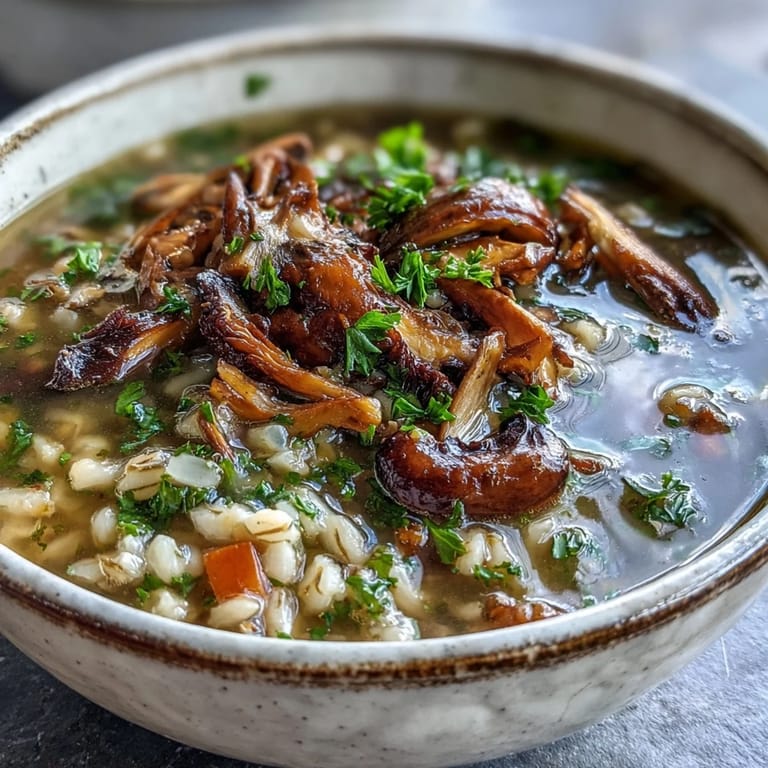
 This soup tastes like someone cared enough to cook something real for you, and that's the whole point. Make it, serve it hot, and watch people slow down long enough to actually taste what they're eating.
Recipe FAQs
- → Can I use other types of mushrooms?
Absolutely. While shiitakes provide deep umami, you can substitute dried porcini or morels. For fresh mushrooms, cremini, portobello, or button mushrooms work well. Mix varieties for more complex flavor.
- → Do I need to rinse the barley before cooking?
Yes, rinsing pearl barley removes dust and any debris. It also helps wash away excess starch, preventing the soup from becoming overly thick or gummy during cooking.
- → Why strain the mushroom soaking liquid?
Dried mushrooms often carry sand or grit from harvesting. Straining through a fine-mesh sieve or cheesecloth ensures this doesn't end up in your soup while preserving all the flavorful liquid.
- → Can I make this gluten-free?
Pearl barley contains gluten. For a gluten-free version, substitute with quinoa, brown rice, or buckwheat groats. Adjust cooking time accordingly—quinoa needs about 15-20 minutes, while rice takes 45-50 minutes.
- → How long does this soup keep?
Refrigerate for up to 5 days in an airtight container. The barley will continue absorbing liquid, so add more broth or water when reheating. It also freezes well for up to 3 months.
- → What can I add for more protein?
Stir in cooked white beans, lentils, or diced tofu during the last 15 minutes of simmering. For non-vegetarians, shredded chicken or turkey works beautifully with the existing flavors.