 Save Pin
 I stumbled onto sushi bake completely by accident one Tuesday night when my roommate challenged me to make sushi without the rolling. I was skeptical, honestly—it felt like cheating—but watching the layers come together in a baking dish made me realize something: sometimes the best discoveries happen when you stop trying to follow tradition exactly. This casserole captures everything I love about sushi without the hand cramps, and it's become my go-to when I want something that feels fancy but doesn't require sushi-rolling skills I don't have.
The first time I served this to my friends who are actual sushi snobs, I was nervous. One of them took a bite and just went quiet for a moment—I thought I'd made a terrible mistake. Then she asked for seconds before anyone else had finished their first helping. That quiet moment of approval meant more to me than any enthusiastic feedback ever could, because it told me I'd created something that honored sushi without trying to be something it wasn't.
Ingredients
- Sushi rice: The foundation matters here—sushi rice has a different starch content than regular rice, and that stickiness is what holds the casserole together rather than falling apart into individual grains.
- Rice vinegar, sugar, and salt: These three create the seasoning that brings everything alive; don't skip this step even if you're tempted.
- Salmon fillet: I learned to buy slightly thicker fillets because they stay more moist during baking and flake into bigger, more satisfying pieces.
- Soy sauce and sesame oil: These season the salmon before baking, creating a deeper flavor than if you just season it afterward.
- Cream cheese and Kewpie mayonnaise: Kewpie makes a real difference—it's richer and has a slight egg yolk sweetness that regular mayo doesn't have.
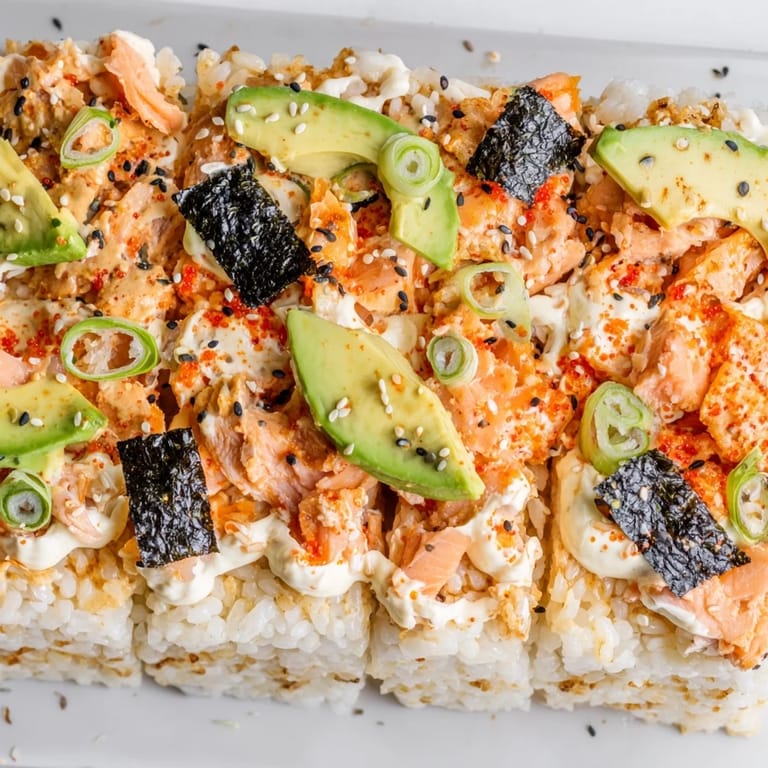
- Avocado: Add this right before serving so it stays bright and doesn't brown from the warm casserole underneath.
- Nori sheets: Cutting them into squares instead of strips prevents them from getting chewy and strange when they touch the warm rice.
- Sesame seeds, spring onions, and soy sauce: These finish the dish with brightness and texture, making each bite feel complete.
Tired of Takeout? 🥡
Get 10 meals you can make faster than delivery arrives. Seriously.
One email. No spam. Unsubscribe anytime.
Instructions
- Rinse and cook the rice:
- Rinse the sushi rice under cold water, stirring gently with your hand until the water runs clear—this removes excess starch that would make the rice gluey. Combine with water in a saucepan, bring to a boil uncovered, then cover, reduce heat to low, and let it steam for 15 minutes without peeking.
- Season the rice while warm:
- While the rice is still steaming, whisk together rice vinegar, sugar, and salt in a small bowl. Once the rice has rested for 10 minutes, gently fold this mixture in with a fork, fluffing as you go. Spread it evenly into your greased baking dish and let it cool slightly—you want it warm, not piping hot, when you add the salmon layer.
- Prepare and bake the salmon:
- Preheat your oven to 400°F and place the salmon on a parchment-lined tray. Brush it lightly with soy sauce and sesame oil, crack some black pepper over the top, and bake for 12 to 15 minutes until it flakes easily with a fork. Don't overbake—salmon goes from perfect to dry incredibly fast.
- Mix the creamy salmon layer:
- While the salmon cools just enough to touch, beat together softened cream cheese, mayonnaise, lemon juice, and sriracha if you like heat until smooth and fluffy. Break the cooked salmon into flakes and fold it in gently—you want chunks, not a paste.
- Layer and bake the casserole:
- Spread the salmon mixture evenly over your cooled rice, then bake the whole thing for 10 minutes until it's warmed through and just beginning to turn golden. This second bake brings the layers together without drying anything out.
- Finish and serve:
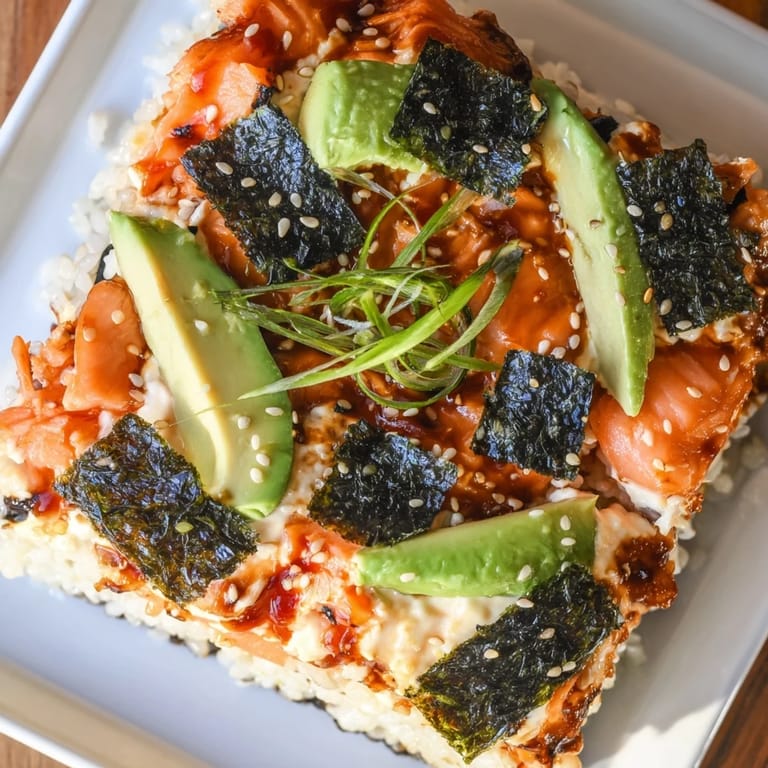
- Top the hot casserole with sliced avocado, squares of nori, toasted sesame seeds, and thinly sliced spring onions. Serve it warm with small bowls of soy sauce, pickled ginger, and wasabi for dipping.
 Save Pin
 There's something deeply satisfying about serving this dish—it comes out of the oven looking like you've done something complicated, but you know exactly how much of it was just layering and waiting. That contradiction between effort and result is why I keep making it for people I want to impress without exhausting myself.
Why This Works as a Crowd Pleaser
Sushi bake sits in this beautiful middle ground where it feels special enough for dinner guests but casual enough that you're not stressed if something's slightly imperfect. People expect traditional rolls to be technically flawless, but a casserole? A casserole can be rustic, and that's part of its charm. I've served this at potlucks where people who claim they don't like sushi came back for thirds, which tells me something about the power of warm, creamy salmon and perfectly seasoned rice.
Substitutions and Variations That Actually Work
I've tested different proteins and some combinations are better than others. Canned tuna works in a pinch—drain it really well and taste as you go because tuna can be saltier than fresh salmon. Cooked shrimp creates a completely different texture that's lighter and more delicate. Crab meat, if you can find quality stuff, elevates this into something restaurant-worthy. The creamy layer is flexible too; you can absolutely use light cream cheese and mayo if you're watching calories, though the result will be slightly less luxurious. One trick I discovered by accident: panko breadcrumbs mixed with a little butter and toasted sesame seeds, sprinkled on top before the second bake, adds incredible crunch.
Pairing and Serving Ideas
The casserole format makes this perfect for feeding a group, and it reheats beautifully if you add the avocado and nori after warming rather than before. I usually serve it with a crisp Sauvignon Blanc or cold sake, and always keep pickled ginger and wasabi at the table because people want to customize their bites. The flavors are bold enough that it stands on its own, but humble enough to appreciate whatever toppings or sides you want to add.
- Chill the serving plates slightly if you have time—it keeps the casserole warm longer while you're eating.
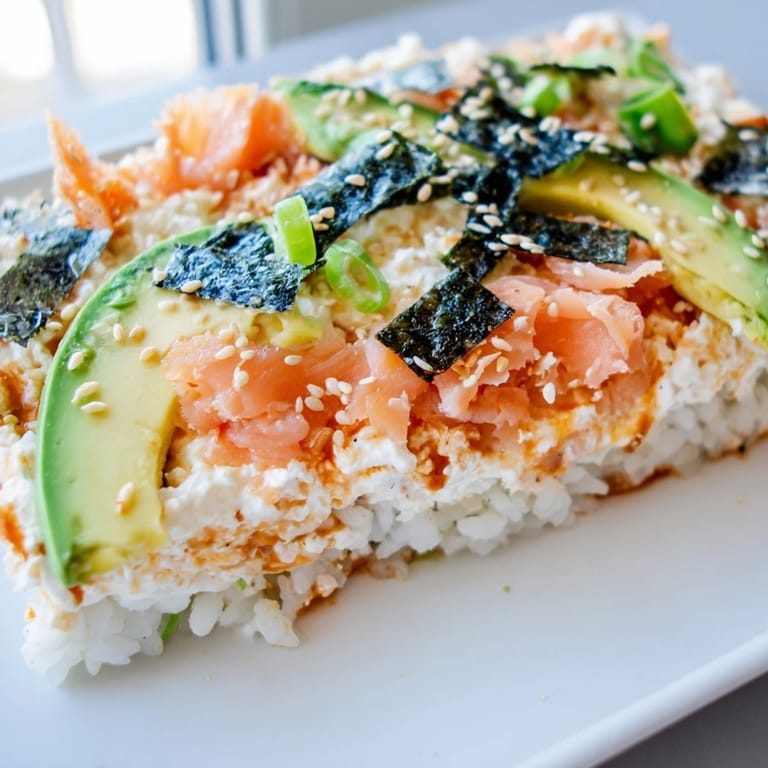
- Cut into squares, not slices, so each piece has a balanced ratio of all the layers.
- Leftover casserole (without avocado) keeps for two days and tastes great warmed in a 300-degree oven until heated through.
 Save Pin
 This recipe has become my answer to the question of how to cook something that feels impressive without burning myself out. It's become the thing I make when I want to show someone I care through food, but also want time to actually enjoy their company while eating it.
Recipe FAQs
- → What type of rice is best for this dish?
Sushi rice is ideal due to its sticky texture which helps hold the layers together after baking.
- → Can I use other fish besides salmon?
Yes, cooked crab meat, canned tuna, or cooked shrimp can be used as flavorful alternatives to salmon.
- → How should the avocado be prepared?
Use ripe avocados sliced thinly to top the dish just before serving to maintain freshness and creaminess.
- → What is the purpose of the creamy layer?
The creamy mixture combines cream cheese and mayonnaise with a touch of sriracha and lemon, blending smoothly with the flaked fish for a rich, balanced flavor.
- → How is the dish served for best taste?
Serve warm with soy sauce on the side, accompanied optionally by pickled ginger and wasabi for added complexity.
- → Are there any suggested wine pairings?
A crisp, dry white wine such as Sauvignon Blanc or chilled sake complements the freshness and richness perfectly.