 Save Pin
 The first time I made Thai curry pasta, I was standing in my kitchen on a rainy Tuesday evening, staring at a half-empty jar of green curry paste and a box of linguine, wondering if they had any business being in the same dish. But something about the aroma of that paste—bright, herbal, unapologetically bold—made me curious enough to try. Twenty minutes later, I was twirling noodles that tasted like they'd been whispered secrets from Bangkok, and I realized that some of the best meals happen when you stop overthinking and just let the kitchen talk to you.
I remember making this for my neighbor who had just moved in, and the smell of coconut and lime drifting across the hallway was apparently all the invitation she needed to appear at my door with curiosity and hunger written all over her face. We ended up eating straight from the pan while sitting on my kitchen counter, laughing about how something so effortlessly delicious had no right to exist, and by the end of the night, she was already planning which vegetables she'd swap in for her own version.
Ingredients
- Linguine or spaghetti (350 g): The thinner the pasta, the better it cradles the sauce—I learned this after one attempt with thick pappardelle that felt more like competing for the curry's attention than dancing with it.
- Thai green curry paste (3 tbsp): This is your flavor anchor, so taste a tiny bit before committing the whole amount; curry pastes vary wildly in heat and saltiness, and some brands pack more punch than others.
- Coconut milk (400 ml, full fat): Please don't reach for the light version—full fat is where the sauce gets its silky, luxurious body that makes pasta actually worth eating.
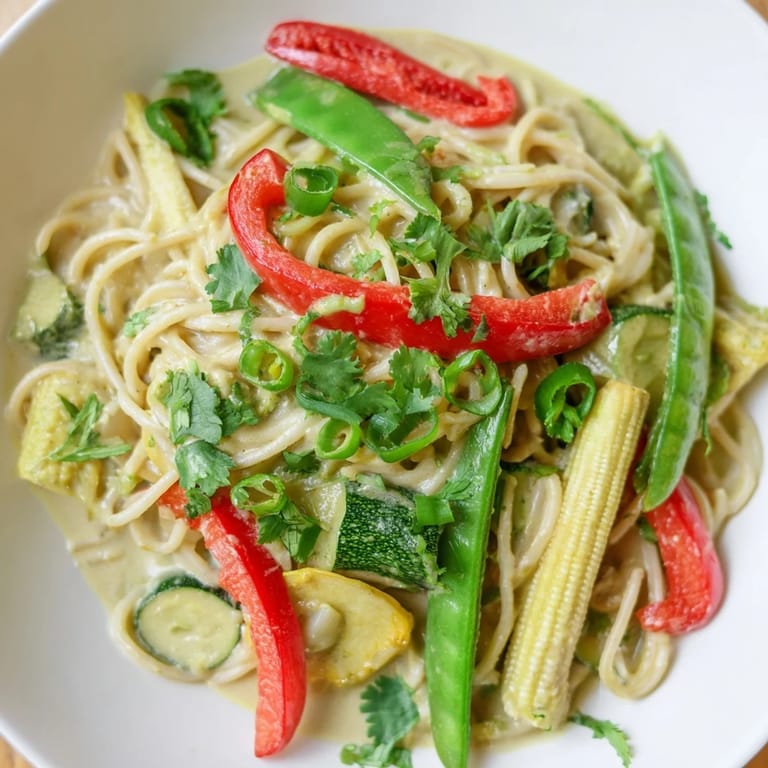
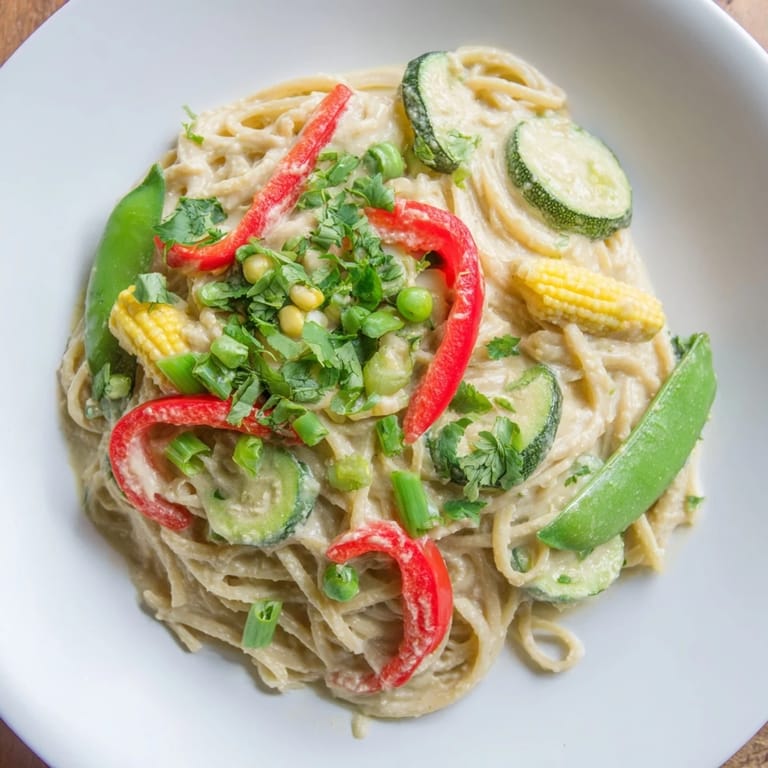
- Red bell pepper: I slice it thin so it stays slightly crisp and sweet, a textural contrast that keeps your palate from getting tired of the rich sauce.
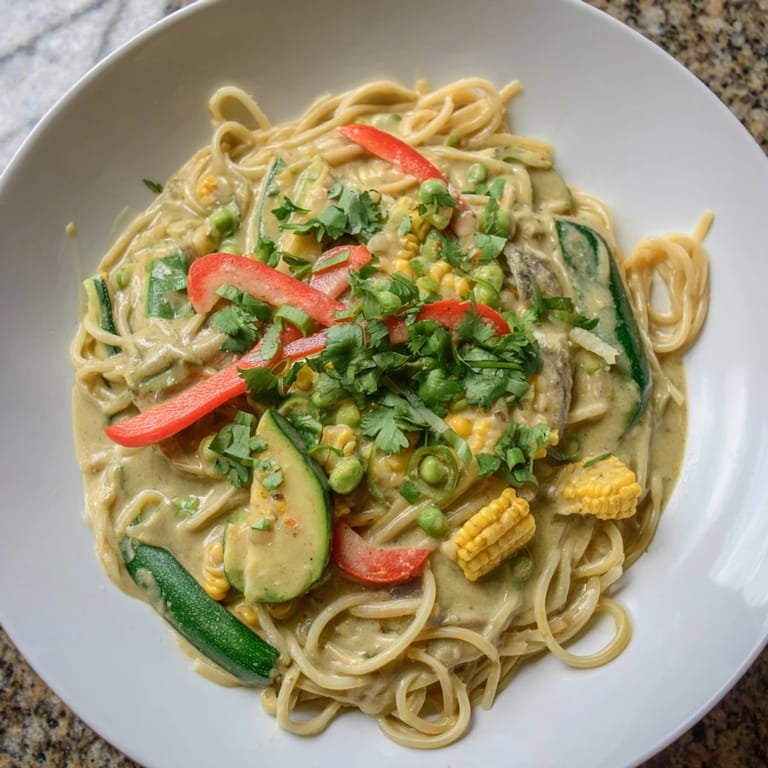
- Zucchini, snap peas, and baby corn: Mix and match based on what looks fresh; the goal is vegetables that stay firm enough to bite into, not mushy vegetables that surrender to the heat.
- Fresh ginger (1 tsp, grated): That sharp, warm note keeps the sauce from feeling one-dimensional and prevents it from tasting like a coconut milk soup with ambitions.
- Lime juice: It's the final word that brings everything into focus, so squeeze it fresh and taste before you finish—bottled lime juice whispers when fresh lime juice should sing.
- Spring onions and cilantro: These go in at the very end because they're the bright, alive finishing touch that makes the whole dish feel vibrant rather than heavy.
Tired of Takeout? 🥡
Get 10 meals you can make faster than delivery arrives. Seriously.
One email. No spam. Unsubscribe anytime.
Instructions
- Boil your pasta base:
- Fill a large pot with enough water that the pasta has room to move around freely—crowded pasta never cooks evenly. Once the water is rolling at a boil, add salt and your pasta, then follow the package timing but start testing a minute before it's supposed to be done, aiming for that tender-but-still-slightly-resistant al dente texture.
- Build your curry foundation:
- While the pasta cooks, heat oil in your skillet or wok over medium heat until it shimmers just slightly. Add the curry paste and ginger, letting them toast for a couple of minutes until your kitchen smells like someone just threw open a window into Southeast Asia—this is where the magic begins.
- Bloom the sauce:
- Pour in the coconut milk, then add soy sauce and brown sugar, stirring until everything is smooth and combined. Simmer gently for a few minutes, letting the flavors get to know each other and the raw edge of the curry paste soften into something rounded and welcoming.
- Cook the vegetables with intention:
- Add your peppers, zucchini, snap peas, and baby corn, watching them closely as they cook. You want them tender enough to be pleasant to eat but still with enough body that they don't disappear into the sauce—usually about five to six minutes depending on how thinly you sliced them.
- Marry the pasta and sauce:
- Add your drained pasta to the skillet along with a splash of that reserved pasta water (the starch in it helps the sauce cling beautifully to each strand). Toss everything together gently and let it simmer for a couple of minutes so the pasta actually absorbs the flavors rather than just sitting in them.
- Finish with brightness:
- Remove from heat and stir in the spring onions, fresh cilantro, and lime juice. Taste the whole thing, adjust the salt or lime if it needs it, and serve immediately while everything is still steaming and the herbs are still vibrant.
 Save Pin
 There was an evening when someone I care about took a bite of this and closed their eyes like they'd just been transported somewhere beautiful, and I realized that the best part of cooking isn't about impressing anyone—it's about creating a moment where food becomes a language between you and the people you're feeding.
Why This Fusion Works
Thai cuisine and Italian pasta might seem like they're speaking completely different languages, but they actually understand each other better than you'd think. The pasta gives you something to hold onto, something familiar and comforting, while the curry sauce brings heat, complexity, and an aromatic quality that makes every bite feel intentional. It's the kind of dish that proves the best cooking happens when you stop being precious about tradition and just listen to what tastes good.
Customizing Without Losing the Plot
This recipe is forgiving enough that you can make it your own without it falling apart. Swap the vegetables based on your mood or what's in your fridge—broccoli adds a pleasant bitterness, carrots bring sweetness, mushrooms add earthiness. If you want protein, add chicken, shrimp, or crumbled tofu right when you add the vegetables so they cook together. The curry paste is also your volume control; start with two tablespoons if you're nervous about heat, knowing you can always add more next time once you know how your particular jar behaves.
Serving Suggestions and Pairings
This dish is complete on its own, but it loves company—a simple green salad with a sharp vinaigrette cuts through the richness beautifully, and a crisp Riesling or even a cold beer works if you want something to drink alongside. The optional garnishes aren't just decoration; roasted cashews or peanuts add a textural surprise, extra cilantro doubles down on the freshness, and a sliced red chili is there if you want to announce to your mouth that you're serious about the heat. I've also learned that leftovers taste even better the next day because the flavors have had time to settle into every noodle.
- Serve with lime wedges on the side so people can adjust the brightness to their taste.
- Toast those cashews or peanuts yourself if you have time—they're worth the extra five minutes.
- This freezes well for up to three months, so make a double batch and future you will say thank you.
 Save Pin
 Some dishes are recipes, and some dishes become part of how you feed yourself and the people around you. This one has a habit of becoming the latter, sneaking into rotation until one day you realize you've made it so many times that the memory of discovering it has started to blur with all the different versions you've created along the way.
Recipe FAQs
- → What type of pasta works best?
Linguine or spaghetti hold the sauce well and complement the curry flavors. Choose your preferred shape for texture.
- → Can I adjust the spice level?
Yes, modify the amount of green curry paste or add sliced chili to increase heat to your taste.
- → Are there vegan options available?
Ensure the curry paste contains no animal products and skip any optional garnishes like nuts if preferred.
- → What vegetables pair best in this dish?
Bell pepper, zucchini, snap peas, baby corn, and spring onions provide a mix of crunch and sweetness that balances the creamy sauce.
- → Can this be prepared ahead of time?
It’s best served fresh to preserve the vibrant flavors and tender-crisp vegetables, but leftovers can be reheated gently.