 Save Pin
 There's something almost meditative about the smell of butternut squash roasting in the oven—it fills the kitchen with this warm, honeyed promise that makes you forget about the gray weather outside. My neighbor stopped by one October afternoon while I was deep in the process, and within five minutes she was asking for the recipe, drawn in by nothing but that aroma wafting down the hallway. That's when I knew this soup had something special, something that went beyond just tasting good.
I made this for my book club last November, thinking I'd pair it with something else, but honestly it stole the show—people kept coming back for seconds and asking what made it taste so different from canned versions. One friend admitted she'd always found butternut squash soup boring until that night, which felt like a small victory in my kitchen.
Ingredients
- 1 large butternut squash (about 1.2 kg / 2.5 lbs), peeled, seeded, and cubed: Roasting brings out its natural sugars and creates those caramelized edges that make all the difference—don't skip this step by using raw squash.
- 1 medium yellow onion, chopped: Yellow onions mellow beautifully when sautéed, becoming almost sweet and acting as the flavor foundation.
- 2 cloves garlic, minced: Just enough to add depth without overpowering the delicate squash character.
- 1 liter (4 cups) vegetable broth: Use a good quality broth if you can—it really matters in a simple soup like this.
- 250 ml (1 cup) water: This dilutes the broth slightly so the squash flavor stays front and center.
- 120 ml (1/2 cup) coconut milk or heavy cream: Coconut milk keeps it vegan-friendly and adds a subtle richness; cream makes it luxurious if you're not worried about dairy.
- 2 tbsp pure maple syrup: Pure matters here—the artificial stuff never quite hits the same note.
- 1/4 tsp ground nutmeg: A whisper of warmth that ties everything together.
- 1/2 tsp ground cinnamon: Not enough to make it taste like dessert, just enough to make people wonder what that cozy spice is.
- 2 tbsp olive oil: Divided between roasting and sautéing for different jobs.
- Salt and freshly ground black pepper, to taste: Always taste before you decide you're done—the final seasoning is where you claim ownership.
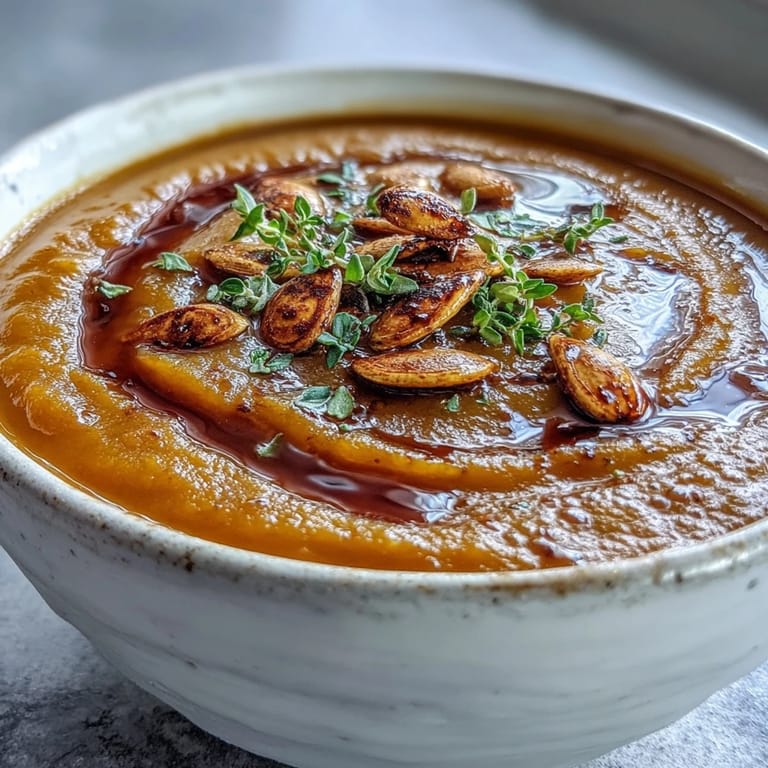
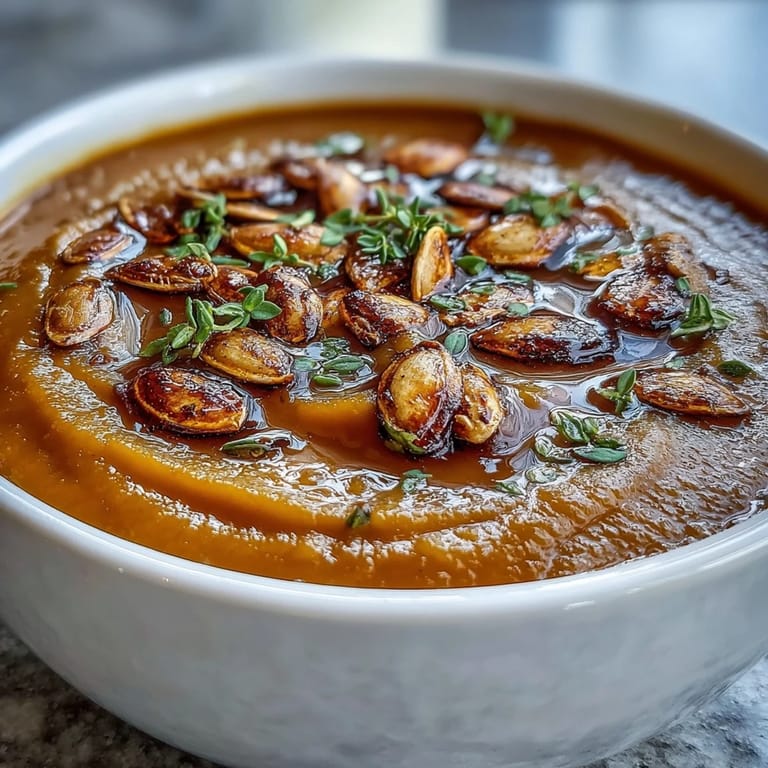
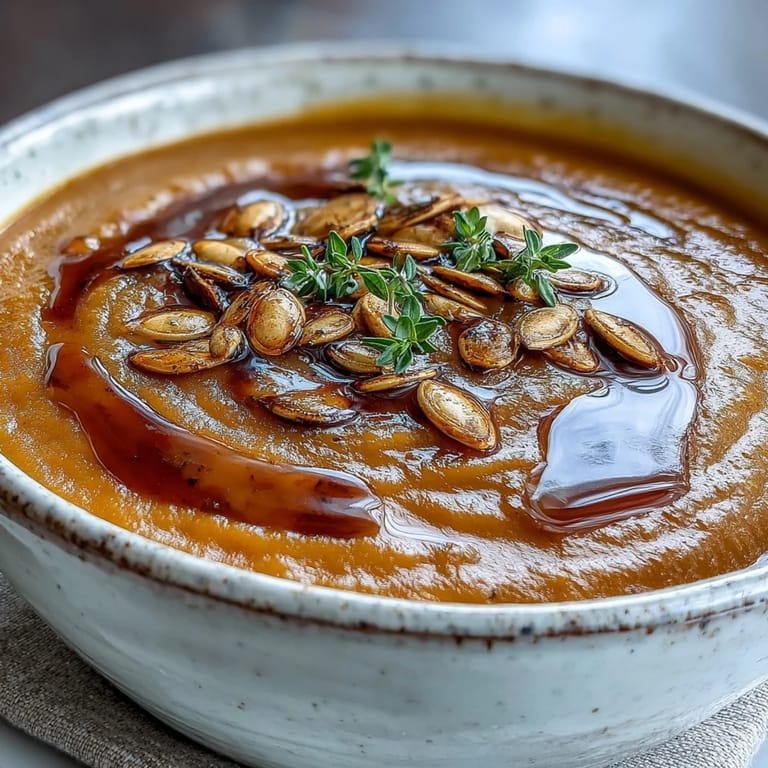
- Toasted pumpkin seeds, maple syrup drizzle, fresh thyme leaves (optional garnish): These aren't really optional if you want the soup to look as good as it tastes.
Tired of Takeout? 🥡
Get 10 meals you can make faster than delivery arrives. Seriously.
One email. No spam. Unsubscribe anytime.
Instructions
- Heat your oven and prepare the squash:
- Preheat to 200°C (400°F) while you cut and cube your butternut squash—it'll be ready and waiting. You'll know you've cubed it right when the pieces are roughly the size of dice, maybe a bit smaller, so they roast evenly.
- Season and roast the squash:
- Toss your cubed squash with one tablespoon of olive oil, salt, and pepper on a baking sheet, spreading it out so there's space between pieces. Let it roast for 30 to 35 minutes, turning halfway through so every side gets those golden, caramelized edges that make this soup taste like something you'd pay for in a restaurant.
- Build the flavor base:
- While the squash is roasting, heat the remaining tablespoon of oil in a large pot over medium heat and add your chopped onion, letting it soften and turn translucent for about four or five minutes. Add the minced garlic and give it just a minute so it releases its perfume without browning.
- Combine everything and simmer:
- Add the roasted squash to your pot along with the vegetable broth, water, maple syrup, nutmeg, and cinnamon—take a moment to really stir it all together so the spices are distributed. Bring it to a boil and then turn the heat down to let it simmer gently for ten minutes, which gives all those flavors a chance to mingle.
- Blend to silky smoothness:
- Using an immersion blender, purée the soup right in the pot with slow, careful motions until it's completely smooth—or if you don't have an immersion blender, work in batches with a regular blender, being careful with that hot liquid. Either way, you're looking for a texture that's creamy and velvety with no chunks.
- Finish with cream and adjust seasoning:
- Stir in the coconut milk or heavy cream, and then taste it—this is your moment to adjust the salt and pepper to your preference. Reheat gently if needed before serving.
- Serve with care:
- Ladle the soup into bowls and top with pumpkin seeds, a small drizzle of maple syrup, and a scatter of fresh thyme if you have it.
 Save Pin
 My mom made this soup when my sister was going through a rough patch, and somehow sharing bowls of something warm and quietly elegant became the thing that let us all talk about what was really bothering us. Food has this way of creating space for honesty that's hard to find any other way.
Why Roasting Changes Everything
The first time I tried making this soup, I was impatient and threw raw squash chunks directly into the pot with the broth, thinking I'd save thirty-five minutes. The result was technically soup, but it tasted pale and watery, like something was missing the whole time. Roasting transforms those squash cubes into something golden and concentrated, and when they finally hit the hot broth, they bring all that caramelized sweetness with them—that's the magic you can't replicate any other way.
The Spice Balance
The nutmeg and cinnamon work together in a way that's almost invisible—people taste this soup and feel cozy without being able to name what's making them feel that way. I learned this the hard way by overseasoning a batch and making it taste like pumpkin pie, which taught me that restraint with warm spices is actually the secret to elegance.
Make It Your Own
This is one of those soups where you can absolutely make changes without breaking anything—add cayenne if you like heat, swap the maple syrup for honey, use different broths, or even add a splash of apple cider vinegar for brightness. The structure is strong enough to hold whatever adjustments feel right for your kitchen and your taste buds.
- A pinch of cayenne pepper adds a subtle warmth that makes people lean in for another spoonful.
- If you have sage or rosemary on hand, try infusing a sprig in the broth for an earthy twist.
- Leftover soup freezes beautifully for up to three months, so make extra without hesitation.
 Save Pin
 This soup tastes like comfort that you've made with your own hands, which somehow always tastes better than comfort that comes from anywhere else. Serve it with crusty bread and let people come back for more.
Recipe FAQs
- → Can I make this soup ahead of time?
Absolutely. This soup keeps beautifully in the refrigerator for up to 4 days. The flavors actually deepen and meld together overnight. Reheat gently on the stove, adding a splash of broth or water if it has thickened.
- → Is this soup freezer-friendly?
Yes, freeze this soup for up to 3 months. Let it cool completely, then transfer to airtight containers. Thaw overnight in the refrigerator before reheating. The texture may separate slightly after freezing, but a quick whisk or blend will restore its creamy consistency.
- → What can I serve with this soup?
Crusty bread, warm dinner rolls, or homemade croutons pair perfectly. A simple green salad with vinaigrette cuts through the richness. For a heartier meal, top with roasted chickpeas or serve alongside a grilled cheese sandwich.
- → Can I substitute the maple syrup?
Honey or brown sugar work as alternatives, though maple syrup offers a unique depth. For a sugar-free version, omit the sweetener entirely—the roasted squash provides plenty of natural sweetness on its own.
- → How do I get the smoothest texture?
Roasting the squash until fully tender is key for easy blending. An immersion blender works well, but a high-speed countertop blender yields the silkiest results. Blend for at least 1-2 minutes, adding more liquid if needed to reach your desired consistency.
- → Is roasting necessary or can I boil the squash?
While boiling works, roasting creates deeper flavor through caramelization. The oven concentrates the squash's natural sugars and adds subtle nutty notes that boiling can't achieve. If you're short on time, boiling is acceptable, but roasting makes a noticeable difference in taste.