 Save Pin
 I discovered the magic of the Keto Power Plate during a lazy Sunday brunch when I realized I had a collection of beautiful cured meats and cheeses scattered across my fridge. Instead of making another heavy sandwich, I arranged them on a large platter with fresh vegetables, and suddenly what started as a way to use up ingredients became the most elegant, satisfying meal I could prepare without turning on the stove. My guests were amazed at how something so simple felt like a celebration.
The first time I served this to my keto-curious friend Sarah, she actually gasped when she saw it. She had convinced herself that eating low-carb meant deprivation, but as she filled her plate with smoky prosciutto, creamy Gruyère, and crisp vegetables, I watched her realize that keto could be abundant and genuinely luxurious. That moment changed how she thought about healthy eating.
Ingredients
- Sliced roast beef (120 g): The deepest, richest flavor on your platter. Look for beef that's been properly aged and sliced thin enough to drape slightly. This is your anchor protein.
- Smoked turkey (120 g): Adds a lighter, smoky note that prevents the platter from feeling too heavy. The smoke flavor pairs beautifully with sharp cheeses.
- Prosciutto (120 g): This is where elegance lives. Paper-thin prosciutto has an almost floral saltiness that elevates everything around it. Don't skip quality here.
- Salami, sliced (100 g): Your textural contrast and spice element. Choose a quality dry salami that curls naturally and has visible fat marbling.
- Aged cheddar, cubed (100 g): Sharp and complex, these cubes become little flavor bombs throughout your platter. The golden color adds warmth visually.
- Gruyère, sliced (100 g): The sophisticated one. Nutty and slightly sweet, it's what makes this feel special rather than ordinary.
- Manchego, sliced (100 g): Brings a subtle herbaceous note and a firmer texture. Its pale yellow is a visual anchor balancing the deeper cheeses.
- Cherry tomatoes, halved (1 cup): The freshness that cuts through rich proteins. Halving them increases surface area and makes them easier to grab.
- Cucumber, sliced (1 cup): Cool and hydrating, these provide both textural contrast and a subtle sweetness that awakens the palate between bites.
- Radishes, sliced (1 cup): Your peppery secret weapon. They add a bright bite that prevents the platter from feeling one-note and their pink color is beautiful.
- Baby bell peppers, sliced (1 cup): Sweet, colorful, and satisfying to eat raw. Each color tastes slightly different, which keeps things interesting.
- Celery sticks (1 cup): The classic crunch and a subtle mineral note that grounds everything else.
- Green olives (1/4 cup): Briny anchors that add sophistication and visual punctuation across the platter.
- Black olives (1/4 cup): Deeper, earthier than green. Their dark color creates contrast and they pair beautifully with aged cheeses.
- Fresh parsley, chopped (2 tbsp): More than just decoration. The fresh herb note lifts the entire platter and adds a garden-fresh element.
- Extra virgin olive oil (2 tbsp): This is your seasoning oil. A good one adds fruity notes that complement every element on the platter.
- Freshly ground black pepper: Added just before serving so it stays crisp and visible, giving every bite a finishing kick.
Tired of Takeout? 🥡
Get 10 meals you can make faster than delivery arrives. Seriously.
One email. No spam. Unsubscribe anytime.
Instructions
- Gather and prep everything first:
- Take everything out of the fridge about 10 minutes before assembling. Cold meats and cheeses are harder to arrange beautifully, and they taste better when not ice-cold. Slice everything you need and have it ready on your cutting board. This is where you set yourself up for success.
- Create your meat foundation:
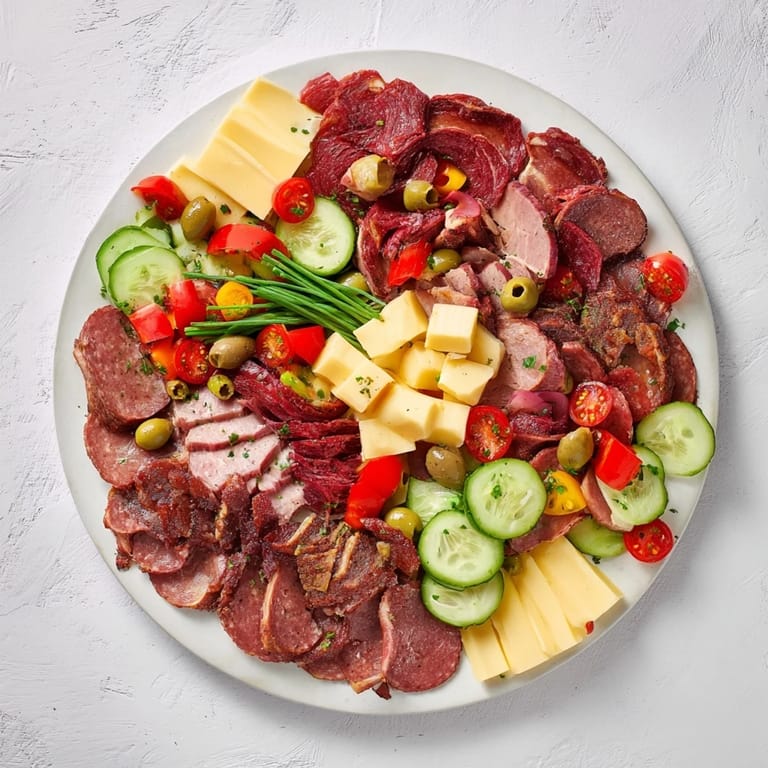
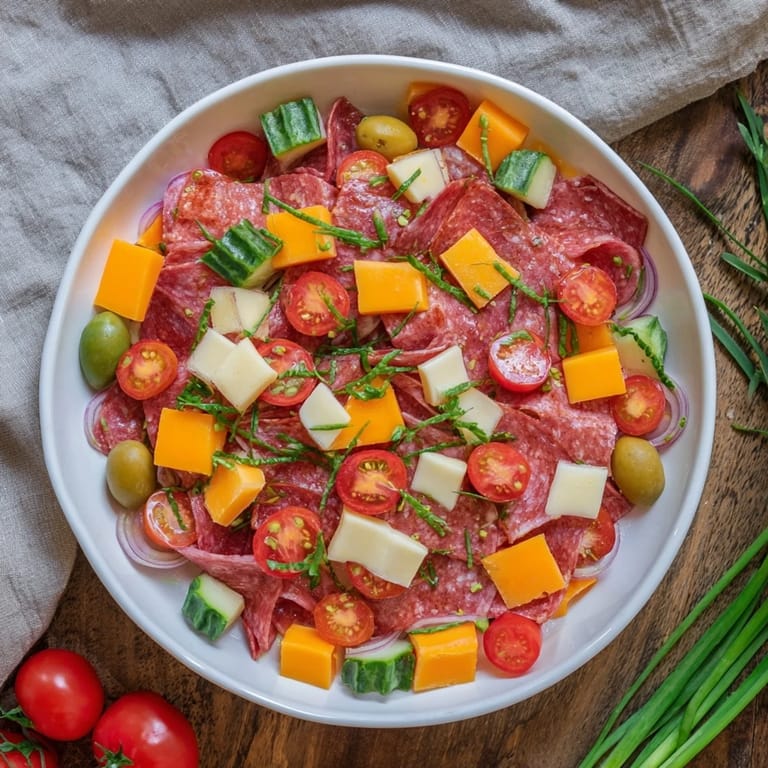
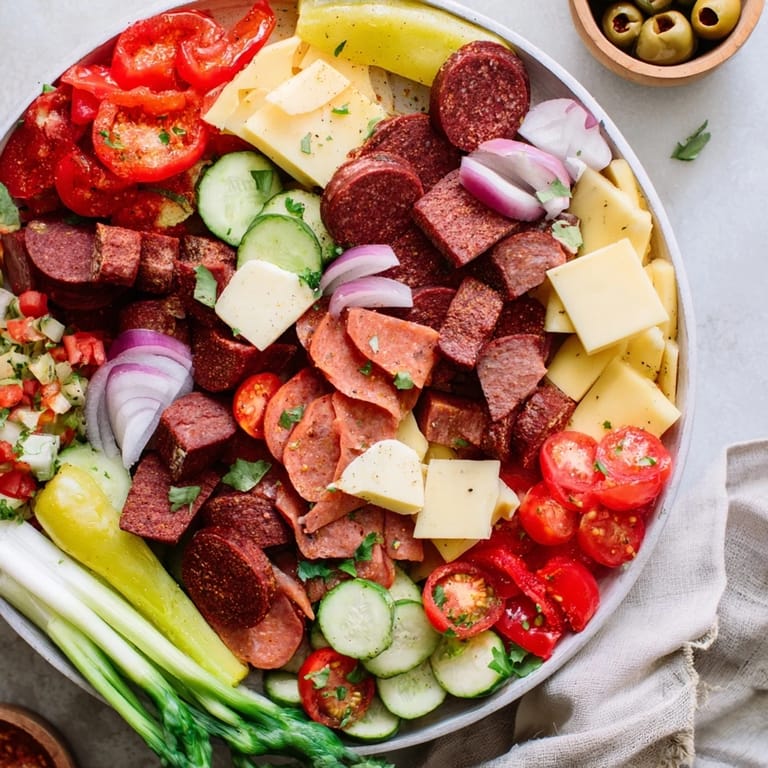
- Find your largest, most beautiful platter. Start with the meats, clustering each type together as if you're painting with flavor. Layer the roast beef so it drapes naturally, fan the prosciutto like delicate flowers, and let the salami curl as it wants to. The arrangement should feel organic, not rigid.
- Nestle the cheeses in:
- Place cheese beside and sometimes overlapping the meats. Vary the shapes: cubed cheddar in one corner, sliced Gruyère creating lines through the middle, Manchego scattered throughout. Think about color balance as you go. You're creating visual rhythm.
- Fill strategic spaces with vegetables:
- Don't just sprinkle vegetables randomly. Group like items together: tomato halves in one section, cucumber slices in another, radishes clustered for their color pop. This organization makes the platter feel intentional and helps people navigate it instinctively.
- Distribute olives throughout:
- Tuck olives into the spaces between proteins and vegetables. They serve as visual anchors and flavor boosters. Think of them as punctuation marks across your platter.
- Add the finishing touches:
- Drizzle the olive oil lightly across the vegetables, being generous enough that it catches the light but not so much that things get slippery. Grind fresh pepper over everything. Scatter the chopped parsley as a final verdant blessing. Step back and look at it. It should make you smile.
 Save Pin
 I remember watching my grandmother arrange a charcuterie board for a dinner party when I was eight years old. She moved with such intention, considering colors, textures, and how different elements would interact. Years later, I realized she was teaching me that food is also art, and that taking time to make something beautiful for people matters deeply. This platter carries forward that lesson.
The Art of Building the Perfect Platter
A platter like this is less about following rules and more about understanding balance. You're balancing richness with freshness, colors across the spectrum, soft meats against crisp vegetables, salty elements against sweet ones. The best platters are the ones that feel personal to you, where you've included your favorite cheeses and excluded what you don't love. There's no single right way to arrange it, only your way.
Wine Pairing and Serving
This platter pairs beautifully with a dry white wine, something with enough acidity to cut through the richness of the cheeses and meats. A crisp Sauvignon Blanc or Grüner Veltliner feels perfect. If wine isn't your thing, sparkling water with fresh lemon is refreshingly honest, or try unsweetened iced tea. The point is something that cleanses the palate between bites and lets you taste each element fresh.
Make It Your Own Every Time
The beautiful thing about a power platter is that it's endlessly adaptable. Swap in whatever proteins and cheeses excite you. Add roasted nuts if your plan allows them, switch vegetables with the seasons, experiment with different olives and dips. This isn't a recipe meant to be followed exactly. It's a framework for creating something that makes sense in your kitchen, with what you have available right now.
- Try serving keto-friendly dips like garlic aioli or herbed cream cheese alongside for extra flavor adventure
- Add pickled vegetables like cornichons or pickled onions for brightness and a tangy contrast to the rich proteins
- Keep it simple and stunning, or make it your own by including unexpected elements that bring you joy
 Save Pin
 Making a keto power platter taught me that some of the most satisfying meals require no cooking at all, just intention and care in the arrangement. It's become my go-to when I want to feel fancy without stress.
Recipe FAQs
- → What meats are featured in the platter?
Sliced roast beef, smoked turkey, prosciutto, and salami provide a variety of rich and savory flavors.
- → Which cheeses are included?
Aged cheddar, Gruyère, and Manchego are used, offering a mix of sharp and nutty tastes.
- → What vegetables complement the dish?
Cherry tomatoes, cucumbers, radishes, baby bell peppers, and celery bring fresh crunch and vibrant color.
- → How is the platter seasoned?
A drizzle of extra virgin olive oil and a sprinkle of freshly ground black pepper add subtle, balanced seasoning.
- → Can the components be substituted?
Yes, meats like roast chicken or cheeses such as Emmental can replace originals to suit preferences.
- → What garnishes enhance the presentation?
Chopped fresh parsley and a mix of green and black olives provide visual appeal and flavor contrasts.