 Save Pin
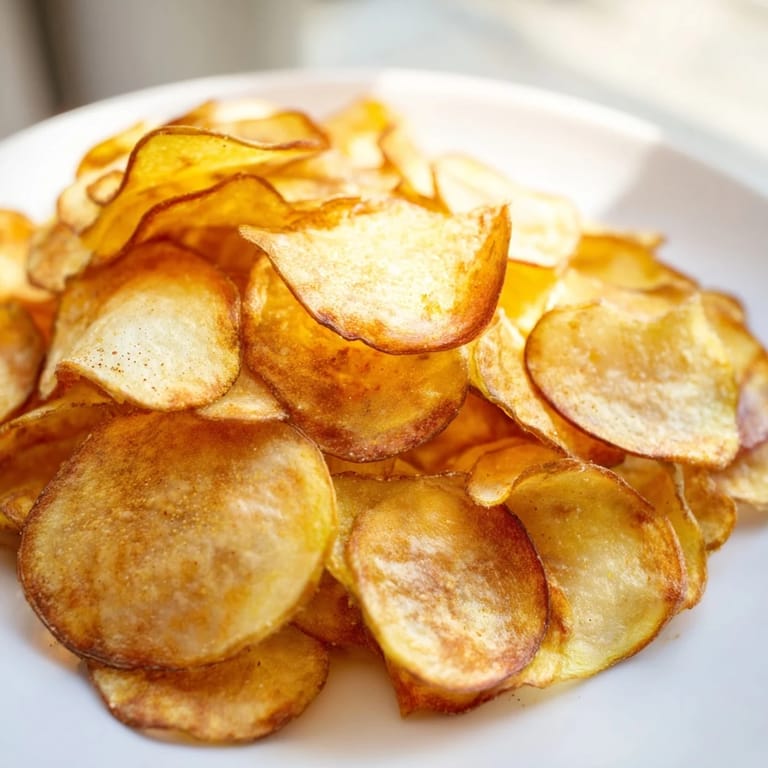
 I discovered the magic of air-fryer potato chips on a lazy Sunday afternoon when my usual bag of store-bought snacks ran out and I was too restless to run to the store. With two russet potatoes sitting in my fruit bowl and a mandoline I'd been meaning to use, I thought, why not try? Twenty minutes later, I pulled out the crispiest, most golden chips that tasted nothing like the greasy versions I'd been eating for years. It was one of those kitchen moments where the simplest idea becomes your new favorite trick.
My partner walked in while I was arranging the second batch in the air fryer and immediately grabbed a handful from the cooling rack. Without saying anything, they just nodded and smiled—that's the highest compliment our kitchen gives. Now whenever friends come over for movie night, they ask if I'm making "those chips" before they even sit down.
Ingredients
- 2 large russet potatoes: Choose firm ones without soft spots; the starch content in russets makes them crisp up beautifully.
- 1 tablespoon olive oil: Don't skip this—it's what helps them achieve that golden, crunchy exterior without being deep-fried.
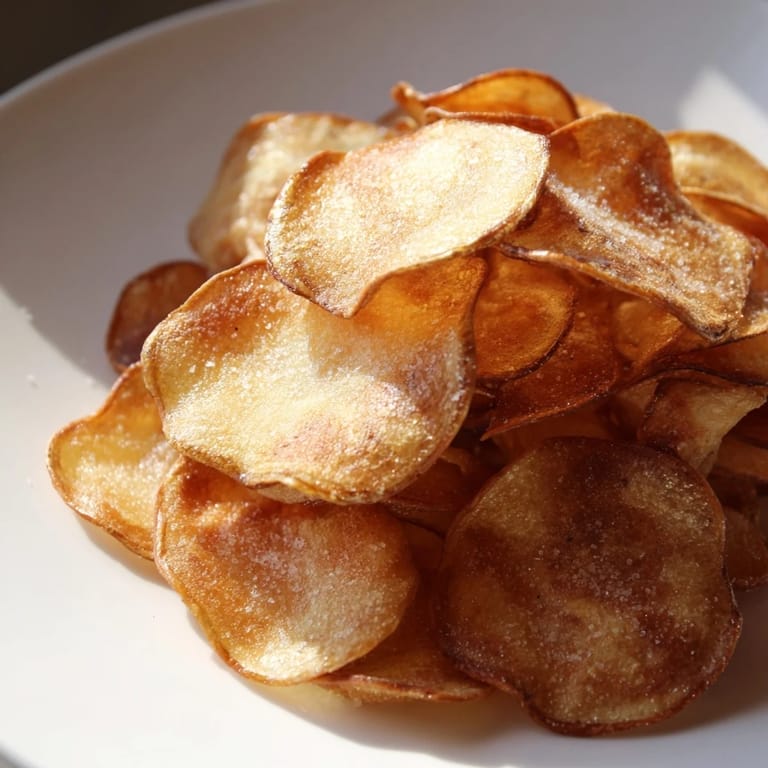
- ½ teaspoon fine sea salt: Fine salt distributes more evenly than kosher; you want it in every bite.
- ¼ teaspoon freshly ground black pepper: Optional, but the warmth it adds is subtle and worth it.
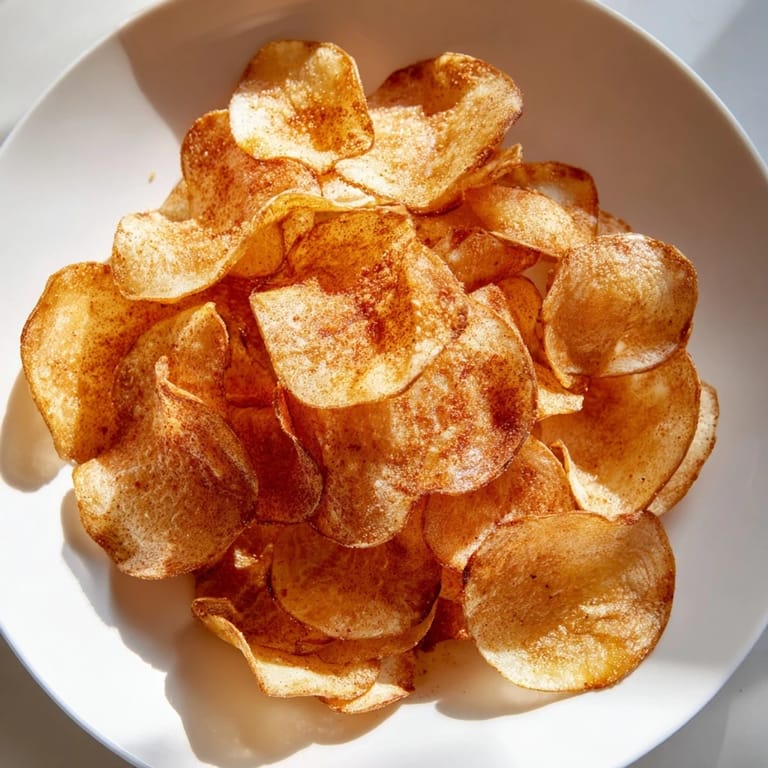
- ¼ teaspoon smoked paprika: Optional, but if you use it, it gives a hint of depth that makes people ask what the secret ingredient is.
Tired of Takeout? 🥡
Get 10 meals you can make faster than delivery arrives. Seriously.
One email. No spam. Unsubscribe anytime.
Instructions
- Prepare the potatoes:
- Scrub them under cold running water, then slice as thinly as possible—about 1.5 mm thick. A mandoline makes this effortless and consistent, though a very sharp knife works if you have the patience for it.
- Soak to remove starch:
- Drop those slices into a bowl of cold water and let them sit for 10 minutes—this is the step that changes everything, making them crispy instead of chewy. It feels like a small thing, but it absolutely matters.
- Dry thoroughly:
- Pat each slice dry with paper towels as if you're handling something delicate. Any moisture left behind turns into steam and ruins the crispiness you're working toward.
- Season and toss:
- Drizzle the oil over the dried slices and sprinkle salt and any seasonings you're using, then toss gently so every slice gets coated. It should feel almost buttery, not wet.
- Preheat the air fryer:
- Set it to 180°C (360°F) and let it run for 3 minutes—that warmth makes the difference between crispy and merely cooked.
- Arrange and cook first round:
- Lay potato slices in a single layer without overlapping; if you have too many, use another batch. After 8 minutes, flip them or shake the basket to help them cook evenly.
- Finish cooking:
- Continue for another 6 to 8 minutes until they turn golden and smell impossibly good. You'll know they're done when the edges start curling slightly and they snap between your fingers.
- Cool and crisp:
- Transfer to a wire rack so air can circulate underneath; they'll continue crisping as they cool, so resist the urge to eat them right away—mostly.
 Save Pin
 There was a moment last week when my niece, who usually turns her nose up at homemade versions of things, grabbed a chip and then another without thinking about it. She didn't compliment me or make a big deal out of it—she just kept eating. That quiet satisfaction of someone enjoying something you made is worth more than any fancy recipe or fancy ingredient could ever be.
The Mandoline Question
The first time I made these, I used a sharp knife and sliced for what felt like an eternity, and the chips still came out uneven—some thin and crispy, others thick and still slightly soft. Then I borrowed a mandoline from a friend and understood immediately why chefs swear by them. Now it takes me maybe three minutes to slice two potatoes, and every chip is the same thickness. If you're going to make these more than once, a mandoline is worth the small investment.
Seasoning Beyond the Basics
The plain salted version is perfect, but once you've made it a few times, you start getting ideas. I've tried everything from garlic powder and dried herbs to a mix of chili powder and lime zest. My current favorite is smoked paprika with a whisper of cayenne, which adds a warmth without making them spicy. The best part is that you can season them right before air frying, so you can make a batch and season different portions differently if you're feeding people with different tastes.
Storage and Keeping Them Crispy
These are best enjoyed the day you make them, while they're at peak crispiness. If you do have leftovers—which is rare in my house—an airtight container in a cool, dry place keeps them fresh for up to two days, though they'll gradually soften. I've never successfully reheated them to recapture that original crispiness, so I usually just accept that they're a fresh-made kind of snack.
- Cool them completely before storing so condensation doesn't make them soggy.
- If they do soften overnight, a quick 3-minute air fry at 160°C will bring some crunch back.
- Keep them away from humidity and never store them near the stove where warmth can seep in.
 Save Pin
 The beauty of this recipe is that it proves you don't need complicated techniques or fancy equipment to make something genuinely better than what you can buy. Once you taste homemade, the store-bought versions become hard to go back to.
Recipe FAQs
- → How thin should potato slices be?
Slice potatoes about 1.5 mm thick using a mandoline or sharp knife for even crisping and texture.
- → Why soak the potato slices in water?
Soaking removes excess starch, preventing them from sticking together and helping achieve crispiness.
- → Can I use other potatoes besides russet?
Yes, Yukon Gold potatoes work well and offer a slightly different flavor and texture.
- → How do I store the chips to keep them crisp?
Allow chips to cool completely, then store in an airtight container for up to two days to maintain crunch.
- → What seasonings can enhance the flavor?
Try garlic powder, chili powder, smoked paprika, or your favorite spice blends for added flavor.
- → Can the chips be made without peeling the potatoes?
Yes, leaving the skin on adds texture and nutrients, but peeling is optional based on preference.