 Save Pin
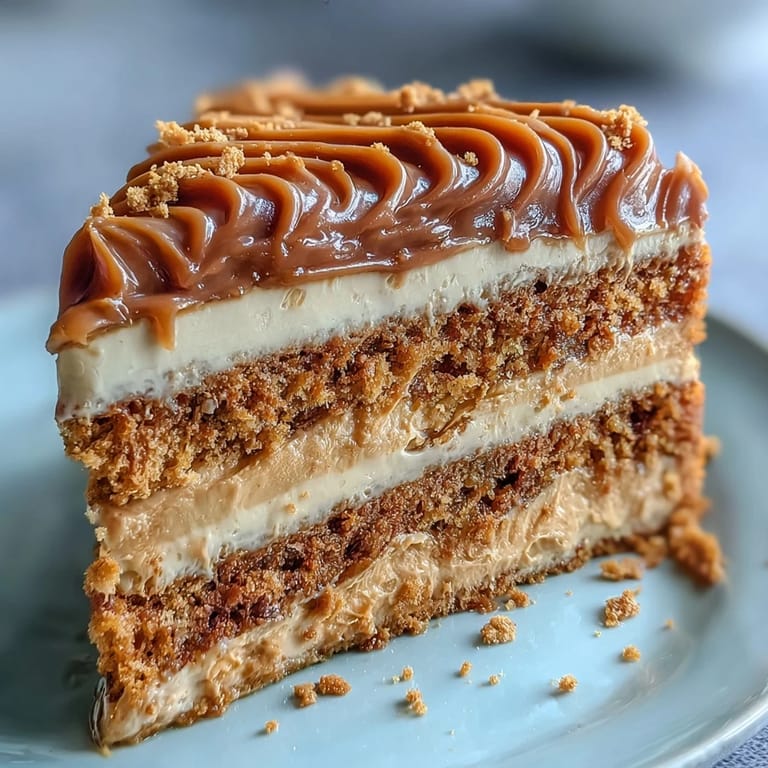
 The smell of caramelized biscuits hit me before I even opened the oven door. I was testing a hunch that crushed Biscoff cookies could survive baking without turning into mush, and the kitchen smelled like a bakery in Brussels. My neighbor knocked to ask if I was opening a café, and I handed her a warm slice still crumbling at the edges. She called it dangerous in the best way, and I knew I had something worth keeping.
I made this cake for a friend who swore she didnt like frosting. She scraped every smear of Lotus buttercream off her plate with her finger when she thought I wasnt looking. That moment taught me more about flavor balance than any cookbook ever could. Sometimes the right recipe changes someones mind without them even realizing it.
Ingredients
- Biscoff biscuits, crushed: The soul of this cake, they add spiced crunch and caramel depth that plain cookies cant touch, crush them by hand in a bag for uneven pieces that create surprise pockets of texture.
- All purpose flour: The structure that holds all that butter and cookie magic together, sift it to avoid dense spots that can ruin an otherwise perfect crumb.
- Baking powder and baking soda: This duo gives lift and tenderness, the soda also deepens the golden color and plays nicely with the Lotus spread.
- Salt: Just a pinch cuts through sweetness and makes every other flavor sing louder, never skip it even in dessert.
- Unsalted butter, softened: It creams into sugar like silk and carries flavor without adding unwanted saltiness, let it sit out until your finger leaves a dent.
- Granulated sugar: Creamed with butter it traps air for a lighter cake, the texture changes completely if you rush this step.
- Large eggs: They bind and enrich, add them one at a time or risk curdling the batter into a grainy mess I learned that the hard way once.
- Vanilla extract: A teaspoon of warmth that makes everything taste more like itself, pure extract beats imitation every single time.
- Whole milk: It keeps the cake moist and tender, low fat milk will work but the crumb wont feel as luxurious.
- Lotus spread (Biscoff spread): This is the magic ingredient, swirled into batter and whipped into frosting, its nutty caramel flavor is impossible to replicate.
- Powdered sugar: The base of a frosting that spreads like a dream, sift it unless you enjoy tiny sugar pebbles in your buttercream.
- Heavy cream or milk: A splash loosens the frosting to pipeable perfection, add it slowly because too much turns it soupy.
Tired of Takeout? 🥡
Get 10 meals you can make faster than delivery arrives. Seriously.
One email. No spam. Unsubscribe anytime.
Instructions
- Prep the oven and pan:
- Set your oven to 180°C and grease your pan generously, then dust it with flour or line it with parchment. A stuck cake is a heartbreak you can avoid with 30 seconds of care.
- Combine the dry ingredients:
- Sift the flour, baking powder, baking soda, and salt into a bowl and set it aside. This ensures even distribution and no surprise lumps in your batter.
- Cream butter and sugar:
- Beat softened butter and sugar on medium speed for 3 to 5 minutes until pale and fluffy. The mixture should look almost white and feel airy, this step traps air that makes your cake rise.
- Add eggs and vanilla:
- Mix in eggs one at a time, letting each disappear into the batter before adding the next. Stir in vanilla extract and watch the batter turn glossy.
- Alternate dry and wet:
- Add a third of the flour mixture, then half the milk, then another third of flour, the rest of the milk, and finish with flour. Mix just until you see no streaks, overmixing now will give you a tough crumb.
- Fold in Biscoff and spread:
- Gently fold crushed biscuits and Lotus spread into the batter with a spatula. Streaks of spread are fine, they will marble beautifully as the cake bakes.
- Bake until golden:
- Pour batter into your prepared pan, smooth the top, and bake for 35 to 40 minutes. A toothpick inserted in the center should come out clean or with just a crumb or two.
- Cool completely:
- Let the cake rest in the pan for 10 minutes, then turn it onto a wire rack. Frosting a warm cake will melt your frosting into a puddle, patience pays off here.
- Make the frosting:
- Beat softened butter until smooth, then add powdered sugar slowly. Mix in Lotus spread, cream, and a pinch of salt, then whip on medium high for 3 minutes until fluffy.
- Frost and decorate:
- Spread or pipe the frosting over the cooled cake. Sprinkle crushed Biscoff on top or drizzle extra Lotus spread for a bakery worthy finish.
 Save Pin
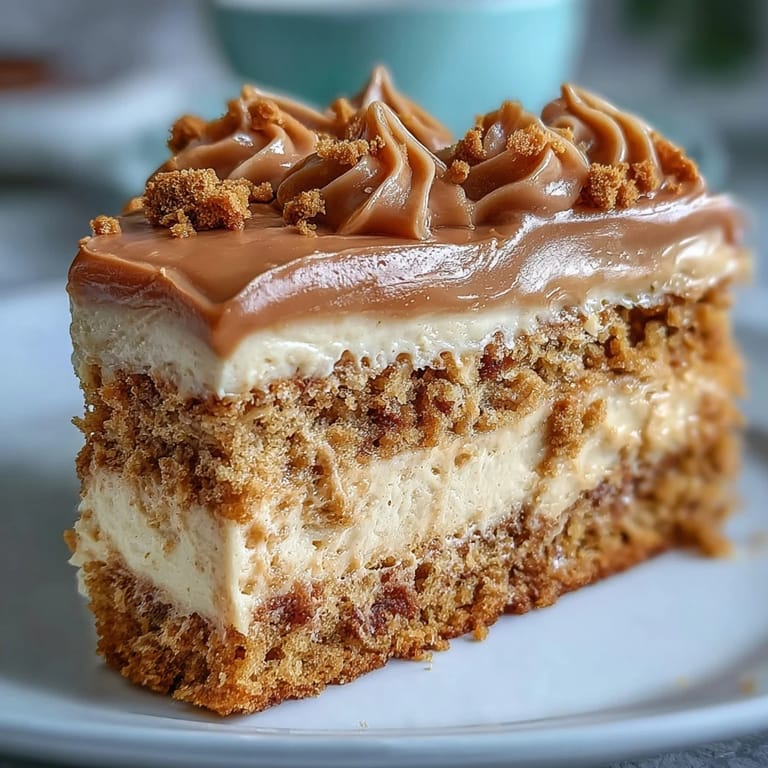
 I brought this cake to a potluck once and watched a quiet debate break out over whether it was better to eat it with a fork or just pick up the slice. Three people asked for the recipe before I even sat down. That night it stopped being just a cake and became the thing people remembered me by, which felt surprisingly wonderful.
Storing and Serving
This cake lives happily in an airtight container at room temperature for up to three days, though it rarely lasts that long. The frosting stays soft and the biscuit pieces keep their crunch if you seal it well. I slice it into generous wedges and serve it with strong coffee or a cup of Earl Grey, the tannins cut through the richness perfectly. If you want to make it ahead, bake the cake a day early and frost it the morning of serving.
Variations Worth Trying
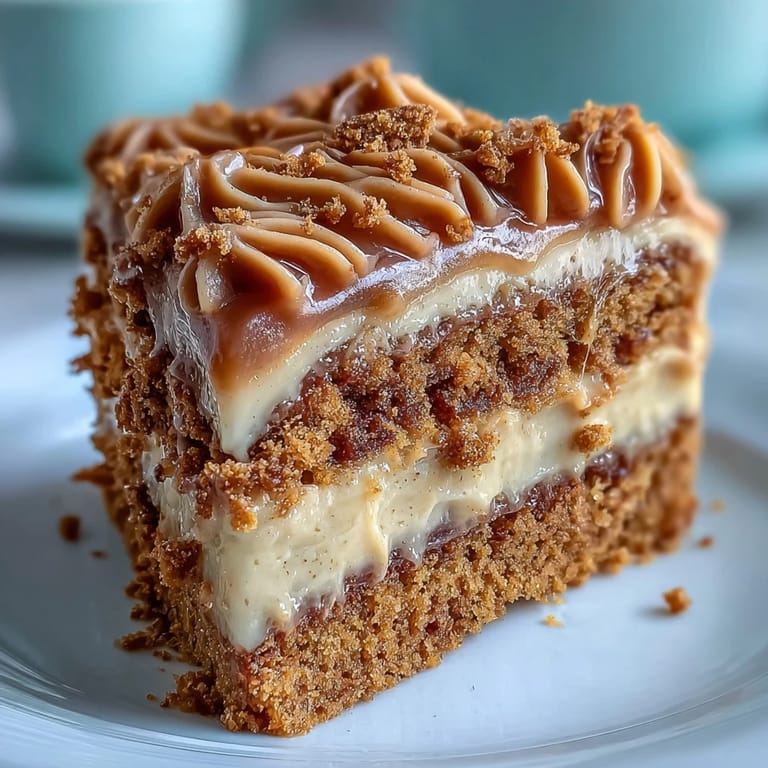
I have folded dark chocolate chips into the batter and the result was dangerously good, bittersweet chocolate plays beautifully with caramel spice. Chopped toasted hazelnuts add crunch and a nutty echo that doubles down on the Biscoff flavor. For a layered version, bake the batter in two 8 inch pans, slice each in half horizontally, and stack them with frosting between every layer. You can also swirl extra Lotus spread into the frosting for a marbled look that tastes even richer.
What to Watch For
The most common mistake is adding eggs to cold butter, which causes the batter to curdle and split. Always bring butter and eggs to room temperature before you start. If your frosting feels too thick to spread, add cream one teaspoon at a time until it loosens. If it gets too thin, chill it for 10 minutes and it will firm up just enough.
- Use an oven thermometer if your cakes often overbake, many home ovens run hot.
- Press parchment into the pan corners so it lays flat and your cake bakes evenly.
- Taste your frosting before spreading it, a pinch more salt can transform it from sweet to balanced.
 Save Pin
 This cake has become my answer to celebrations that need something memorable without being fussy. It delivers joy in every caramelized, cookie studded bite, and it makes people smile before they even taste it.
Recipe FAQs
- → Can I use a different type of cookie instead of Biscoff?
Yes, you can substitute speculoos or ginger snap cookies for similar spiced flavor, though the distinctive caramel notes of Biscoff may be missed. Ensure cookies are finely crushed for best texture distribution.
- → How do I prevent the cake from being too dense?
Avoid overmixing the batter once you add the flour. Mix just until ingredients are combined, and ensure your butter and eggs are at room temperature before beginning. Proper creaming of butter and sugar creates essential air pockets.
- → Can I make this cake ahead of time?
Absolutely. Bake the cake up to 2 days in advance and store wrapped at room temperature. Frost on the day of serving for best appearance, or refrigerate the frosted cake and bring to room temperature 30 minutes before serving.
- → What consistency should the frosting be?
The frosting should be smooth, creamy, and spreadable but hold its shape. If too stiff, add cream one teaspoon at a time. If too loose, chill for 10–15 minutes or add more powdered sugar gradually.
- → Can I make this in a different pan size?
Yes, use two 8-inch round pans for a layer cake (reduce baking time to 25–30 minutes), or a 9x13-inch pan for a sheet cake. Adjust baking time accordingly and test with a toothpick for doneness.
- → How should I store leftover cake?
Keep in an airtight container at room temperature for up to 3 days. For longer storage, refrigerate for up to 5 days, though the texture is best at room temperature. Bring chilled cake to room temp before serving.