 Save Pin
 I'll never forget the first time I attempted an elaborate charcuterie board at a dinner party. I spent hours arranging meats and cheeses, thinking I was creating something special, but it looked rather modest compared to what I'd seen in magazines. That night, a friend mentioned how the most impressive boards aren't just about quality ingredients—they're about presentation, patience, and a touch of theatrical flair. Years later, after countless boards and plenty of practice sculpting cheese roses at midnight, I've learned that this isn't just appetizer assembly; it's edible art. The Advanced Artisan Array became my masterpiece, the board I finally felt proud to place in front of guests without apology.
I remember assembling one of these boards for my partner's birthday celebration, and watching their face light up when they saw it was worth every minute of preparation. But the real magic happened when our friends started mixing unexpected combinations—goat cheese with fig jam and prosciutto, manchego with apricots and almonds—and suddenly everyone was engaged in the same delicious conversation. That's when I realized this board wasn't about impressing people with extravagance; it was about giving them permission to play, taste, and enjoy without rules.
Ingredients
- Prosciutto (100g), soppressata (100g), capicola (100g), chorizo (100g), mortadella (100g): These five cured meats are your foundation—each brings distinct flavor and texture. The key is slicing them paper-thin and varying how you fold them. I learned the hard way that room-temperature meats fold more gracefully than cold ones, so let them sit out for ten minutes before arranging
- Brie (150g), manchego (150g), aged cheddar (150g), goat cheese (150g), gouda (150g), provolone (100g): This cheese selection gives you soft, medium, and hard varieties in different flavor profiles. The provolone is specifically for sculpting roses because it's pliable when slightly warmed—I discovered this after ruining three attempts with brittle cheese that wouldn't cooperate
- Red and green grapes (2 bunches combined), figs (2, quartered), pomegranate seeds, apple slices, pear slices: Fresh fruit adds brightness and prevents the board from feeling too heavy. The secret is slicing apples and pears just before serving so they don't brown, and seeding the pomegranate the night before to save yourself the messy morning-of scramble
- Dried apricots (50g), dried cherries (50g), dried figs (50g, halved), Marcona almonds (75g), pistachios (75g): These contribute sweetness and textural contrast. Marcona almonds are buttery and slightly sweet—worth the splurge—while pistachios add color and a subtle saltiness that balances rich cheeses
- Cornichons (75g), mixed olives (75g), roasted red peppers (50g), artichoke hearts (50g), whole grain mustard (100g), fig jam (100g), honey (100g): These are your flavor anchors. The mustard and fig jam should always be in small bowls rather than spread directly on the board—I learned this when fig jam made a mess of my carefully arranged cheese roses. Honey drizzled over brie just before serving is non-negotiable
- Baguette, assorted crackers (150g), grissini breadsticks (100g): Your vehicles for tasting. I prefer a mix because different textures pair with different components—delicate crackers for soft cheeses, sturdy baguette slices for cured meats and jams
- Fresh rosemary sprigs, fresh thyme, edible flowers, microgreens, radish roses: These final garnishes transform your board from nice to show-stopping. Don't skip them; they're what makes people pause and take photos
Tired of Takeout? 🥡
Get 10 meals you can make faster than delivery arrives. Seriously.
One email. No spam. Unsubscribe anytime.
Instructions
- Prepare Your Canvas:
- Start with a completely clean, dry board—I use a soft cloth and a tiny bit of olive oil to make sure there are no water spots. Place your small bowls for mustard, fig jam, and honey in strategic spots around the board, leaving plenty of open space for arranging. This is your chance to envision the overall balance before you start placing anything permanent
- Sculpt Your Cheese Roses:
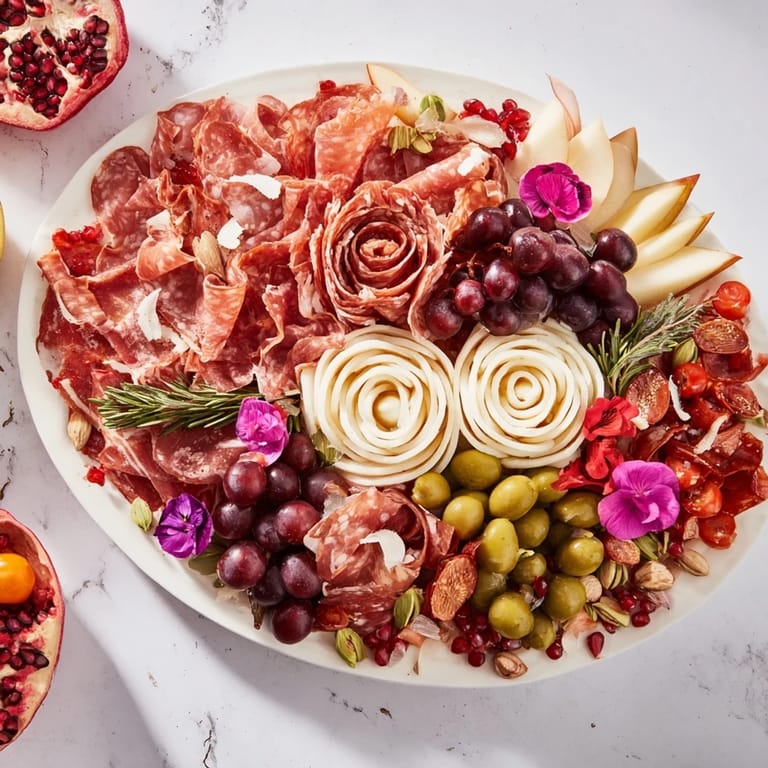
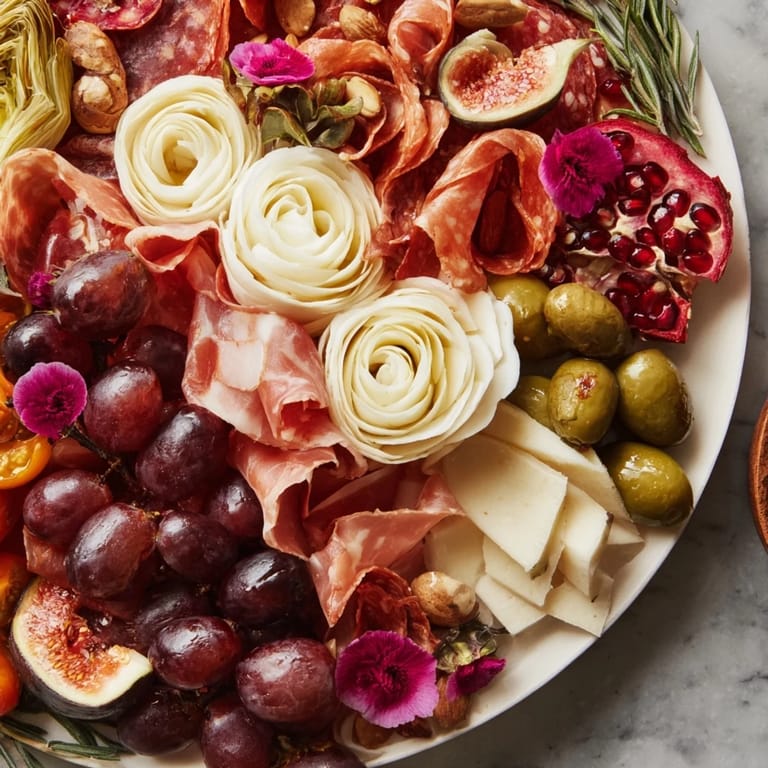
- Take your provolone and slice it even thinner than you think you need to—almost translucent. Let the slices sit at room temperature for a few minutes to become slightly pliable. Take one slice and begin rolling it tightly into a spiral, like you're creating the center of a rose. Then gently roll subsequent slices around this center, letting each layer peak out slightly more than the last. Furl the outer edges outward with your fingers to create that perfect petal effect. This step requires patience and calm hands—I put on music and give myself permission to take my time. Make at least three cheese roses; they're your board's showpiece
- Fold the Cured Meats Dramatically:
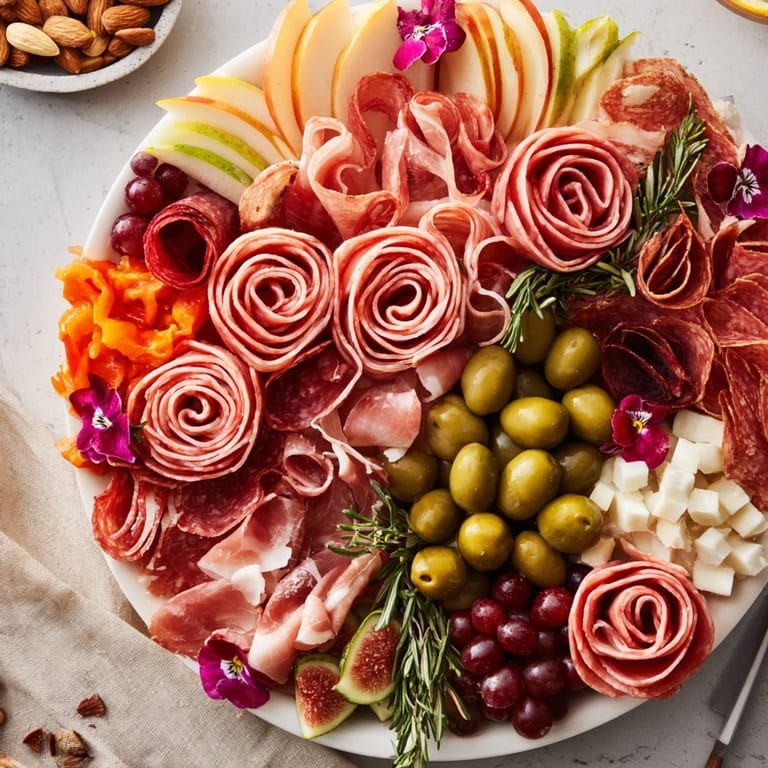
- Pull out your prosciutto and imagine it as delicate fabric you're artfully draping. Create loose, organic folds rather than neat stacks—bunch some pieces together, let others cascade, fold some into quarters so you see the edges. Repeat with soppressata and capicola, layering them so there's depth and movement. The chorizo and mortadella can be stacked or fanned. Leave gaps; you'll fill them with other elements, and those negative spaces make the arrangement breathe
- Build Your Cheese Architecture:
- Cut your other cheeses into varied shapes—some into wedges, some into small cubes, some shaved into shards. Distribute them throughout the board, clustering similar colors together but ensuring variety in each section. Place your cheese roses as focal points. Think of this like a landscape where different textures create visual interest
- Nestle Your Fruits Thoughtfully:
- Cluster grapes in small piles, positioning them to create pockets of color. Scatter apple and pear slices near cheeses they pair well with. Tuck pomegranate seeds into gaps—they'll catch the light beautifully. Distribute dried fruits in small clusters. Fresh fruit should be the last thing you add before serving if possible, to prevent browning
- Anchor with Nuts and Pickles:
- Create small piles of Marcona almonds and pistachios in different areas, giving the eye places to rest. Scatter olives in clusters or place them in small bowls. Arrange artichoke hearts and roasted peppers in their own little groupings. Cornichons can be fanned out or stacked. These ingredients add texture and breaks up the softness of the cheese and cured meats
- Arrange Your Vehicles for Tasting:
- Fan out baguette slices in one area. Create a separate section for assorted crackers, arranging them at different angles so they look abundant but not chaotic. Stand grissini breadsticks up in a glass or bundle them with twine for height and visual interest. These components fill remaining gaps and guide guests toward how to build their bites
- Apply Your Final Garnish:
- This is the moment where everything transforms. Tuck fresh rosemary sprigs and thyme between ingredients as if you're creating a garden. Scatter microgreens across the board. Place edible flowers strategically as jewels—they don't need to be everywhere, just in key spots. Add radish roses for an elegant touch. Step back and admire what you've created. At this point, you're done with the technical assembly and can take a breath
- Serve or Store with Care:
- If serving immediately, drizzle honey over the brie just before guests arrive. If making ahead, cover loosely with plastic wrap and refrigerate until an hour before serving, allowing ingredients to come to proper temperature. The magic of this board is best experienced at room temperature, when cheeses are creamy and flavors are bright
 Save Pin
 There was an evening when I'd spent two hours perfecting this board for a small gathering, and a guest who's usually reserved about food suddenly became animated, mixing unexpected flavors and sharing stories about meals from her childhood. That's when I understood that the true luxury of a board like this isn't the expensive meats or the artfully sculpted cheeses—it's the permission you give people to slow down, to taste mindfully, and to connect over good ingredients and the stories they inspire.
The Art of Balance
The most successful boards aren't the ones where every space is filled; they're the ones where light and shadow, color and contrast, create visual rhythm. I learned to think of my board like a painting, where negative space is just as important as positive elements. A large gap between clusters actually makes each cluster more impactful. Don't feel pressured to use every ingredient all at once—think of the board as a landscape that guides the eye on a journey from one taste to the next.
Pairing Wine with Your Creation
The beauty of an elaborate board like this is that it pairs beautifully with both bold reds and crisp sparkling wines. A Syrah or Côtes du Rhône complements the cured meats and aged cheeses, while Prosecco or Champagne adds elegance and brightness that cuts through richness. I've found that offering both options means your guests can explore different flavor combinations throughout the evening—aged cheddar with Syrah tastes completely different from aged cheddar with champagne, and both are revelations.
Building Flavor Combinations
The secret to a board that people remember is teaching them how to taste through strategic placement. I position aged cheddar near fig jam because that combination is transformative, and manchego near the pomegranate seeds because the tartness cuts through the richness. But I also leave room for discovery—some of the best flavor moments come from guests creating unexpected combinations you never imagined. Trust that good ingredients speak for themselves.
- Prosciutto plus brie plus fig jam is the foundation of a perfect bite that converts skeptics into board enthusiasts
- Aged cheddar with Marcona almonds and dried apricots creates complexity that makes people pause and savor
- Goat cheese with roasted red peppers and thyme tastes like you've been cooking all day when you've done zero actual cooking
 Save Pin
 Every time I create one of these boards, I'm reminded that the most elegant meals are often the ones that require no cooking, just intention and care. This board is your invitation to slow down and celebrate good ingredients, gathered friends, and the simple pleasure of tasting without rules.
Recipe FAQs
- → How do I create cheese roses?
Use pliable cheeses like provolone, slicing thinly and rolling into spirals, then gently fanning out edges to resemble petals.
- → What meats work best for folding on the board?
Thinly sliced cured meats like prosciutto, soppressata, and capicola fold well to create layered ribbons and intricate textures.
- → How should fruits be arranged for best visual effect?
Cluster fresh and dried fruits by color and shape to add bursts of vibrancy and natural sweetness throughout the display.
- → What garnishes enhance the board’s presentation?
Fresh herbs, edible flowers, microgreens, and radish roses contribute color, aroma, and a refined finishing touch.
- → Can this board accommodate dietary substitutions?
Yes, gluten-free crackers and plant-based alternatives for meats and cheeses can be substituted to suit different diets.