 Save Pin
 The first time I made Korean BBQ nachos, it was on a whim—I'd just gotten back from a late-night Korean barbecue restaurant where the sizzle of marinated beef had gotten under my skin, and I couldn't stop thinking about those smoky, umami-rich flavors. That same evening, staring into my pantry, I spotted a bag of tortilla chips and thought: what if I just went for it? The result was messy, glorious chaos on a baking tray, and my friends didn't stop eating them until the platter was bare.
I remember making a huge batch of these for a casual dinner party, and watching my friend who claimed she didn't like Korean food dig in with both hands, sauce dripping down her chin, suddenly declaring that maybe she'd been wrong about the whole thing. That moment—when food breaks through someone's preconceptions—that's when I knew this recipe was a keeper.
Ingredients
- Flank steak or sirloin: Thin slices are key here; the thinner the beef, the faster it cooks and the better it soaks up all that gochujang goodness.
- Gochujang: This fermented chili paste is where the soul of the dish lives—don't skip it or substitute with hot sauce, the depth is completely different.
- Sesame oil: Just a teaspoon goes a long way; it adds a toasted, nutty quality that ties the whole marinade together.
- Tortilla chips: Go for a sturdy chip that won't immediately dissolve under the cheese and beef weight—think a thicker restaurant-style chip.
- Korean cheese blend: A mozzarella-cheddar mix works beautifully, but honestly, any melty cheese you have on hand will do the job.
- Fresh vegetables: The crisp vegetables added at the end are your contrast to all that richness—they're not optional, they're what makes this feel fresh and alive.
- Kimchi: Adds a tangy punch and that fermented complexity that makes people pause and ask what that flavor is.
- Sesame seeds: Toasted, they bring a subtle nuttiness that elevates this from casual appetizer to something a little more intentional.
Tired of Takeout? 🥡
Get 10 meals you can make faster than delivery arrives. Seriously.
One email. No spam. Unsubscribe anytime.
Instructions
- Make the marinade and prep the beef:
- Whisk together gochujang, soy sauce, brown sugar, sesame oil, minced garlic, ginger, rice vinegar, and black pepper until smooth. Add your sliced beef and coat it thoroughly, then let it sit for at least twenty minutes—the longer it marinates, the deeper those flavors sink in.
- Get your oven ready:
- Preheat to 200°C (400°F) so it's hot and ready when you need it.
- Sear the beef until it's golden:
- Heat a skillet over medium-high heat until it's good and hot, then sear your marinated beef in batches for two to three minutes per side until the edges are browned and caramelized. Don't crowd the pan—you want each piece to touch the hot surface, not steam in a pile.
- Build your nacho foundation:
- Line a baking tray with parchment paper and spread your tortilla chips in an even layer, then scatter half your cheese over the top, followed by all that beautiful seared beef, then the remaining cheese.
- Melt everything together in the oven:
- Bake for six to eight minutes until the cheese is bubbling and just starting to brown at the edges—keep an eye on it so the chips don't burn.
- Add the fresh elements while everything's hot:
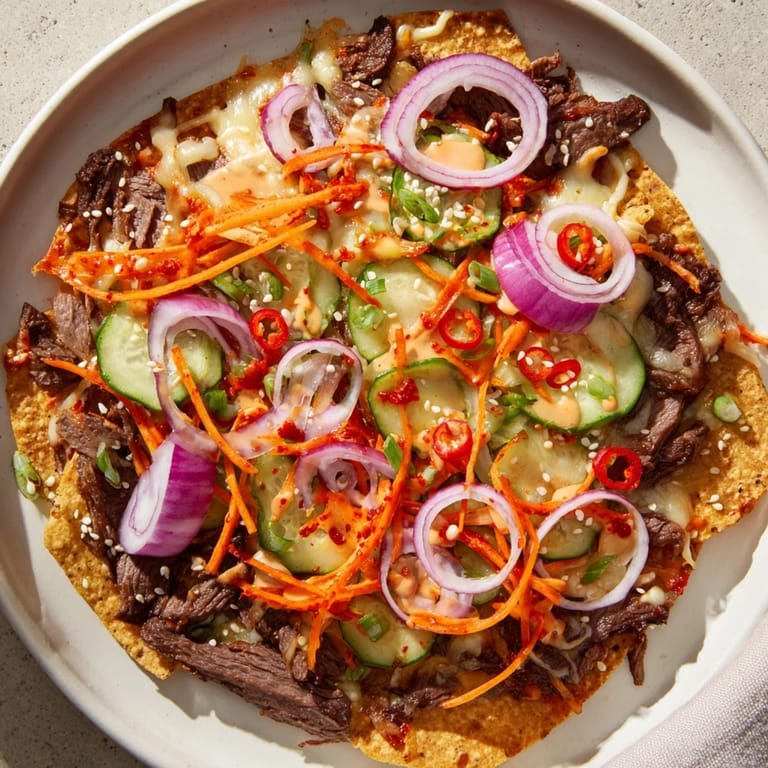
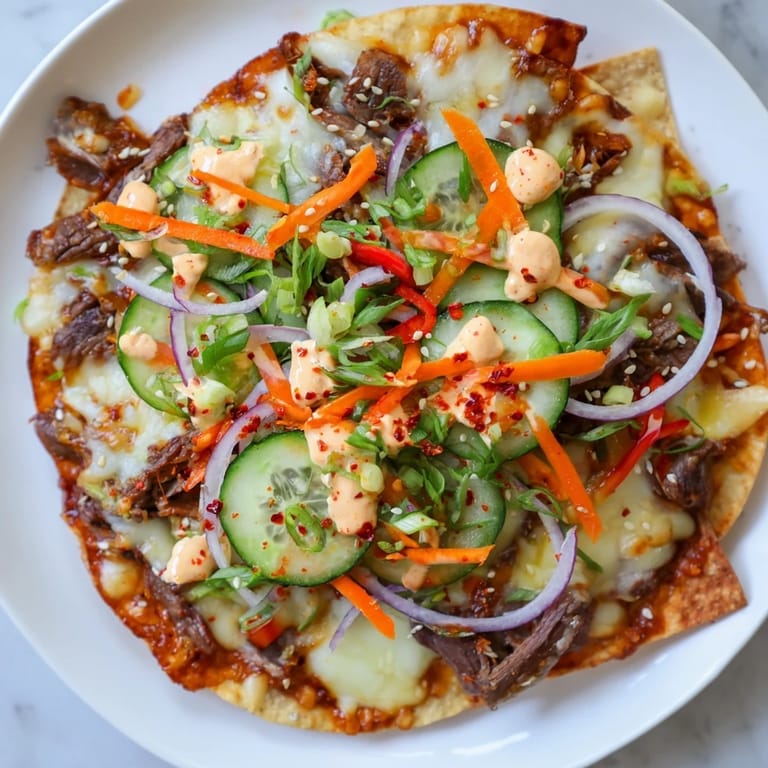
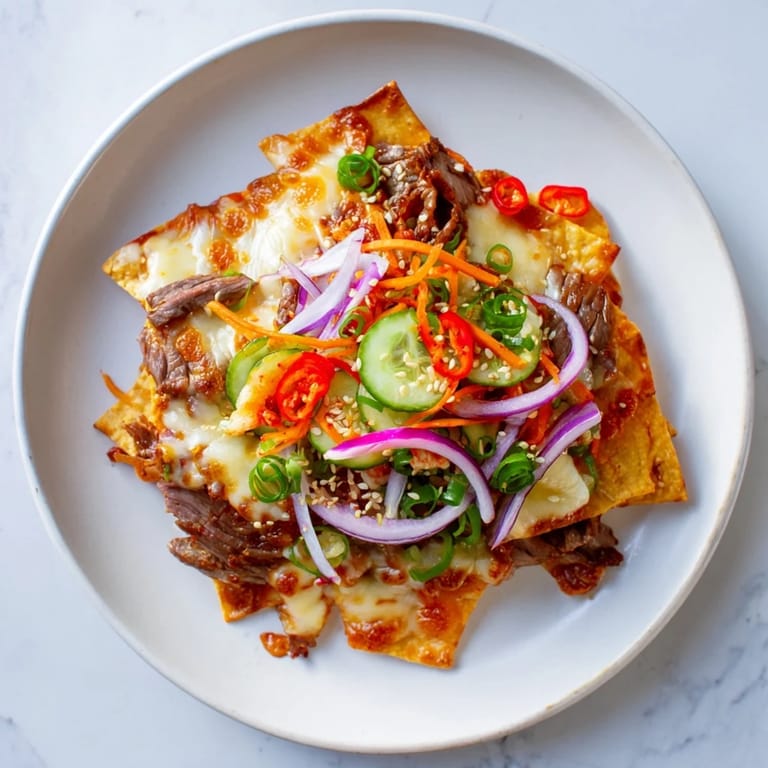
- Pull it out of the oven and immediately scatter over the red onion, carrot, cucumber, scallions, and sesame seeds while the cheese is still molten and will help everything stick.
- Finish with the flavor layers:
- Top with chopped kimchi and fresh herbs, then drizzle with sriracha mayo or gochujang mayo if you want that extra kick.
 Save Pin
 I realized the magic of this dish when my eight-year-old nephew, who normally turns his nose up at anything spicy, asked for seconds and then thirds, declaring it his new favorite food. It wasn't just about satisfying hunger; it was about showing him that flavors could surprise you, that taking a chance on something unfamiliar might lead somewhere delicious.
Why the Korean BBQ Flavor Works on Nachos
There's something deeply satisfying about taking a flavor profile from one cuisine and letting it reshape another—it shouldn't work in theory, but somehow it does. The gochujang marinade has this sweet-spicy-savory complexity that pairs beautifully with the salt of tortilla chips and the creaminess of melted cheese, creating layers of flavor that feel both familiar and surprising at the same time.
Customizing Your Nacho Experience
One of the best things about this recipe is how forgiving it is when you start making substitutions based on what you have or what you're craving. I've made these with marinated grilled chicken, crispy tofu, and even sautéed mushrooms, and each version has its own personality while still feeling fundamentally Korean-BBQ-nacho in spirit.
Serving and Pairing Ideas
These nachos have a casual, shareable energy that makes them perfect for game nights, small dinner parties, or those moments when you want something that feels a little more elevated than typical bar food. The sweetness of the marinade, the heat of the gochujang, and the cooling crunch of fresh vegetables all play together in a way that keeps you reaching for another bite.
- Serve these alongside a crisp lager or light beer that cuts through the richness, or go all-in and pour some chilled soju for an authentic pairing.
- Have lime wedges and extra gochujang mayo on the side so people can customize the heat and brightness to their taste.
- If you want to stretch these for a larger crowd, you can make a double batch and set them out on two trays so one stays fresh while the other gets devoured.
 Save Pin
 These nachos remind me that the best dishes aren't the ones that follow rules—they're the ones that break them just enough to feel like they were meant to be. Every time I make them, they taste like possibility.
Recipe FAQs
- → What cut of beef works best for this dish?
Thinly sliced flank steak or sirloin are ideal for marinating and quick searing, ensuring tender, flavorful bites.
- → Can I substitute the beef with another protein?
Grilled chicken, tofu, or marinated mushrooms make great alternatives while maintaining the dish's robust flavors.
- → How do I achieve the perfect cheese melt?
Layer cheeses evenly over the chips and beef, then bake just until the cheese bubbles and turns golden brown.
- → What fresh vegetables complement the flavors here?
Thin slices of red onion, julienned carrot, cucumber, scallions, and optional red chili add crunch and brightness.
- → What garnishes enhance the finished platter?
Chopped kimchi, fresh cilantro or shiso, toasted sesame seeds, and a drizzle of sriracha or gochujang mayo bring vibrant taste layers.
- → Are there any common allergens present?
This dish contains soy, wheat, dairy, and possibly egg; check ingredient labels for gluten-free or allergy-friendly options.